Quick Answer
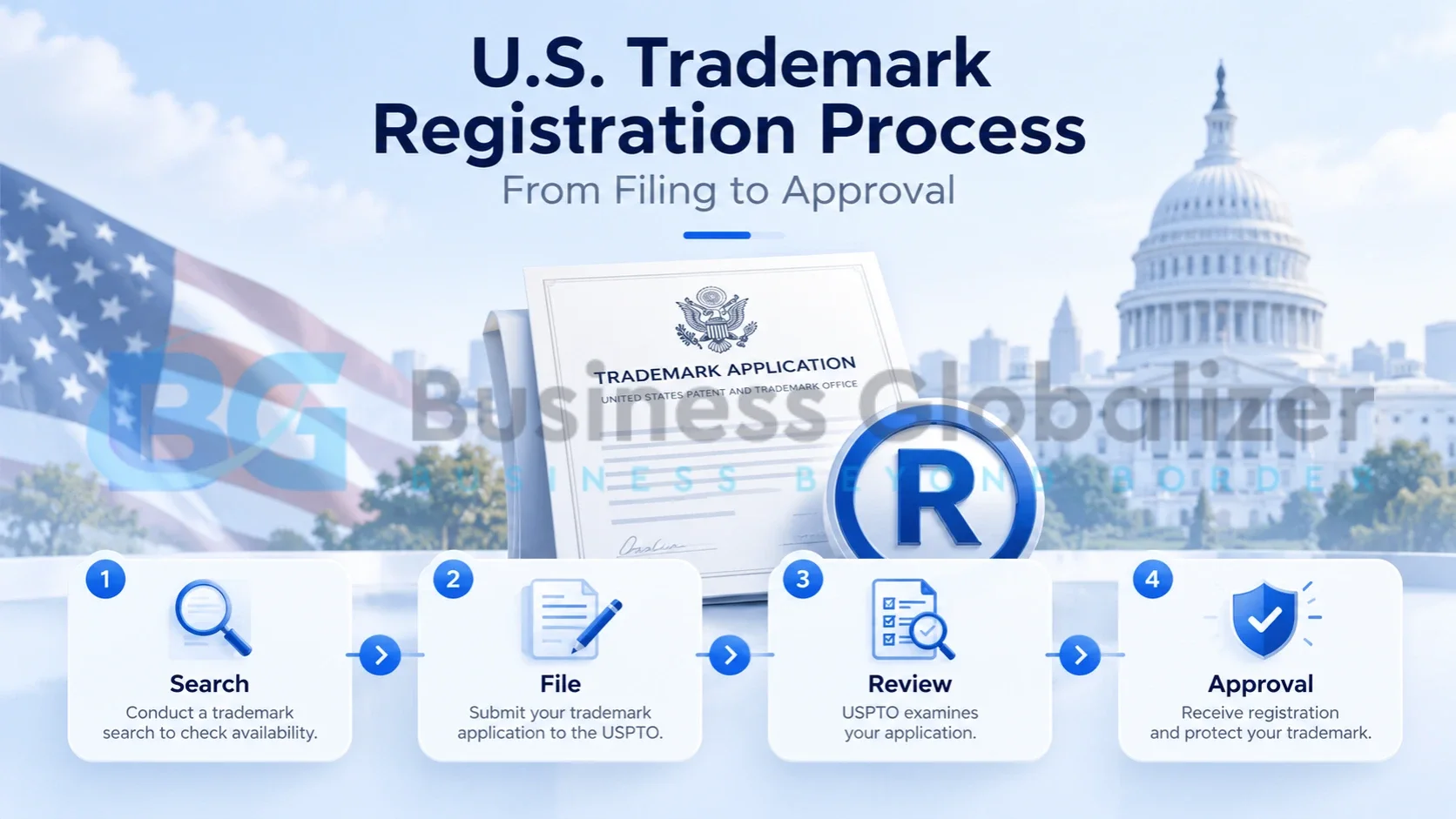
The U.S. trademark registration process involves checking trademarkability, preparing a USPTO trademark application, filing through the Trademark Center, waiting for USPTO review, responding if needed, publication, and final registration.
You finally decide, “Okay, this brand name is serious now.”
The logo is ready. The website looks clean. Maybe the product is already selling. Maybe you are preparing for Amazon, Shopify, or a wider U.S. launch. Then someone says, “You should register the trademark.”
That sounds simple enough, until you see words like filing basis, specimen, USPTO review, Office Action, publication, and registration certificate. This is where many founders freeze.
The U.S. trademark registration process is not impossible, but it does have steps. And each step matters. Filing too quickly, using the wrong owner, or choosing the wrong goods and services can create problems later.
So let’s walk through the process clearly, without making it feel like legal fog.
What Is U.S. Trademark Registration?
Before the process, let’s quickly clear the basics.
A U.S. trademark is a brand identifier used to distinguish your goods or services from others in the marketplace. It can be a name, logo, slogan, symbol, or another source-identifying mark.
U.S. Trademark registration means applying to register that mark with the United States Patent and Trademark Office, commonly called the USPTO. Once registered, the trademark can give stronger federal protection, public notice of ownership, and the right to use the ® symbol for the goods or services listed in the registration.
If you are completely new to trademarks, start with the broader U.S. Trademark basics first. This article focuses mainly on the filing journey.
Before You Start the US Trademark Registration Process
Here’s the part many people rush. Before filing, you should know whether your mark is actually suitable for trademark protection and whether your application is structured correctly from the start.
A more complete pre-filing checklist looks like this:
- Is the mark distinctive and capable of functioning as a trademark?
- Have you conducted a proper trademark search to check for conflicts?
- Is the mark already being used by someone else in a similar space?
- Does it clearly connect to your goods or services?
- Is the correct owner (individual or business entity) filing the application?
- Are you filing for goods, services, or both?
- Have you identified the correct trademark classes?
- Do you have proper proof of use if filing based on actual use?
- Are you choosing the correct filing basis (use in commerce or intent to use)?
- Are you prepared for possible USPTO objections or delays?
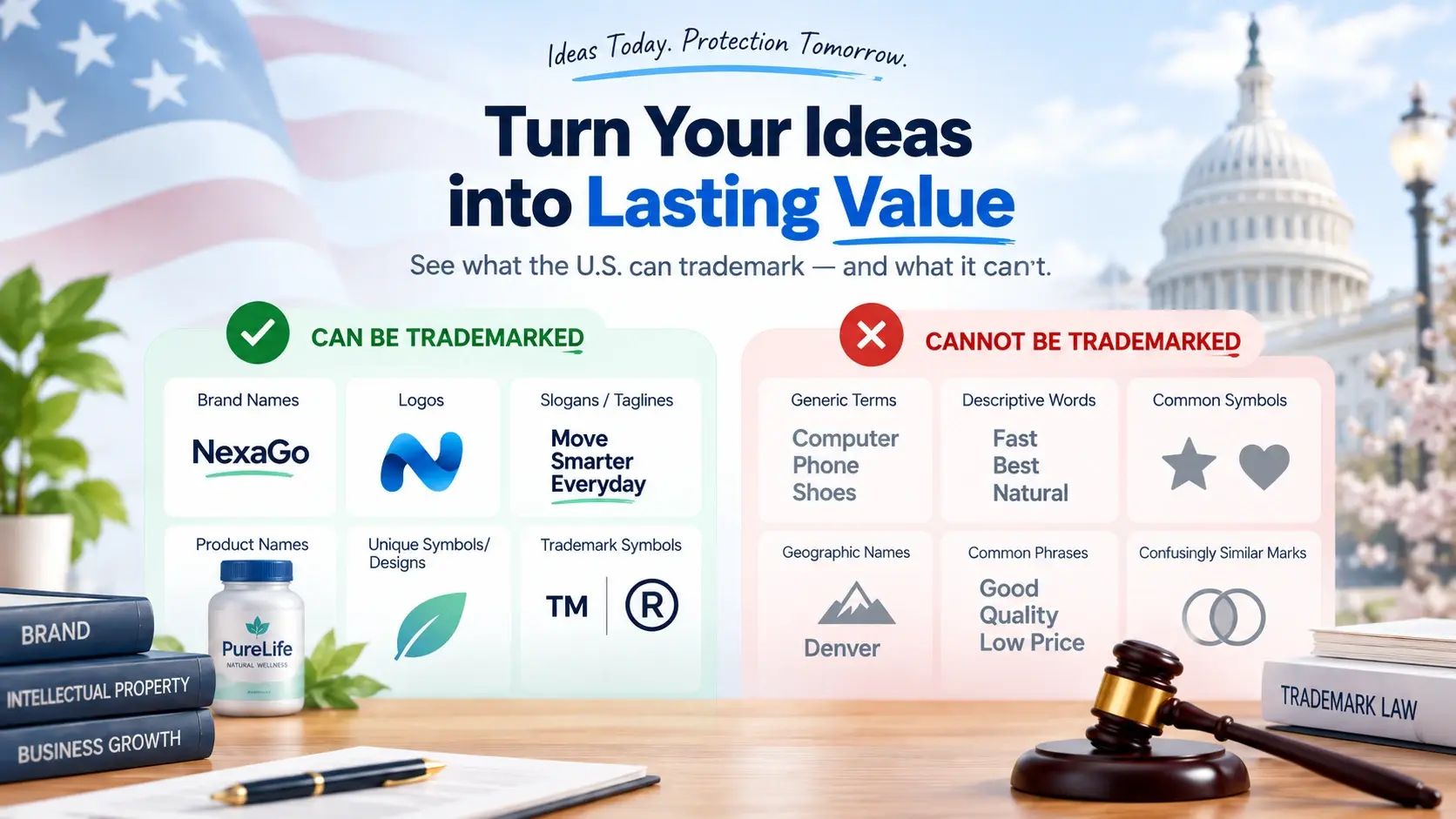
Another important point to understand is what can be trademarked in the U.S. and what cannot. During the review process, problems can arise if a mark is generic, confusingly similar, merely descriptive, or lacks evidence of correct usage.
State vs Federal Trademark Registration: A Short Note
Before filing with the USPTO, make sure federal protection is actually what you need.
A state trademark may be enough for a very local business operating only inside one state. But if you sell online, work across state lines, plan to grow nationally, or want stronger brand protection, federal registration is usually the better fit.
That is why understanding the differences between state and federal trademark registration matters before starting the USPTO process.
US Trademark Registration Requirements
The USPTO trademark application is not just a name and a payment. You generally need to provide:
- The trademark itself
- Owner name and address
- Legal entity type
- Goods or services connected to the mark
- Trademark class or classes
- Filing basis
- Specimen, if filing based on use in commerce
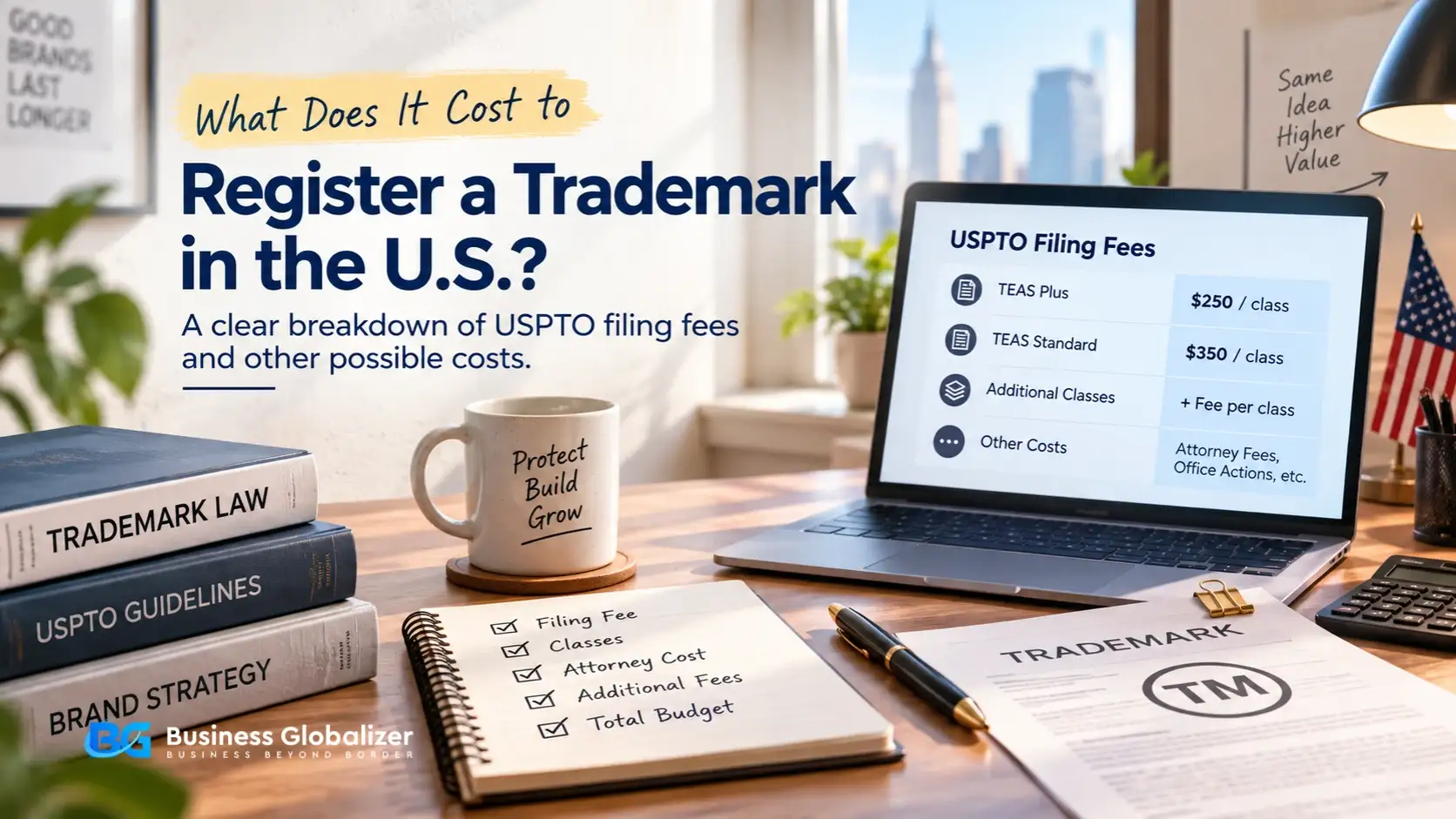
- Required government filing fee
- Attorney details, if required
In addition to the basics above, it is also helpful to prepare:
- A clear description of the mark, especially if it includes design elements (required for special form marks)
- A translation or transliteration if the mark includes non-English words or characters (required when applicable)
- A disclaimer for any non-distinctive parts of the mark, if applicable (often required by the USPTO during examination)
- A drawing of the mark in the correct format (standard character or special form)
- Dates of first use anywhere and first use in commerce, if filing based on use in commerce
- A valid email address for USPTO correspondence (required for all applicants)
- A declaration confirming the accuracy of the application details (required)
- Payment method details for filing fees and any future USPTO charges
Let’s quickly break down the most important parts.
The Trademark
This is the mark you want to protect. It may be:
- A word mark
- A logo
- A slogan
- A design
- A combination of words and design
You need to decide what exactly you are filing for. A plain word mark and a logo design are not always treated the same way.
The Owner
The owner must be the person or business entity that actually owns and controls the trademark. This matters more than many founders think. If the wrong person or company files the application, the application can become difficult, or sometimes impossible, to fix later.
Goods and Services
Your application must clearly identify the goods or services connected to the mark. For example, selling clothing is different from providing marketing services. Software is different from cosmetics. Restaurant services are different from packaged food. The USPTO reviews the mark in relation to the goods or services you list. So vague or incorrect descriptions can create problems.
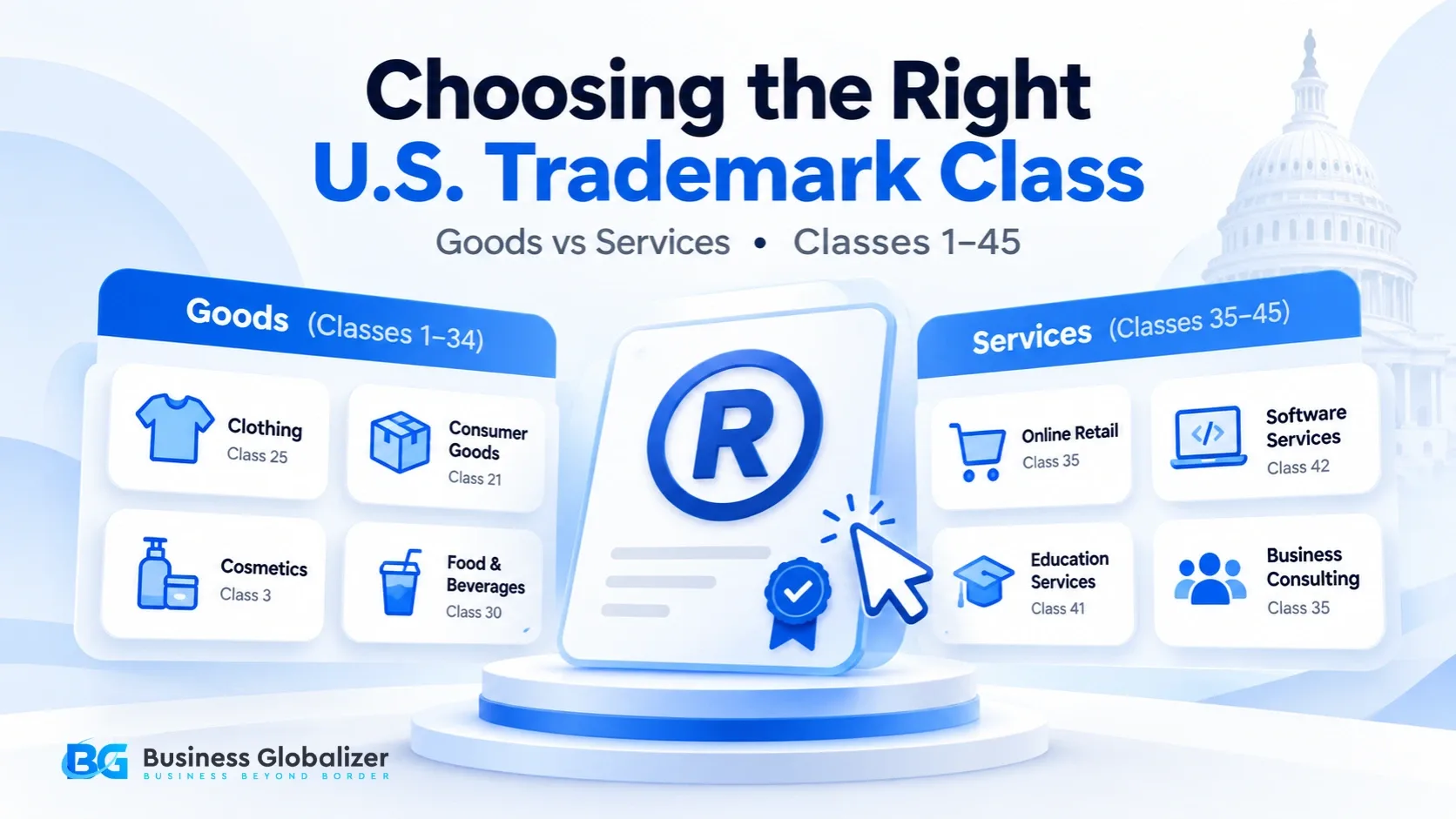
Trademark Classes
The USPTO uses trademark classes to group goods and services. There are 45 international classes:
- Classes 1–34 cover goods
- Classes 35–45 cover services
Your application must use the correct class or classes based on what your business actually offers. More classes usually mean more filing fees, so this is not something to guess.
Filing Basis
A USPTO trademark application must include a filing basis. Common filing bases include:
- Use in commerce
- Intent to use
- Foreign application or registration basis
- Madrid Protocol extension into the United States
For many U.S.-focused businesses, the two most common are use in commerce and intent to use. If you’re already using the mark within U.S. commerce, you may file based on use. If you are not using it yet but have a real plan to use it, you may file based on intent to use.
Specimen
A specimen is proof showing how the mark is actually used in commerce. Examples may include:
- Product labels
- Packaging
- Website product pages
- Service pages
- Advertising materials for services
- Screenshots showing the mark used with the goods or services
The specimen must match the goods or services in the application. A weak or incorrect specimen is one of the common reasons applications run into trouble.
How to Apply for a US Trademark
The main filing route is through the USPTO’s online filing system, the Trademark Center application. In simple terms, the process usually looks like this:
- Prepare the mark and owner details.
- Identify the goods or services.
- Choose the correct filing basis.
- Select the proper class or classes.
- Upload the specimen if required.
- Review the application carefully.
- Pay the USPTO filing fee.
- Submit the application.
That sounds simple, but the details matter.
The USPTO does not rewrite your business strategy for you. It examines what you submit. So the application should be prepared carefully before filing, not patched together afterward.
Step-by-Step US Trademark Registration Process
Once you’ve gathered everything, the actual US Trademark Registration Process becomes much easier to understand.
Think of it as a series of checkpoints rather than one big approval. Every application follows roughly the same journey, although the timeline can vary depending on the application itself and whether the USPTO raises any issues during examination.
Here’s what usually happens.
Step 1: Prepare Your Application
Before opening the Trademark Center application, make sure you have:
- The correct trademark owner
- A clear representation of the mark
- The correct goods or services
- The appropriate trademark class(es)
- The correct filing basis
- A specimen (if filing based on use in commerce)
- Payment ready for the filing fee
Many problems begin long before the application is submitted. Spending extra time preparing the application is usually far easier than fixing mistakes later.
Step 2: File Through the Trademark Center
Applications are filed electronically using the USPTO’s Trademark Center. During filing, you’ll provide information about:
- The trademark
- The owner
- Goods or services
- Trademark classes
- Filing basis
- Specimen (where applicable)
- Required declarations
Once submitted, the USPTO issues a filing receipt and assigns a serial number. Keep this number. You’ll need it throughout the registration process.
Step 3: USPTO Initial Review
After filing, your application enters the USPTO system. It is not reviewed immediately. Applications usually wait in a queue before being assigned to an examining attorney. Current waiting times vary, so always check the USPTO for the latest estimates. During this stage, no action is usually required from the applicant unless the USPTO contacts you.
Step 4: Examination by a USPTO Attorney
Once assigned, an examining attorney reviews the application. This review includes questions such as:
- Is the mark capable of functioning as a trademark?
- Does it conflict with an earlier registration?
- Are the goods or services described properly?
- Is the correct filing basis used?
- Does the specimen meet USPTO requirements?
- Are all mandatory application details included?
If everything is acceptable, the application moves forward. If not, the USPTO normally issues an Office Action explaining the issues that need attention. Receiving an Office Action does not automatically mean the application has failed. Many applications receive one or more Office Actions before moving ahead.
Step 5: Publication for Opposition
If the examining attorney gives the green light, your mark is published in the Trademark Official Gazette. This gives other people a chance to speak up if they think your trademark steps on their existing rights.
As long as nobody objects during that window—or if you manage to clear up any issues that arise—your application moves on to the final stages.
Step 6: Registration (or Notice of Allowance)
What happens next depends on the filing basis.
- If You Filed Based on Use in Commerce
If the application satisfies all USPTO requirements and there are no successful oppositions, the USPTO issues a U.S. trademark registration certificate. Registration is then complete.
- If You Filed Based on Intent to Use
Instead of immediate registration, the USPTO issues a Notice of Allowance. This means you must later submit acceptable proof that the trademark is being used in commerce before registration can be completed.
US Trademark Registration Timeline Explained
One of the most common questions founders ask is: “How long does trademark registration take?” Well, the honest answer is: It depends. The trademark application timeline varies depending on:
- USPTO workload
- Whether an Office Action is issued
- Whether an opposition is filed
- Whether additional evidence is needed
- Your own response times
A straightforward application may move much faster than one requiring several rounds of correspondence. Rather than focusing on a specific number of months, it’s better to understand that trademark registration is a process. Not an instant approval.
What Happens After Filing Trademark Application?
Submitting the application is only the beginning. After filing, you should:
- Save your serial number.
- Watch for USPTO correspondence.
- Respond promptly if an Office Action is issued.
- Monitor publication dates.
- Keep your contact information up to date.
- Continue using the trademark appropriately.
If your application is approved, registration follows (or a Notice of Allowance if applicable). If the USPTO requests additional information, responding carefully and on time becomes critical.
How to Check Trademark Application Status
After filing, you don’t have to wonder where the application stands. The USPTO allows applicants to check trademark application status online using their serial number. Depending on where your application is in the process, you may see statuses such as:
- New application filed
- Assigned to an examining attorney
- Office Action issued
- Response received
- Published for opposition
- Registered
- Notice of Allowance issued
- Abandoned
Checking your status periodically helps ensure you don’t miss important deadlines or USPTO notices. Remember, simply filing the application does not guarantee registration. Keeping track of its progress is part of protecting your brand.
Common Mistakes in the US Trademark Registration Process
Most trademark delays do not happen because the founder is careless. They happen because the process looks simpler from the outside than it really is.
Here are the common mistakes to avoid:
- Filing before checking whether the mark is trademarkable.
- Skipping a proper trademark search.
- Using the wrong owner name in the application.
- Choosing the wrong goods or services.
- Selecting the wrong trademark class.
- Filing a weak or incorrect specimen.
- Confusing state business registration with federal trademark registration.
- Ignoring USPTO deadlines after filing.
- Using the ® symbol before registration.
- Assuming filing means automatic approval.
The safer approach is simple: prepare carefully before filing, monitor the application after submission, and respond quickly if the USPTO raises an issue.
After Registration: What Comes Next?
Registration is a major milestone, but it is not the final chapter. Once your mark is registered, you should:
- Use the trademark consistently.
- Use the ® symbol correctly for the registered goods or services.
- Watch for confusingly similar brand use.
- Keep ownership and correspondence details updated.
- File required maintenance documents on time.
- Keep evidence of continued use.
A U.S. trademark registration can last for a long time, but only if it is maintained properly. If maintenance filings are missed, the registration can be cancelled or expire.
Business Globalizer: Helping You File with Confidence
A trademark application is not just a form. It is a legal filing that can affect your brand for years.
At Business Globalizer, we help founders understand the US Trademark Registration Process, evaluate whether a name, logo, slogan, or brand element may be suitable for registration, provide trademark search guidance, support USPTO trademark applications, assist with U.S. company formation, e-commerce business registration in the U.S., ITIN application support, EIN services, DUNS number assistance, U.S. taxation guidance, and ongoing compliance support for entrepreneurs expanding into the United States.
Whether you are preparing your first application or trying to avoid mistakes before filing, our team helps make the process clearer and more manageable. Because the best time to fix a weak application is before it reaches the USPTO.
Closing Thoughts
The US Trademark Registration Process can feel intimidating when you first see all the moving parts: filing basis, specimens, trademark classes, Office Actions, publication, registration, and status checks.
But once you break it into steps, the process becomes much easier to follow. The biggest lesson is this: do not treat filing as the first step. The real work begins before the application is submitted. Choose a trademarkable mark. Search carefully. Use the correct owner. Describe your goods or services clearly. Track your application after filing.
A strong brand deserves more than a rushed application.
Key Insights
- The US Trademark Registration Process starts before filing, not after.
- A strong application begins with a trademarkable name, proper owner details, and clear goods or services.
- Federal trademark registration is handled through the USPTO, not by state business registration offices.
- A USPTO trademark application must include the mark, owner, filing basis, goods or services, and required fees.
- The Trademark Center application is now the main filing route for new USPTO trademark applications.
- A trademark application timeline can vary depending on USPTO review, Office Actions, publication, and opposition
- Filing does not mean approval; the USPTO still examines the application.
- You can check trademark application status using the USPTO’s online status tools.
- Foreign-domiciled applicants usually need a U.S.-licensed attorney for USPTO filings.
- Getting the basics right early can prevent delays, refusals, and expensive corrections later.
FAQs on the US Trademark Registration Process
What is the US Trademark Registration Process?
Answer: The US Trademark Registration Process usually includes checking trademarkability, preparing the application, filing through the USPTO Trademark Center, examination by a USPTO attorney, publication for opposition, and registration if no major issues remain.
What are the main US trademark registration requirements?
Answer: The main US trademark registration requirements include the mark, owner details, goods or services, filing basis, trademark class, filing fee, and a specimen if filing based on use in commerce.
How to apply for a US trademark?
Answer: To apply for a US trademark, you generally prepare the application details, choose the correct goods or services and filing basis, submit the Trademark Center application through the USPTO, and monitor the application after filing.
What is a USPTO trademark application?
Answer: A USPTO trademark application is the formal filing submitted to the United States Patent and Trademark Office to request federal registration of a trademark for specific goods or services.
How long does a trademark take?
Answer: The answer depends on the application. While a seamless trademark application can progress quickly, factors like missing details, oppositions, or Office Actions can delay the overall timeline.
What happens after filing a trademark application?
Answer: After filing, the USPTO assigns a serial number, places the application in queue, examines it, may issue an Office Action, and may later approve it for publication, registration, or further action.
How do I check trademark application status?
Answer: You can check trademark application status using the USPTO’s online status tools with your application serial number. This helps you track updates, deadlines, Office Actions, publication, and registration status.
Does filing a USPTO trademark application guarantee approval?
Answer: No. Filing only starts the process. The USPTO still reviews the application for legal and technical requirements before deciding whether it can move forward.
Can non-U.S. residents file a U.S. trademark application?
Answer: Yes, non-U.S. residents can apply. However, foreign-domiciled applicants usually need a U.S.-licensed attorney to represent them before the USPTO.
What is the Trademark Center application?
Answer: The Trademark Center application is the USPTO’s current online system for filing trademark applications and managing related trademark submissions.