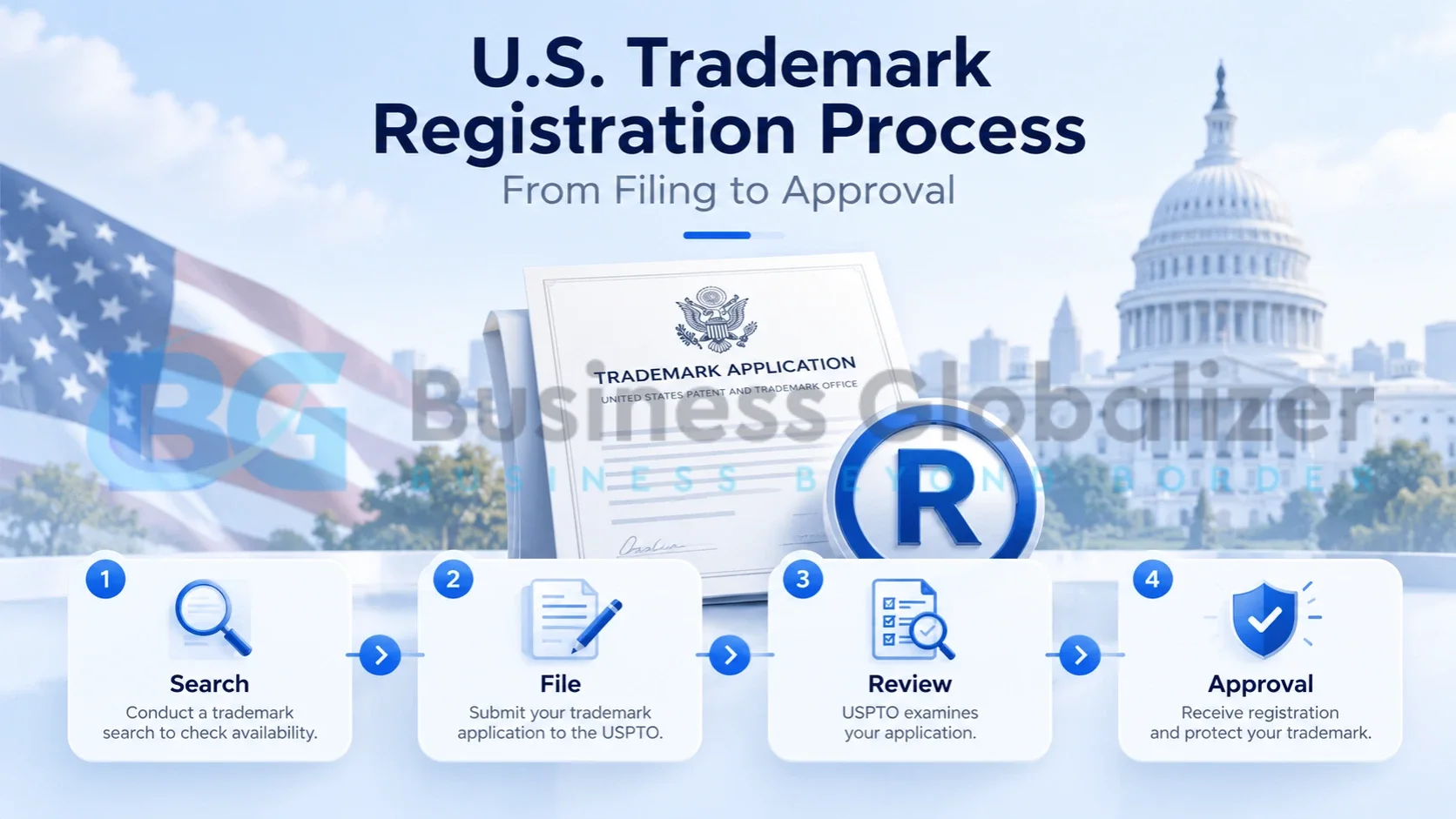
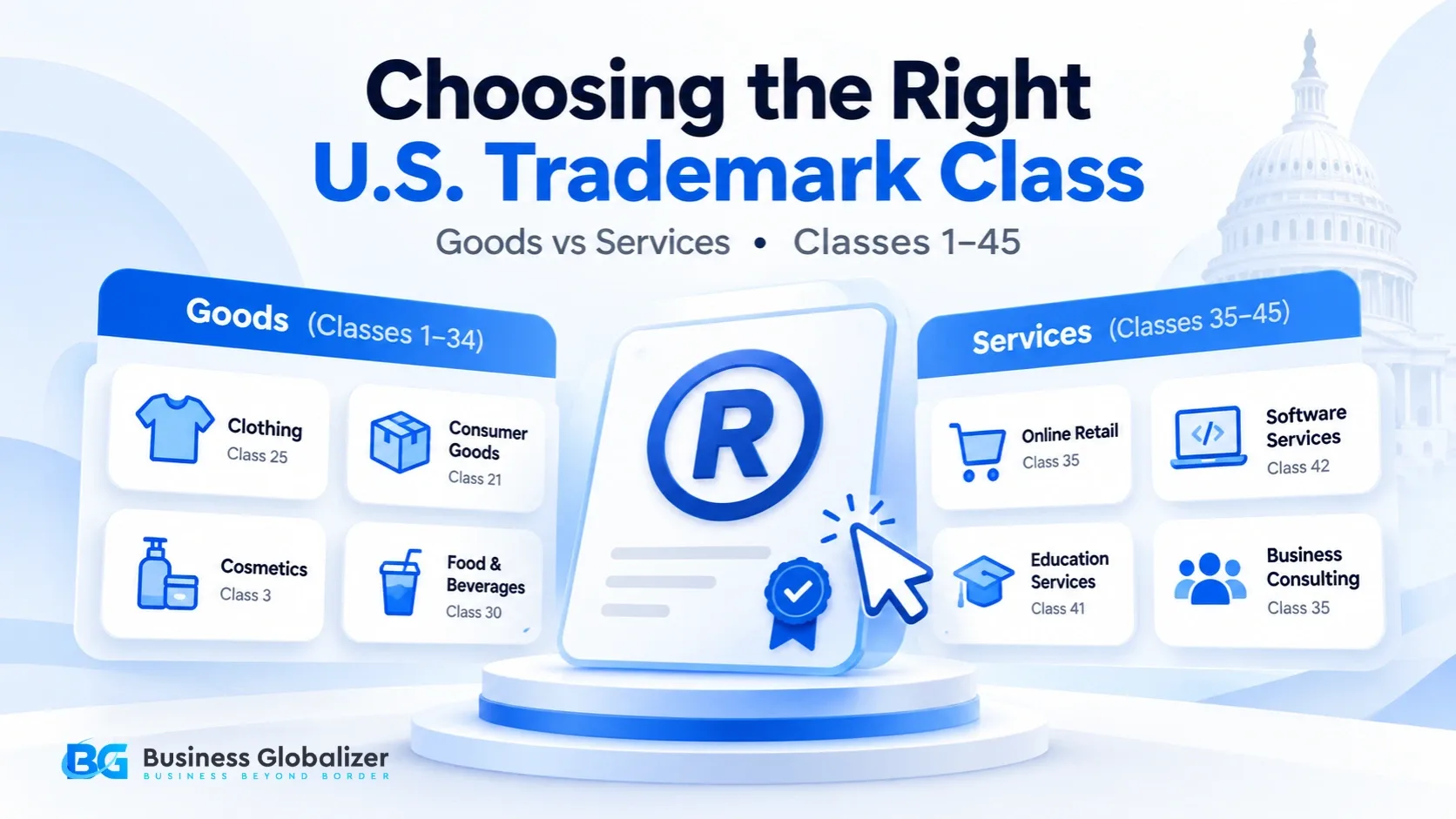
Quick Answer
The US Trademark Filing Basis informs the USPTO why you can file a trademark application. Most applicants choose either a Section 1(a) trademark (already using the mark in commerce) or a Section 1(b) trademark (intent to use the mark later). This selection determines the required documents, timeline, fees, and overall registration process.
Some business owners spend weeks choosing the perfect brand name.
Then they reach the trademark application and suddenly face a question they’ve never thought about: “What’s your filing basis?”
It’s one of those questions that seems small until you realize the wrong answer can slow the entire application or create unnecessary legal issues in the U.S. trademark registration process.
The good news is that the concept isn’t as complicated as it first appears.
Once you understand the US trademark filing basis, you’ll see that it simply answers one question: Why are you allowed to file this application today for the registration of your U.S. trademark?
That answer depends on whether you’re already using the trademark in commerce or honestly planning to use it in the near future.
What Is a US Trademark Filing Basis?
Every federal trademark application must include a legal basis for filing. Your US trademark filing basis tells the USPTO why the application qualifies under U.S. trademark law. Think of it as the legal foundation supporting the application.
Without a valid trademark filing basis, the USPTO cannot properly examine or register the trademark. Also, a clear understanding of U.S. trademark basics makes it easier to see why every federal application needs a legally valid filing basis.
Depending on your situation, a filing basis may be based on:
- Current use in commerce.
- A bona fide intent to use the mark in commerce.
- A qualifying foreign application.
- A qualifying foreign registration.
Before choosing any filing basis, it also helps to check what can be trademarked in the U.S. and what cannot, since not every name, phrase, logo, or design qualifies for federal registration. For most entrepreneurs and businesses, however, the decision usually comes down to two options:
- Section 1(a) trademark
- Section 1(b) trademark
These are also the filing bases that create the most questions, so let’s look at them one at a time.
Section 1(a) Trademark: Use in Commerce Trademark Application
A Section 1(a) trademark application is used when the trademark is already being used in commerce in connection with the listed goods or services.
In simple terms, this filing basis says: “I’m not planning to use this trademark someday; I am already using it in the way required by U.S. trademark law.”
A use in commerce trademark application generally requires the applicant to provide:
- The date the trademark was first used anywhere.
- The date it was first used in U.S. commerce that Congress can regulate.
- A specimen showing how the trademark is actually used.
- A verified statement confirming those facts.
The specimen is especially important because it shows the USPTO that the trademark is functioning as a source identifier in real business activity. For goods, examples may include product packaging, labels, tags, or qualifying online sales pages.
For services, acceptable specimens often include websites, advertisements, or promotional materials where the services are offered under the trademark.
The review of trademark application requirements becomes especially useful here because the specimen and supporting information must match the application.
What Counts as “Use in Commerce”?
This is where many applicants become confused.
Simply printing a logo, registering a company, or buying a domain name does not automatically create trademark rights under a use-in-commerce trademark application. Generally, the trademark must be used in the ordinary course of trade, not merely to reserve rights.
For goods, that usually means the trademark appears on the products, packaging, labels, or displays associated with the sale, and the goods are sold or transported in commerce. For services, the trademark should be used while advertising or rendering the services in commerce.
The USPTO examines whether the submitted evidence reflects genuine commercial use rather than a token or temporary display created only for filing purposes.
Section 1(b) Trademark: Intent to Use Trademark Application
Not every business is already selling products when it’s ready to protect a brand. Maybe you’re still developing the product. Maybe the website isn’t live yet. Maybe you’re preparing for launch next quarter.
That’s exactly why the Section 1(b) trademark filing basis exists.
An intent-to-use trademark application allows an applicant to reserve a place in line before qualifying commercial use begins, provided there is a bona fide intention to use the trademark in commerce.
The important phrase here is bona fide. The USPTO expects a genuine, real business intention, not simply an idea that might happen someday.
Businesses often choose this filing basis when they are:
- Launching a new company.
- Developing a product.
- Preparing a software platform.
- Building a new brand.
- Expanding into the U.S. market.
- Waiting for manufacturing or regulatory approval.
This option is particularly common among startups because it allows them to begin the trademark process before sales officially start.
Use in Commerce vs Intent to Use Trademark Application
So which option is better? Neither. The right choice depends entirely on your business. Here’s a simple comparison:
| Use in Commerce Trademark Application | Intent to Use Trademark Application |
| Trademark is already being used in qualifying commerce | Trademark is not yet in qualifying use |
| Requires a specimen with the initial filing | Specimen is usually submitted later |
| Registration may proceed sooner if all requirements are met | Additional steps are required before registration |
| Filed under Section 1(a) trademark | Filed under Section 1(b) trademark |
State and federal trademark registration deals with the geographical and legal scope of protection, while Section 1(a) and Section 1(b) are filing bases used in federal USPTO applications.
Trying to file under Section 1(a) before genuine commercial use exists can create serious problems. On the other hand, filing under Section 1(b) when the mark is already in use may unnecessarily lengthen the process.
Choosing the correct US trademark filing basis from the beginning helps avoid both situations.
What Is a Notice of Allowance Trademark?
One of the most misunderstood documents in an intent-to-use application is the Notice of Allowance trademark. Many applicants assume receiving it means the trademark has been registered.
It doesn’t.
A Notice of Allowance trademark simply means:
- The application has successfully completed examination.
- It has been published for opposition.
- No successful opposition prevented registration.
- The USPTO is now waiting for proof that the trademark is actually being used in commerce.
In other words, the application has reached an important milestone, but one final step still remains.
What Is a Statement of Use Trademark?
After a Notice of Allowance trademark is issued, the applicant generally has six months to either:
- File a Statement of Use trademark, or
- Request an extension of time if qualifying use has not yet begun.
A Statement of Use trademark filing typically includes:
- A verified declaration.
- Dates showing when the mark was first used.
- An acceptable specimen.
- The required government fee.
If the mark still is not in use, extension requests may usually be filed in six-month increments, up to the statutory maximum permitted by the USPTO, provided the legal requirements continue to be met.
Failing to file a timely Statement of Use or extension request can result in abandonment of the application.
How Filing Basis Affects the Registration Timeline
The filing basis doesn’t just change paperwork; it also changes the path your application follows.
A Section 1(a) trademark application may move directly toward registration after examination, publication, and any required approvals because qualifying use already exists.
A Section 1(b) trademark application follows an extra stage:
Application → Examination → Publication → Notice of Allowance → Statement of Use → Registration
That’s why two applicants filing on the same day may receive registrations months apart, even when both applications are otherwise acceptable.
The difference often comes down to the selected trademark filing basis.
Other Trademark Filing Bases
Although Section 1(a) trademark and Section 1(b) trademark are the filing bases most businesses encounter, they are not the only options.
Depending on the circumstances, an applicant may also rely on:
- A qualifying foreign application under Section 44(d).
- A qualifying foreign registration under Section 44(e).
- An international registration extended to the United States through the Madrid Protocol under Section 66(a).
These filing bases have their own eligibility rules and documentation requirements.
They are particularly relevant for businesses seeking trademark registration for non-residents, although not every foreign applicant will qualify for every option.
If you’re filing from outside the United States, it’s also worth understanding the separate rules on attorney representation, ownership, and domicile, as discussed in our guide to registering a US trademark for non-residents.
Common Mistakes When Choosing a Trademark Filing Basis
If there’s one takeaway from this article, it’s this: Don’t choose a filing basis simply because it looks faster or easier.
The US Trademark Filing Basis should reflect your actual situation on the filing date. Here are some of the mistakes applicants make most often:
Filing under Section 1(a) before the trademark is genuinely in use
Some businesses assume they’re “using” a trademark because they’ve:
- Registered the company.
- Reserved a domain name.
- Designed a logo.
- Created social media pages.
Those steps may be important for launching a business, but they do not automatically satisfy the USPTO’s requirements for use in commerce.
Filing under Section 1(b) even though the trademark is already in use
This isn’t necessarily fatal, but it can add extra steps that weren’t needed. If qualifying commercial use already exists, filing under the correct basis often makes the process more straightforward.
Choosing the wrong goods or services
The filing basis and the listed goods or services should support one another. For example, claiming current use for products that have not actually entered commerce can create unnecessary problems during examination.
That’s one reason why selecting accurate trademark classes matters from the beginning.
Submitting an unacceptable specimen
For Section 1(a) trademark applications and later Statement of Use trademark filings, the specimen must show genuine trademark use. Digitally created mock-ups, altered images, or materials that don’t reflect actual commercial use may not satisfy USPTO requirements.
Assuming a Notice of Allowance means the trademark is registered
This misunderstanding is surprisingly common. A Notice of Allowance trademark is an important milestone, but registration does not occur until all remaining legal requirements, including an acceptable Statement of Use when required, have been completed.
How the Filing Basis Connects to the Rest of Your Application
A trademark application isn’t a collection of unrelated forms. Each part supports the others. Your trademark filing basis should match:
- The correct trademark owner.
- The listed goods or services.
- The selected trademark classes.
- The filing dates.
- The specimen, when required.
- The verified declarations.
If one part conflicts with another, the examining attorney may issue a trademark Office Action requesting clarification or refusing registration. That’s why many applicants review the entire application, not just the filing basis, before submitting it.
A proper search of the federal trademark database, accurate trademark application requirements, and the right filing basis all work together.
And if you’re filing from another country, the same principle applies to non resident trademark registration. The filing basis must still accurately reflect the facts, regardless of where the applicant is located.
Remember, choosing a filing basis is only one step in the overall trademark registration process, and it doesn’t change the government trademark application cost, which is generally charged per class.
How Business Globalizer Can Help?
Choosing between a Section 1(a) trademark and a Section 1(b) trademark isn’t always obvious, especially for new businesses, startups, or founders entering the U.S. market for the first time.
Business Globalizer helps entrepreneurs prepare for the filing process by helping them understand which information belongs in the application before it reaches the USPTO.
Our support includes everything about U.S. trademark registration:
- Reviewing trademark ownership details
- Assisting with trademark search preparation
- Identifying goods, services, and trademark classes
- Preparing application information before filing
- Coordinating with qualified U.S. trademark attorneys when required
- U.S. company formation
- EIN services
- U.S. E-commerce business registration
- ITIN application support through our IRS Certified Acceptance Agent (CAA)
- DUNS number assistance
- U.S. tax guidance
- Ongoing compliance services
Our role is to help applicants begin with accurate information and a well-prepared application, not to promise registration.
Closing Thoughts
Remember that question at the beginning? “What’s your filing basis?”
It turns out that it’s one of the first legal decisions you’ll make during a trademark application, and one of the easiest to answer once you understand what the USPTO is asking. The US Trademark Filing Basis isn’t about choosing the faster option. It’s about choosing the truthful one.
Whether your application is based on current commercial use or a genuine plan to launch in the near future, selecting the correct filing basis helps the rest of the application move forward on the right footing.
A little extra attention before filing is usually much easier than correcting avoidable mistakes later.
Key Insights
- Your US Trademark Filing Basis explains why you are legally eligible to file a trademark application.
- The two filing bases most applicants use are Section 1(a) trademark and Section 1(b) trademark.
- A use-in-commerce trademark application is appropriate when the mark is already being used in qualifying U.S. commerce.
- An intent-to-use trademark application is designed for applicants who have a genuine plan to use the mark in the future.
- A Notice of Allowance trademark is not the same as a registration certificate.
- A Statement of Use trademark is generally required before an intent-to-use application can mature into a registration.
- Choosing the wrong trademark filing basis can lead to delays, additional costs, or legal problems.
FAQ
What is a US Trademark Filing Basis?
Answer: A US Trademark Filing Basis explains the legal reason you are entitled to file a federal trademark application. The most common filing bases are Section 1(a) trademark for marks already in use and Section 1(b) trademark for marks that will be used in commerce in the future.
What is the difference between a Section 1(a) trademark and a Section 1(b) trademark?
Answer: A Section 1(a) trademark application is filed when the trademark is already being used in qualifying U.S. commerce. A Section 1(b) trademark application is filed when the applicant has a bona fide intention to use the trademark later but has not yet begun qualifying commercial use.
What is a use in commerce trademark application?
Answer: A use in commerce trademark application is filed under Section 1(a). It requires the applicant to show that the trademark is already being used in commerce and usually includes dates of first use and an acceptable specimen demonstrating that use.
What is an intent to use trademark application?
Answer: An intent to use trademark application is filed under Section 1(b). It allows applicants with a genuine future plan to use the trademark to begin the registration process before commercial use starts. Registration generally cannot issue until the required proof of use is later submitted.
What is a Notice of Allowance trademark?
Answer: A Notice of Allowance trademark means an intent-to-use application has successfully completed examination and publication, but it is not yet registered. The applicant must still meet the remaining use requirements before registration can proceed.
What is a Statement of Use trademark?
Answer: A Statement of Use trademark is the filing submitted after a Notice of Allowance to show that the trademark is now being used in qualifying commerce. It generally includes a declaration, dates of use, an acceptable specimen, and the required USPTO fee.
Can I change my trademark filing basis after filing?
Answer: In some situations, the USPTO permits certain amendments to a filing basis if the legal requirements are satisfied. Whether a change is available depends on the facts of the application and the stage of examination, so applicants should review the requirements carefully before requesting an amendment.
Which trademark filing basis should a startup choose?
Answer: There isn’t a single answer for every business. If the trademark is already being used in qualifying commerce, a Section 1(a) trademark filing may be appropriate. If the business is still preparing to launch but has a genuine intention to use the mark, a Section 1(b) trademark filing is often the better choice.