Key Insights
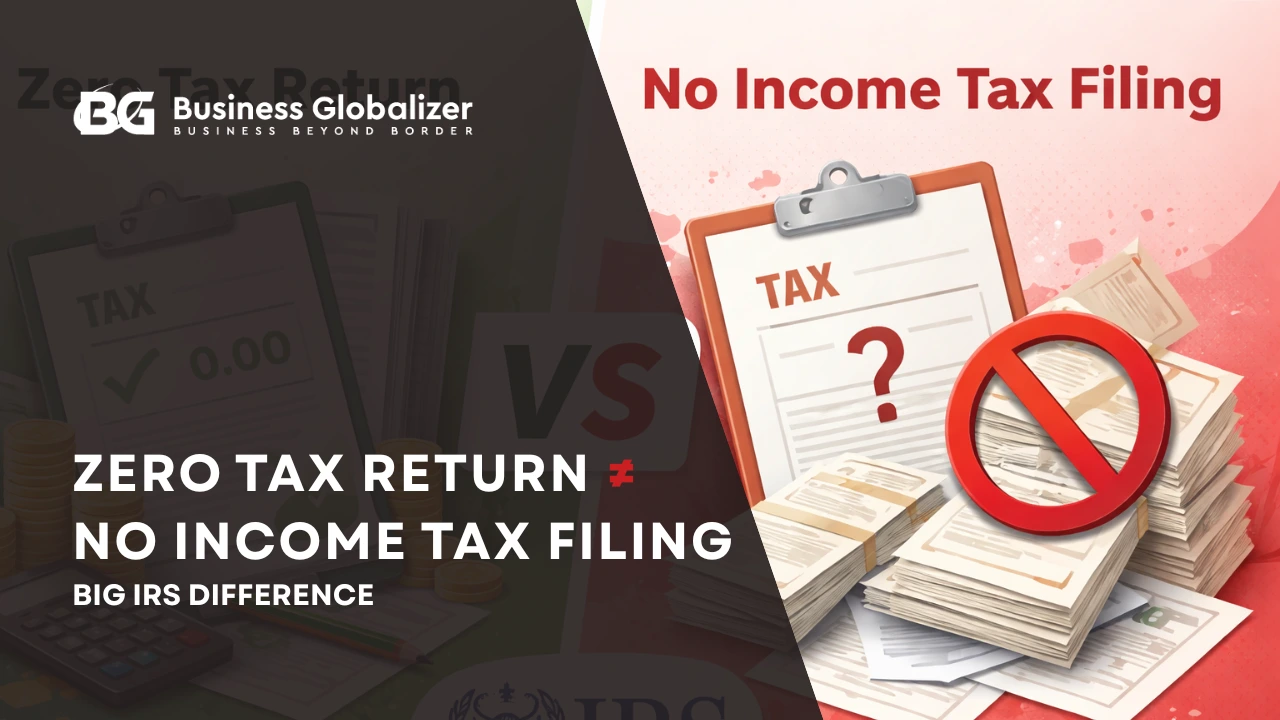
- A zero tax return means a return was filed and the final tax calculation legally came out to $0.
- No income tax filing usually means no income existed and, in many cases, no return is required at all.
- Zero tax is about the result of a calculation, while no income is about the absence of earnings.
- You can earn money and still end up with a zero tax return because deductions, credits, losses, or treaty benefits can wipe the bill down to zero.
- And having no income doesn’t automatically mean “no filing,” especially for businesses, nonresidents, or anyone claiming a refund.
- Filing when not required can create unnecessary IRS records, delays, or questions.
- Tax brackets matter only when a filing is required; they don’t decide whether you must file in the first place.
- Zero tax returns are directly tied to tax liability in the US, even when that liability lands at zero.
- Refunds come from withholding or refundable credits, not simply from having zero income.
- The safest approach is filing only when IRS rules actually require or justify it, not filing “just in case.”
You’d think this would be simple.
“I didn’t earn anything this year, so I don’t need to file.”
Or, “My tax came out to zero, so that’s the same thing, right?”
That assumption is where most people get tripped up.
The IRS treats earning nothing and owing nothing as two very different situations. One is about income. The other is about calculation. And confusing the two is how people end up filing when they shouldn’t, or skipping a return when they actually needed one.
This guide breaks down the Differences between Zero Tax Return and No Income Tax Filing in plain language. We’ll walk through what each one really means, when filing is required, when it’s not, and how these ideas connect to tax liability in the US, without legal mess-up or guesswork.
What People Usually Mean
Before we compare anything, let’s slow this down for a second.
When people talk about Zero Tax Return vs No Income Tax Filing, they’re usually trying to answer one of these questions:
- “Do I need to file if I made nothing?”
- “If my tax is zero, do I still file?”
- “Is zero income the same as zero tax?”
- “Will the IRS expect paperwork from me anyway?”
The short answer:
Sometimes yes, sometimes no.
And the difference depends on why the number is zero.
What Is a Zero Tax Return?
A zero tax return means a tax return was required or filed, and after the full calculation, the final tax due came out to $0. That does not automatically mean zero income.
A zero tax return can happen when:
- Income exists, but deductions or credits offset it
- Taxes were withheld and later refunded
- Business losses offset reported income
- Treaty positions reduce U.S. tax for nonresidents
- The calculation reaches zero after applying tax brackets correctly
The key thing to remember:
A zero tax return is about the result, not the income.
It still involves:
- A real IRS form (Form 1040 or 1040-NR)
- A real filing status
- A real explanation of why tax reached zero
This is why a zero tax return still counts as active compliance.
What Is No Income Tax Filing?
“No income tax filing” usually means you had no income, so you may not owe federal income tax for that year. But the part people miss is this: owing $0 and filing $0 are not the same thing.
For individuals, if you truly had no income and you don’t meet an IRS filing requirement, you may not need to file at all (though some still file to claim a refund or certain credits).
But if you have a U.S. company, “no income” turns into: no tax due, but filing is still required, because many business filings are about reporting and compliance, not just paying tax.
For example:
- Domestic corporations generally still have to file Form 1120, even when there’s no taxable income to report.
- And if you’re running a foreign-owned U.S. disregarded entity (single member LLC), you will still need to submit a pro forma Form 1120 with Form 5472 attached, even if you wouldn’t otherwise be filing an income tax return.
So the cleaner way to say it is:
No income doesn’t always mean “no filing.” It often just means “no payment.”
Zero Tax Return vs No Income Tax Filing
Let’s make this distinction clear, because mixing these two is how people end up filing the wrong thing, or skipping a filing they were still expected to send.
Zero Tax Return
A zero tax return means you did file, and after the full calculation, your final tax due comes out to $0.
That can happen when:
- You had income, but deductions/credits/treaty treatment/losses legally reduced the final tax to zero
- You had withholding and you’re filing to claim it back, even though the final tax is $0
- You’re filing because the IRS or your situation still expects a return (even with no payment)
So yes, this one is tied to tax liability in the US, because the liability was calculated, it just landed at zero.
No Income Tax Filing (Also Known as “Zero Income Tax Return”)
No income tax filing usually means you had no income, so you may assume there’s nothing to do. But the correct version is:
- No income often means no tax due
- Filing may still be required, depending on your status and what you’re connected to
This can still require a filing when, for example:
- You’re a business entity with an annual filing obligation (even with $0 activity)
- You’re a nonresident with reporting requirements tied to forms/status, not profits
- You need to file to claim a refund of withholding (even if income was effectively $0 after the return)
So this one is less about “calculation” and more about whether a filing requirement exists at all, and that answer depends on who you are (individual vs entity), residency, and the IRS rules tied to your situation.
Zero Tax Return vs. No Income Tax Filing
| Point | Zero Tax Return | No Income Tax Filing / Zero Income Tax Return |
| Did income exist? | Yes | No income (or effectively none) |
| Did you file a return? | Yes | depends on rules |
| What’s the IRS result? | Final tax due = $0 | Often tax due = $0, but filing may still be required |
| Why would you file? | Required filing, refund, record, compliance | Reporting requirement, refund reason, entity/nonresident obligations |
| Biggest misconception | “$0 tax means nothing to file” | “No income means no filing” (not always true) |
One is about the final math landing at zero.
The other is about having no income, but still needing to check whether the IRS expects a filing anyway.
When You Might Still File Even With No Income
This is usually the moment people stop and ask,
“If I had no income, can I still file, or even get a refund?”
Sometimes, yes, but only when there’s a real reason. You may still need to file, even with no income, if:
- Federal taxes were withheld earlier and you’re filing to claim that money back
- A refundable credit applies to your situation (limited, but possible)
- You’re listed as a spouse on a joint return where a filing is already required
- You’re a nonresident required to file Form 1040-NR for reporting purposes
- You’re a business owner or entity with an annual information filing obligation
- You need a filing record for immigration matters, loans, or compliance history
- You’re correcting, updating, or maintaining IRS records from prior years
The key rule is quite simple actually:
No income by itself doesn’t create a refund.
Refunds come from withholding or refundable credits, not from “zero” alone.
When You Should Not File at All
Knowing when not to file is just as important as knowing when to file.
You generally should not file if:
- You had no income and no IRS filing requirement applies to you
- You’re filing “just in case” without any legal or reporting reason
- You’re submitting blank or zeroed forms with no explanation or purpose
- You’re using the wrong residency, filing status, or dependency classification
Unnecessary filing can:
- Confuse IRS records
- Delay future filings
- Trigger questions that didn’t need to exist
Sometimes silence is the correct answer, but only when the rules clearly support it. So, be sure first. Know your case properly.
How Tax Brackets Fit Into This
Tax brackets don’t decide whether you file.
They decide how tax is calculated once a filing applies.
If you’re required to file:
- Income is placed into tax brackets
- Only the portions inside each bracket are taxed
- Deductions and credits apply before and after brackets
If no filing is required at all:
- Tax brackets never come into play
This is why tax brackets matter in zero tax returns, but usually don’t matter in no income tax filing situations.
How This Connects to Tax Liability in the US
Here’s the bridge most people miss:
- Zero tax return → tax liability exists, but the final amount equals $0
- No income tax filing → tax liability may never be triggered at all
Tax liability in the US is about what the IRS has the legal right to tax,
not what you assume based on income alone. Reducing taxes doesn’t mean avoiding filing. It means filing only when required, and applying the rules correctly so the final number actually makes sense.
Common Misconceptions That Cause Problems
Most tax mistakes don’t come from people trying to do anything shady. They come from logic that sounds right, until the IRS rules step in.
Here are the misconceptions that cause the most trouble:
- “Zero income means zero paperwork.”
Not always. In many real-world cases, you may still need to file for reporting, compliance history, refunds, or because a business/entity filing requirement exists even in a quiet year.
- “Zero tax means no reporting.”
A zero tax return is still a real return. The IRS still expects the form to be correct, complete, and consistent, even if the final tax is $0.
- “Filing is always safer.”
Sometimes filing when you’re not required creates unnecessary records, delays, or questions. The safer move is filing when it’s required or clearly beneficial, not filing automatically.
- “Nonresidents follow the same rules as residents.”
They don’t. Residency classification changes which forms apply, what income counts, and how tax is calculated, and filing the wrong way can cause problems even if your income is zero.
In simple words, the IRS doesn’t reward assumptions. It responds to status, thresholds, source of income, and the right form for the right reason.
How Business Globalizer Helps You File Only When It Makes Sense
Business Globalizer helps founders and nonresidents file U.S. taxes only when it actually makes sense. Cleanly, correctly, and without future cleanup.
That means:
- Clarifying whether filing is required at all
- Identifying zero tax vs zero income correctly
- Applying treaty positions and deductions properly
- Avoiding unnecessary filings that create problems later
- Helping you request a filing extension when you genuinely need more time, so deadlines don’t turn into stress
- Keeping you compliant with IRS rules through accurate reporting and proper form selection
- If an honest mistake leads to a notice or penalty, helping you respond properly, so you can correct the issue and, where allowed, request penalty relief with the right explanation and paperwork
Unsure, where do you stand? Book a free tax consultancy with our experts.
Final Words
The difference between a Zero Tax Return vs No Income Tax Filing isn’t technical, it’s conceptual.
One means you went through the system and landed at zero.
The other means the system didn’t need you this year.
Once you understand that distinction, filing stops feeling risky or confusing. You stop guessing. You stop copying advice that doesn’t fit your situation. And you deal with the IRS on your terms, not out of fear.
That clarity is the real win.
FAQs on Zero Tax Return vs No Income Tax Filing
Is a zero tax return the same as no income tax filing?
Answer: No. A zero tax return means tax was calculated and ended at $0. No income tax filing usually means no return is required because no income existed.
Can I have income and still file a zero tax return?
Answer: Yes. Deductions, credits, losses, or treaty benefits can legally reduce tax to zero even when income exists.
If I had no income, do I need to file?
Answer: Only if IRS rules require it. Many people with no income have no filing obligation at all.
Can the IRS reject a zero tax return?
Answer: Yes, if the filing status, residency, or explanation doesn’t line up logically.
Does zero income mean zero tax liability in the US?
Answer: Often yes, but tax liability depends on whether a filing requirement is triggered, not income alone.
Is there a special form for zero tax or zero income filing?
Answer: No. Standard IRS forms are used. The difference is in the numbers and the reason for filing.
Can nonresidents file zero tax returns?
Answer: Yes, in specific situations, especially when reporting is required even if tax is reduced to zero.
Should I file “just in case”?
Answer: Not always. Filing without a legal reason can create more issues than it prevents.