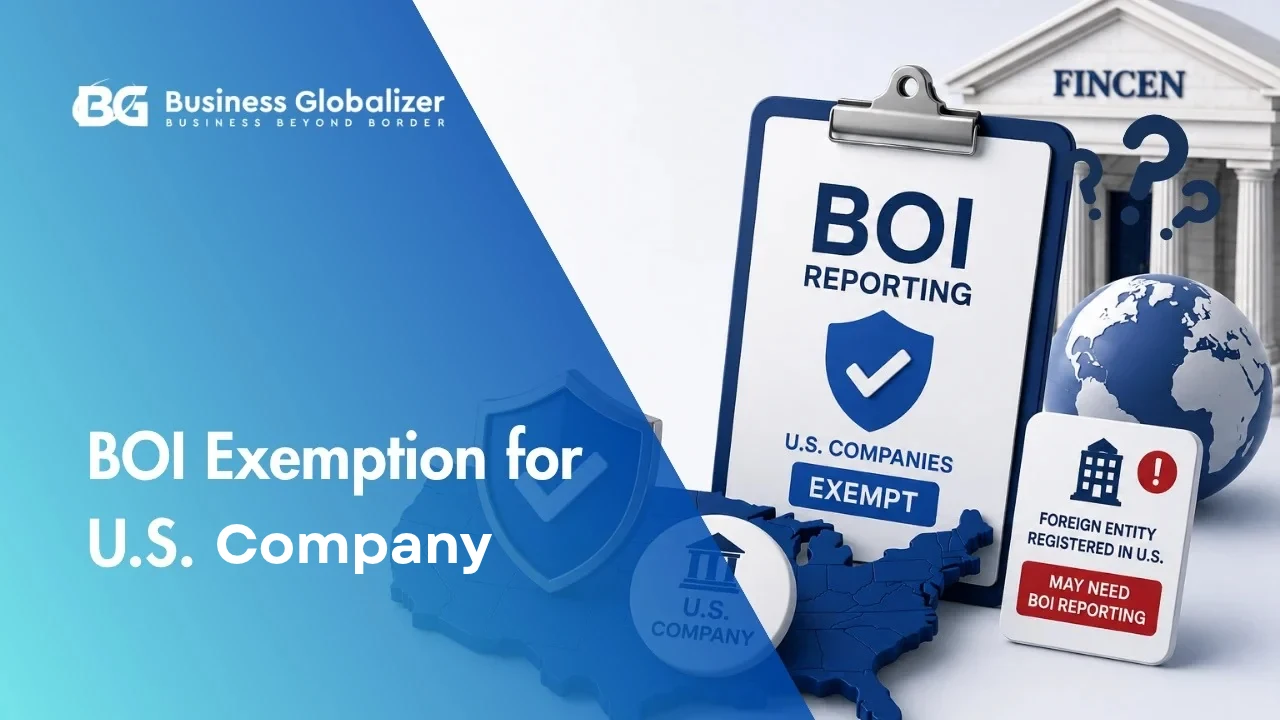
Quick Answer: No. U.S.-created companies are generally exempt from FinCEN beneficial ownership information reporting, though some foreign-formed entities registered in the U.S. may still need to file
If you formed a U.S. LLC a couple of years ago, you probably remember BOI appearing everywhere: file this report, identify your beneficial owners, watch the deadline, don’t risk penalties.
Then the rules changed. And this time, it wasn’t a small deadline extension.
FinCEN dramatically narrowed BOI reporting, removing U.S.-created companies and U.S. persons from the federal reporting requirement. So if you’re still reading an old checklist saying every newly formed U.S. LLC must send a beneficial ownership report to FinCEN, that checklist needs an update.
But don’t stop at “BOI is cancelled.”
That version is too broad. The requirement still matters for a much smaller category of foreign entities.
Here’s where things stand.
What Changed With BOI Reporting?
The Corporate Transparency Act (CTA) originally created a broad beneficial ownership reporting system aimed at requiring many corporations, LLCs, and similar entities to disclose information about the individuals who ultimately own or control them.
FinCEN’s March 2025 interim final rule changed that framework substantially.
It revised the regulatory definition of a “reporting company” so that the term generally covers only an entity that:
- Was formed under the law of a foreign country, and
- Registered to do business in a U.S. state or Tribal jurisdiction by filing with a secretary of state or similar office.
At the same time, entities created in the United States—previously called domestic reporting companies—were exempted from the federal FinCEN BOI reporting requirement.
That’s the part most U.S. founders need to know.
Do U.S. LLCs and Corporations Need to File BOI in 2026?
Under the current FinCEN rule, U.S.-created entities do not have to file BOI reports with FinCEN.
That exemption covers entities created under U.S. law that previously fell within the domestic reporting company definition.
For example, if you formed:
- A Delaware LLC
- A Wyoming LLC
- A Florida LLC
- A Texas Corporation
- Another entity created by filing under the law of a U.S. state or Tribal jurisdiction
The entity is not a reporting company merely because it would have fallen within the old domestic reporting framework.
FinCEN’s current guidance states that these domestic entities do not need to submit an initial beneficial ownership information report, nor do they need to update or correct BOI that they previously submitted.
That’s a major change from the original CTA (Corporate Transparency Act) rollout.
What If a U.S. Company Already Filed Its BOI Report?
This is another common question. If a domestic U.S. entity filed a BOI before the rules changed, FinCEN says domestic entities are exempt from having to update or correct previously filed BOI reports.
So, for example, if your LLC previously reported a change in beneficial ownership and another ownership change happens now, the old federal BOI update requirement does not continue simply because you filed a report in the past.
There is, however, a separate question surrounding previously collected BOI data and how those records will ultimately be handled. That issue has been part of FinCEN’s final-rule discussions, so businesses should distinguish future filing obligations from what happens to information already held by FinCEN.
BOI Reporting Is Not Completely Gone
Here’s the catch: A business can operate in the United States without having been created in the United States.
Suppose a company was incorporated in the UK, Singapore, Canada, Bangladesh, or another country and later registered with a U.S. state to conduct business there. That is a very different situation from forming a new Delaware or Wyoming LLC.
Under FinCEN’s narrowed definition, such an entity may be a foreign reporting company if it:
- Was formed under foreign law;
- Registered to do business in a U.S. state or Tribal jurisdiction through the required filing; and
- Does not qualify for another CTA exemption.
Those qualifying foreign entities remain subject to BOI filing requirements. So “I do business in America” is not enough to answer the BOI question.
Ask instead: Where was the entity legally created?
That one distinction changes the answer.
What Must a Foreign Reporting Company Report?
A foreign entity that still qualifies as a reporting company generally reports information about the company and its reportable beneficial owners.
FinCEN’s current guidance lists company information such as:
- Legal name
- Trade or DBA names
- Relevant U.S. business address
- Foreign jurisdiction of formation
- U.S. jurisdiction where it first registered
- EIN or other qualifying taxpayer identification information
There is another major change here: qualifying reporting companies generally do not report beneficial ownership information for U.S. persons, and U.S. persons are exempt from providing their BOI for such companies.
Reporting companies also do not need to report BOI for U.S. person company applicants. In addition, U.S. persons who previously obtained a FinCEN ID are no longer required to update or correct the information they previously submitted to FinCEN.
The remaining reporting requirement therefore focuses much more narrowly on qualifying foreign entities and reportable non-U.S. beneficial owners.
What Is the BOI Report Deadline Now?
For a foreign entity that becomes a reporting company on or after March 26, 2025, the general rule is 30 calendar days.
The clock starts from the earlier of:
- The date the entity receives actual notice that its U.S. registration is effective, or
- The date a secretary of state or similar office first publicly announces that registration.
Foreign reporting companies already registered before March 26, 2025 were given until April 25, 2025 under the revised timetable. For a newly registering foreign company today, therefore, don’t rely on the old BOI deadlines you may still find in older articles.
Check the current FinCEN rule against the company’s actual registration date.
Does a Foreign Owner of a U.S. LLC Have to File BOI?
This is where the wording matters enormously. Imagine a Bangladeshi entrepreneur owns 100% of a Wyoming LLC. The owner is foreign, but the LLC was created in the United States.
Those are two different facts.
Under the current rule, the Wyoming LLC is a U.S.-created entity and is therefore exempt from FinCEN BOI reporting. The owner’s non-U.S. citizenship does not convert that domestic LLC into a foreign reporting company.
Now change the example. The entrepreneur owns a Bangladeshi company formed under Bangladeshi law, and that company later registers to do business in a U.S. state.
That entity was created abroad. It may therefore fall within the current foreign reporting company definition if the other requirements are satisfied and no exemption applies.
That’s why a foreign-owned U.S. company and a foreign company registered in the U.S. should never be treated as interchangeable terms.
BOI Exemption Does Not Cancel Other Compliance
This update removes a major federal reporting obligation for U.S.-created companies.
It does not mean the company has nothing else to file.
Depending on the entity and its circumstances, obligations may still include:
- Federal tax returns
- State tax or franchise filings
- Annual or periodic state reports
- Registered agent requirements
- Business licences
- Foreign-owner tax information reporting
- Other federal, state, or industry-specific compliance
For example, a foreign-owned U.S. disregarded entity may have IRS information-reporting obligations that are completely separate from FinCEN’s BOI reporting exemption.
BOI and tax compliance were never the same filing. Removing one does not automatically remove the other.
What Should Business Owners Do Now?
For most U.S.-created LLCs and corporations, there is no new FinCEN BOI report to rush out and file.
But there are three sensible checks worth making:
- Confirm whether the entity was legally created in the United States or abroad.
- If it was formed abroad, check whether it registered to do business in a U.S. jurisdiction and whether another exemption applies.
- Ignore old BOI articles, emails, or compliance calendars that still treat every U.S. LLC as a reporting company.
FinCEN also warns businesses about BOI-related scams. Filing directly with FinCEN carries no government filing fee, and FinCEN has warned about fraudulent forms, payment requests, suspicious links, and fake government correspondence.
Where Business Globalizer Comes In
For entrepreneurs dealing with U.S. compliance, Business Globalizer can help make things easier. We can support you with U.S. company setup, federal and state tax filing, registered agent services, and ongoing compliance filings. We also help with closing a company, bringing it back if needed, and offer custom business advice, so you can focus on growing your business while we handle the paperwork.
Before We Call It a Day
For U.S. founders, the BOI story has become much simpler, but the headline needs one important asterisk. U.S.-created companies are exempt. Certain foreign-created companies registered in the United States are not.
That distinction matters far more than the nationality of the owner.
So if someone tells you in 2026 that “every U.S. LLC must file BOI,” they’re working from an outdated rulebook. And if someone tells you “BOI reporting is completely dead,” they’re skipping the foreign-company side of the story.
Check where the entity was created, check how it entered the U.S. market, and then apply the current FinCEN BOI reporting rules to that company. Not to an old checklist.
Key Insights
- Companies created in the United States are exempt from federal BOI reporting requirements to FinCEN.
- This includes entities previously classified as domestic reporting companies, such as U.S.-created LLCs and corporations.
- U.S. persons do not need to provide BOI to reporting companies, and reporting companies do not need to report U.S. person beneficial owners or company applicants.
- The rule does not mean that BOI reporting has disappeared for every business operating in the United States.
- Certain entities formed under foreign law and registered to do business in a U.S. state or Tribal jurisdiction can still qualify as foreign reporting companies.
- U.S. persons with a FinCEN ID are no longer required to update or correct information they previously submitted to FinCEN.
- Businesses should check where the entity was legally created, not simply where its owners live, before deciding whether a BOI filing is required.
FAQs of BOI Reporting
Do LLCs still need to file BOI reports in 2026?
Answer: A U.S.-created LLC is currently exempt from federal BOI reporting to FinCEN. Certain foreign-created entities registered to do business in the United States may still qualify as reporting companies.
Is BOI reporting cancelled?
Answer: For domestic U.S.-created entities, the federal reporting requirement has been removed under the current rule. But BOI reporting requirements still apply to certain qualifying foreign reporting companies, so saying BOI has been cancelled for everyone would be inaccurate.
Does a foreign-owned U.S. LLC need to file BOI?
Answer: Not merely because its owner lives outside the United States. If the LLC itself was created under U.S. law, it falls within the domestic-entity exemption under the current FinCEN rule.
Who still has to file a BOI report?
Answer: Generally, an entity formed under foreign law that registers to do business in a U.S. state or Tribal jurisdiction may qualify as a foreign reporting company, unless another CTA exemption applies.
What is the current BOI report deadline for a new foreign reporting company?
Answer: A qualifying foreign entity registered on or after March 26, 2025 generally has 30 calendar days from the relevant notice or public registration date to submit its initial report.
Do domestic companies need to update BOI reports they filed earlier?
Answer: No. FinCEN’s current guidance says U.S.-created domestic entities are exempt from filing initial BOI reports and from updating or correcting BOI reports previously submitted.