 Quick Answer: Full Accounts are the most comprehensive form of annual accounts prepared by UK companies. They provide detailed financial information and are generally required when a company does not qualify for a simplified reporting regime .
It usually starts with a simple question…
Your accountant asks whether the company qualifies for small company accounts, or mentions micro-entity reporting, often soon after UK company formation, when founders are learning the compliance requirements of forming UK companies. Then someone says, “You’ll probably need full accounts.”
At that point, most founders think: “What actually are Full Accounts, and why are they different?” The answer is simpler than it sounds.
Full Accounts are the most detailed version of a company’s annual accounts. They provide a fuller financial picture than simplified reporting options and help meet legal reporting requirements for larger or non-qualifying companies.
Let’s break it down simply.
What Are Full Accounts?
Think of Full Accounts as the complete version of a company’s annual financial report.
Rather than providing only the minimum information required for simplified reporting, Full Accounts present a broader picture of the company’s financial performance, position, and activities during the accounting period.
Most companies prepare annual accounts, but the amount of information included depends on the reporting framework that applies to them, as well as the different types of limited company accounts available.
If a company does not qualify for simplified reporting, preparing Full Accounts is generally the appropriate route.
Who Needs to Prepare Full Accounts?
Not every company follows the same reporting rules. Many smaller businesses qualify for simplified reporting options, such as small company accounts or Micro Entity Accounts.
However, companies that do not meet those eligibility requirements will generally prepare Full Accounts. The exact reporting framework depends on factors such as:
- Company size
- Financial thresholds
- Legal eligibility
- Applicable accounting standards
Rather than choosing the reporting option yourself, the law determines which framework your company can use.
Full Accounts Thresholds: When Simplified Reporting Does Not Apply
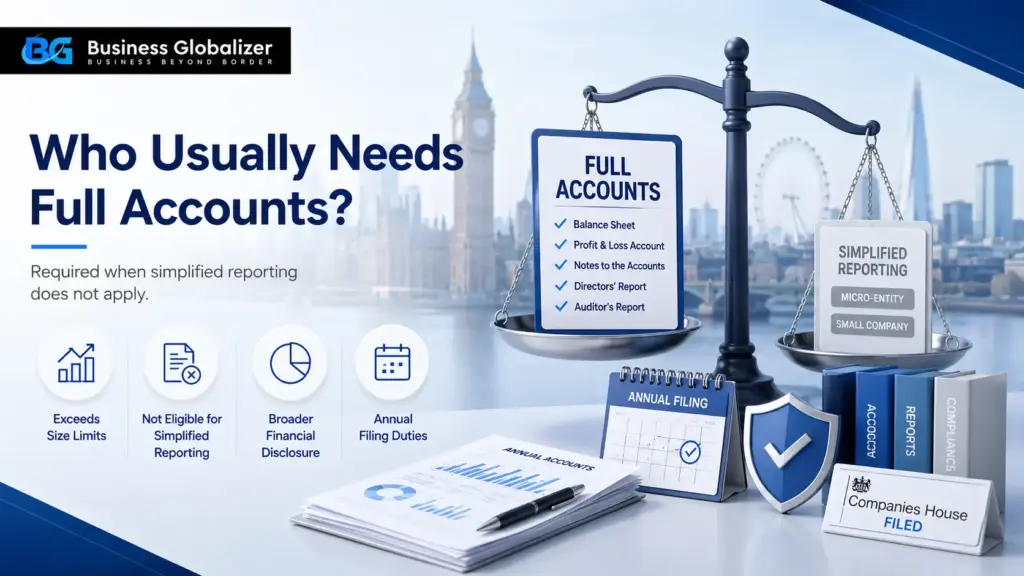
Full Accounts usually apply when a company does not qualify for simplified reporting options such as micro-entity accounts or small company accounts.
For the current Companies House size criteria, a company generally qualifies by meeting at least two of the three limits in the relevant category:
| Company Category | Turnover | Balance Sheet Total | Employees |
| Micro-entity | Not more than £1 million | Not more than £500,000 | Not more than 10 |
| Small company | Not more than £15 million | Not more than £7.5 million | Not more than 50 |
If your company exceeds the small company limits, or does not qualify for simplified reporting for another reason, Full Accounts will usually be the route.
Abridged accounts are different. They belonged to the older reporting framework and are no longer the standard option for current filings, so directors should check the present Companies House filing rules rather than relying on older guidance.
What Do Full Accounts Include?
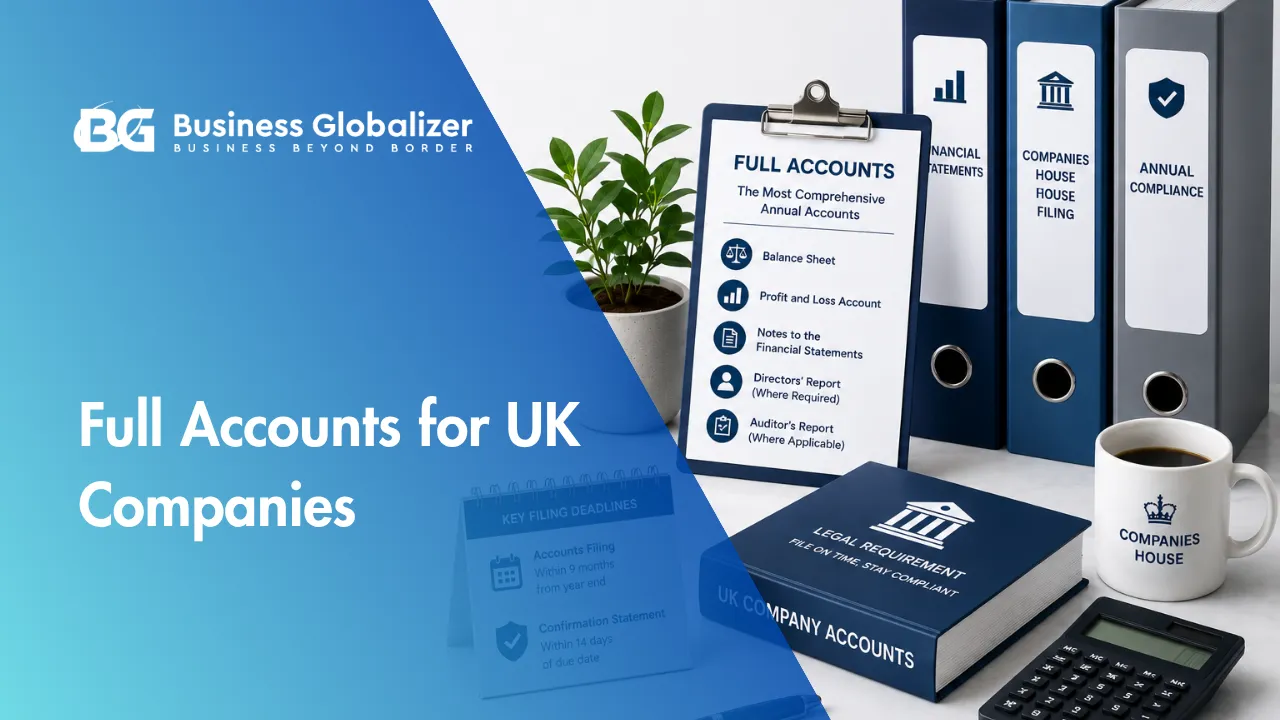
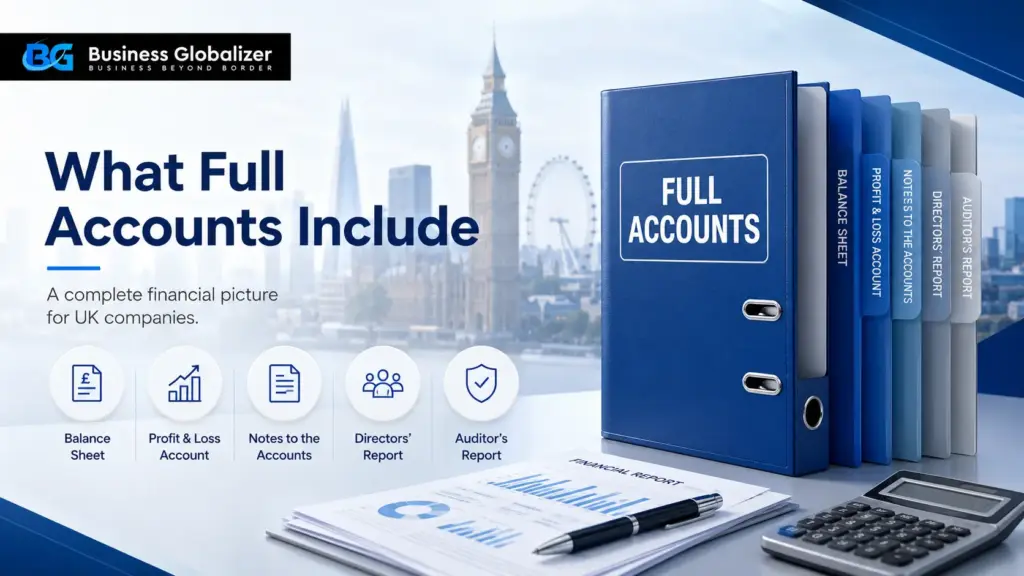
One reason Full Accounts are considered more comprehensive is that they contain considerably more financial information than simplified accounts. Although the exact contents can vary depending on the company’s circumstances, Full Accounts commonly include:
- A Balance Sheet
- A Profit and Loss Account
- Notes to the Financial Statements
- Directors’ Report (where required)
- Auditor’s Report (where applicable)
Together, these documents provide a more complete view of the company’s financial position and year-end performance.
Preparing Full Accounts requires accurate bookkeeping throughout the year, which is why many directors work closely with an accountant long before the filing deadline arrives.
Full Accounts vs Small Company Accounts
This is probably the comparison founders ask about most often.
| Full Accounts | Small Company Accounts |
| Contain more detailed financial information. | Include simplified reporting for qualifying companies. |
| Usually prepared by companies that do not qualify for simplified reporting. | Available only if the company meets the relevant eligibility requirements. |
| Generally involves broader disclosures. | Usually require fewer disclosures than Full Accounts. |
| Suitable for companies outside the small company reporting framework. | Designed to reduce reporting requirements for qualifying small businesses. |
Neither option is better than the other. The correct choice depends entirely on which reporting framework your company qualifies to use.
Full Accounts vs Filleted Accounts
These two terms are sometimes confused, but they describe different things.
- Full Accounts refer to the complete financial statements prepared by a company.
- Filleted Accounts, on the other hand, relate to what an eligible company files at Companies House after removing certain information from the version placed on the public register.
In other words, Full Accounts describe the scope of the financial reporting, while filleted accounts describe how certain eligible companies may present information when filing.
Companies House Filing Requirements for Full Accounts
Preparing Full Accounts is only one part of the process. Directors must also make sure they are filed correctly and on time.
Most companies preparing Full Accounts will need to:
- Prepare annual accounts for each financial year.
- File the appropriate accounts with Companies House by the statutory deadline.
- Keep accounting records that support the figures in the accounts.
- File a Confirmation Statement separately to confirm the company’s information is up to date.
- Meet any Corporation Tax reporting requirements with HMRC where applicable.
Companies House and HMRC perform different roles, so filing one does not automatically satisfy the other. Keeping track of both obligations is an important part of staying compliant throughout the year.
Companies House Penalties for Non-Compliance
Late filing is only one compliance risk.
Late filing isn’t the only risk to keep in mind. Companies House has significantly increased its enforcement powers to deal with businesses that don’t meet their legal duties. Depending on the situation, this could lead to automatic late filing penalties, new financial fines for broader offences, or even the prosecution of directors and actions that could damage the company’s legal standing.
The bottom line is simple: it’s much easier and cheaper to file your Full Accounts accurately and on time than it is to fix expensive compliance problems after the fact.
Common Mistakes Directors Make & How to Avoid Them
The reporting rules themselves are not usually what causes problems. More often, it is small misunderstandings that create unnecessary work later. Some of the most common mistakes include:
- Assuming every company must prepare the same type of annual accounts.
- Believing Full Accounts are optional when the company does not qualify for simplified reporting.
- Missing filing deadlines because bookkeeping was left until the last minute.
- Confusing Companies House filing requirements with HMRC tax obligations.
- Relying on outdated guidance without checking the current reporting framework.
A little preparation throughout the year usually prevents these issues from becoming costly problems.
Business Globalizer: Helping You Stay Compliant
Preparing Full Accounts is not just about completing paperwork. It is about making sure your company meets its legal reporting obligations accurately and on time.
At Business Globalizer, we help UK companies with annual accounts, Companies House filings, Confirmation Statements, Corporation Tax support, registered office services, company dissolution, restoration, and ongoing compliance guidance.
Whether you’re filing Full Accounts for the first time or reviewing your reporting obligations as your business grows, our team helps you understand what applies to your company and keeps your filings on track.
Closing Thoughts
At first glance, Full Accounts might seem a bit intimidating, but they are actually quite manageable.
Essentially, they are the standard requirement for any company that doesn’t meet the criteria for simpler reporting categories. Once you understand when they apply and what needs to be included, the process becomes much more intuitive. It really just comes down to keeping accurate records throughout the year and ensuring everything is submitted on time.
By making compliance a part of your regular business routine, the whole reporting cycle becomes far less stressful.
Key Insights
- Full Accounts provide the most detailed financial picture of a company’s performance and position.
- Not every UK company needs to prepare Full Accounts; eligibility depends on the company’s size and reporting framework.
- Full Accounts generally contain more information than small company or micro-entity accounts.
- Companies House and HMRC may require different information for different purposes.
- Accurate record-keeping throughout the year makes preparing Full Accounts much easier.
- Filing the correct accounts on time helps avoid penalties and wider compliance issues.
- Directors remain responsible for ensuring the accounts are complete and accurate.
- Understanding which reporting framework applies is just as important as preparing the accounts themselves.
FAQ’s on Full accounts Guides for UK Companies
What are Full Accounts?
Answer: Full Accounts are the most detailed form of annual accounts prepared by UK companies. They provide a comprehensive picture of the company’s financial position and are generally required where simplified reporting is not available.
Who needs to prepare Full Accounts?
Answer: Companies that do not qualify for simplified reporting, such as small company or micro-entity accounts, will generally prepare Full Accounts in line with the applicable UK reporting framework.
What do Full Accounts include?
Answer: Full Accounts commonly include a balance sheet, profit and loss account, notes to the financial statements, and, where required, a directors’ report and an auditor’s report.
Are Full Accounts filed with Companies House?
Answer: Yes. Companies that prepare Full Accounts generally file them with Companies House as part of their annual filing obligations, while also meeting any separate reporting requirements with HMRC.
Are Full Accounts the same as Small Company Accounts?
Answer: No. Full Accounts contain more detailed financial information, while Small Company Accounts offer simplified reporting for companies that meet the relevant legal eligibility criteria.
Are Full Accounts the same as Filleted Accounts?
Answer: No. Full Accounts refer to the complete financial statements. Filleted accounts describe the version of eligible accounts filed at Companies House with certain information removed from the public record.
What happens if Full Accounts are filed late?
Answer: Late filing usually results in automatic Companies House penalties. Continued non-compliance can also lead to wider enforcement action, so it is important to prepare and file accounts before the statutory deadline.
Can an accountant prepare Full Accounts for me?
Answer: Yes. Many companies choose to work with an accountant to prepare Full Accounts, ensure the correct reporting framework is followed, and help meet Companies House and HMRC filing requirements.