
Quick Answer: UK Dormant Company Accounts are simplified annual accounts for companies that had no significant accounting transactions during the financial year. Even if the company stayed dormant, Companies House filing obligations usually still apply.
A funny thing happens after many people register a UK company.
They spend weeks choosing a name, setting things up, and imagining future plans. Then life gets busy. The business never launches, the project gets delayed, or the company is simply kept aside for later.
Months pass. Then Companies House sends a reminder. And suddenly the question becomes: “Wait… I haven’t traded at all. Why do I still need to file something?”
This is where understanding UK dormant company accounts becomes important.
A dormant company may be inactive, but it is not off the radar. There are still rules to follow, deadlines to meet, and filings that need your attention. The good news? Once you understand how dormant accounts work, the whole process feels much less intimidating than most founders expect.
What Is a Dormant Company?
Before we get into the accounts, let’s first clear up what a dormant company actually means. For Companies House, a UK company is generally dormant if it had no significant accounting transactions during the financial year.
In simple terms:
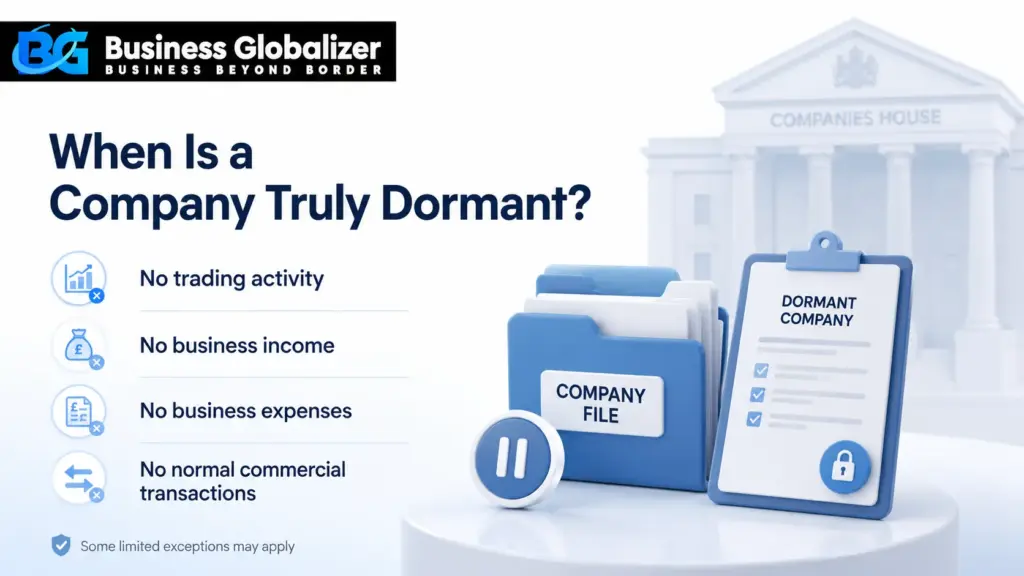
- No trading activity
- No business income
- No business expenses
- No normal commercial transactions
The company still exists legally, but it is not actively doing business.
Many companies become dormant because:
- The founder is saving the company name for future use
- A business launch has been delayed
- A project has been paused
- The company owns no active business operations
- Directors are restructuring before restarting
Dormant does not mean closed. It simply means inactive.
What Are Dormant Accounts?
Dormant accounts are simplified annual accounts that eligible dormant companies submit to Companies House. They are also one of the types of limited company accounts used when a company has had no significant accounting transactions during the year.
Because the company has had no significant accounting transactions, the filing requirements are usually much lighter than those of an active trading business.
The purpose is quite simple: to confirm that the company stayed dormant for the relevant financial year. That way, their records stay accurate, and genuinely inactive businesses don’t have to deal with unnecessary reporting.
What Does Accounts for a Dormant Company Mean?
It simply means the annual accounts filed for a company that qualifies as dormant. Unlike full trading accounts, dormant accounts generally contain very limited financial information because there has been little or no reportable activity.
Think of it this way: A trading company explains what happened. A dormant company confirms that almost nothing happened.
That’s the basic meaning of dormant company accounts in practical terms.
When Is a Company Truly Dormant?
This is where many founders get caught out. A company is not dormant simply because it made no profit. A company can still lose money, make no sales, and yet be active. For Companies House purposes, the key issue is whether there were significant accounting transactions. Generally, routine business transactions can break the dormant status.
However, certain transactions are commonly allowed without affecting dormancy, including:
- Payment for shares taken by subscribers during incorporation
- Fees paid to Companies House for filing purposes
- Civil penalties for late filing of accounts
This is why understanding the rules matters. A company can appear inactive while technically no longer qualifying as dormant.
Issued Share Capital Dormant Company: The Exception Many Founders Miss
One area that causes confusion is the issued share capital dormant company rule. Most UK companies issue shares when they are formed. Naturally, directors often ask: If shares were issued, is the company still dormant? In many cases, yes.
The original payment for subscriber shares at incorporation is generally treated as an allowed transaction and does not automatically prevent dormant status.
This is one reason newly formed companies can often remain dormant immediately after incorporation. However, additional share transactions later on may need careful consideration. When in doubt, it is worth checking the specific circumstances before assuming dormant status still applies.
Dormant Company Accounts Example
Sometimes an example makes everything clearer. So, here’s one to go through:
Imagine Sarah forms a company in January. The company:
- Opens no business bank account
- Makes no sales
- Pays no suppliers
- Receives no income
- Hires no staff
The only activity is the original issue of subscriber shares during incorporation. At year-end, Sarah’s company may qualify to file dormant accounts because there have been no significant accounting transactions.
That is a typical dormant company accounts example.
How to File Dormant Company Accounts
The good news? For most dormant companies, filing is relatively straightforward.
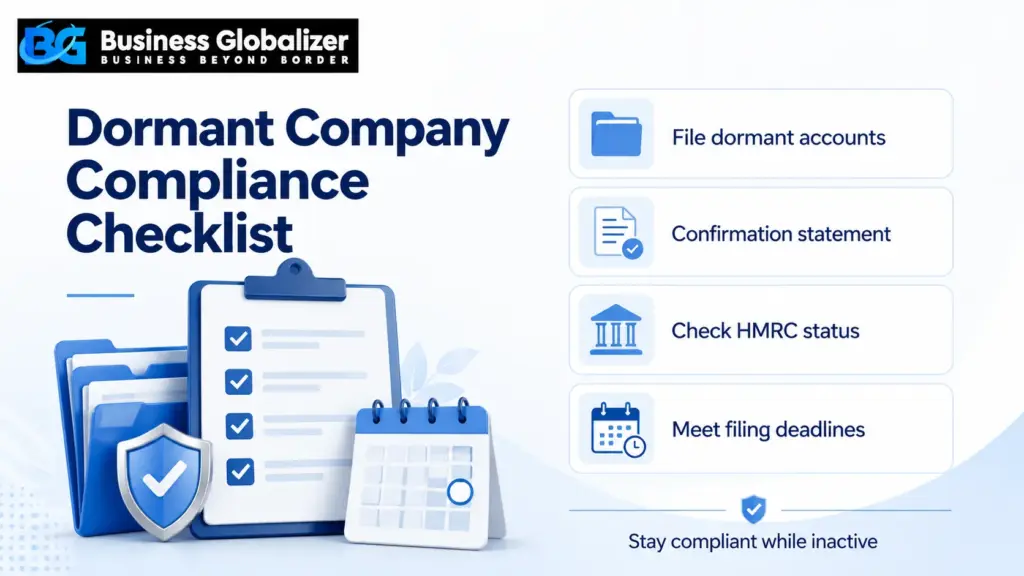
The usual process involves:
- Confirming the company qualifies as dormant
- Preparing dormant accounts
- Filing the accounts with Companies House before the deadline
- Keeping company records up to date
Many dormant companies can file electronically, though the available filing route may depend on the company’s situation and Companies House rules at the time. The real point is simple: don’t leave it until the last minute. Missed deadlines can get expensive faster than most founders expect.
UK Dormant Company Accounts vs Confirmation Statement
This is one of the most common misunderstandings. Many founders think: “I filed dormant accounts, so everything is done.” Not necessarily.
Dormant Company Accounts
Dormant company accounts tell Companies House that the company had no significant accounting transactions during the financial year.
Confirmation Statement
A Confirmation Statement is different. It confirms that important company information remains accurate, including:
- Directors
- Shareholders
- PSC information
- Registered office details
So yes, a company can be dormant and still have both filings due. Dormancy reduces some reporting requirements, but it does not eliminate all compliance responsibilities.
Dormant for Companies House Doesn’t Always Mean Dormant for HMRC
Here’s a detail many directors discover later than they should. A company can be considered dormant by Companies House but not necessarily dormant for HMRC, depending on its activities and tax position.
For example, if HMRC believes the company has become active, tax-related duties may still apply even if the company is filing dormant accounts with Companies House, and missed duties can quickly turn into penalties.
So don’t rely on one definition for both authorities. If the company’s position is unclear, check the Companies House side and the HMRC side before filing.
Filing Deadlines and Penalties
Dormant companies are not exempt from filing deadlines. If dormant accounts are submitted late, Companies House can impose penalties. The penalty generally increases as the delay becomes longer. Many directors ignore reminders because they think, “Nothing really happened this year.”
Unfortunately, Companies House still expects filings even when nothing has happened. The safest approach is simple: Mark deadlines early and deal with them well before they become urgent.
Common Mistakes Founders Make
Most dormant-company problems are surprisingly avoidable. Here are the mistakes that show up repeatedly:
- Assuming dormant means “nothing to file”
- Missing annual filing deadlines
- Forgetting the Confirmation Statement
- Accidentally carrying out transactions that affect dormancy
- Ignoring Companies House correspondence
- Confusing dormant status with company dissolution
- Failing to maintain basic company records
The biggest mistake?
Filing dormant accounts without first checking whether the company truly stayed dormant for that period.
Expert Tips for Dormant Companies
If your company is dormant, keep things simple. A few practical habits help:
- Keep Companies House reminders organised
- Review filing deadlines regularly
- Avoid unnecessary transactions
- Maintain accurate director and shareholder information
- Keep records of any permitted transactions
- Review whether dormancy still makes sense each year
Sometimes restarting a company is the right move. Sometimes, closing it is the cleaner option. The important thing is making an active decision rather than forgetting the company exists.
Business Globalizer: Helping Companies Stay Compliant
Dormant companies may have fewer obligations than trading, or you can say active companies, but compliance still matters.
At Business Globalizer, we help founders with UK company formation, dormant company filings, confirmation statements, annual accounts, UK Taxation, registered office services, company restoration, dissolution support, and ongoing compliance guidance.
Because even a quiet (in this case, dormant) company can become a noisy problem when filings are missed.
Closing Thoughts
Most dormant companies start with a simple plan. A name is reserved. A project is paused. A future idea is kept open for later. Then time passes, and the company is still sitting there on the register.
That is why it really matters to understand UK dormant company accounts. Dormancy does not cancel your company’s legal duties; it only changes the type of filing you usually need to make.
The good news is that dormant accounts are normally manageable once you know the rules. Keep the records tidy, watch the dates, and treat the company as a legal entity even while the business itself is resting.
Because when you finally decide to restart, close, or restructure, clean filings make everything easier.
Key Insights
- Even when a company is not trading, it can still have Companies House filings to deal with.
- Dormant accounts are usually lighter than full accounts because there is no real trading activity to report.
- Many founders wrongly assume “no activity” means “nothing to file.”
- Most dormant companies still need to file annual accounts and a Confirmation Statement.
- Companies House and HMRC do not always view dormancy in exactly the same way.
- Not every transaction breaks dormant status; some limited exceptions are allowed.
- Issued share capital dormant company rules often confuse first-time directors.
- Filing dormant accounts is usually simple when the company has stayed genuinely inactive and records are clean.
- Dormant status can be useful when protecting a company name or pausing a business temporarily.
- Good compliance habits matter just as much for dormant companies as active ones.
FAQ’s on UK Dormant Company Accounts
What are dormant accounts?
Answer: Dormant accounts are the simpler accounts a company files when it has had no significant accounting transactions during the year. They basically tell Companies House, “This company still exists, but it has not been actively trading.”
What does accounts for a dormant company mean?
Answer: It means the company is filing annual accounts as a dormant business rather than as an active trading company. Since there has been no real business activity, the accounts are usually lighter and more straightforward.
How to file dormant company accounts with Companies House?
Answer: First, make sure the company actually qualifies as dormant. Then prepare the dormant accounts and submit them to Companies House before the deadline, usually through the online filing service if your company is eligible.
Does a dormant company still need a Confirmation Statement?
Answer: Yes, in most cases. A dormant company may have simpler accounts, but it still usually needs to confirm key company details through the annual Confirmation Statement.
Can a dormant company have issued share capital?
Answer: Yes. An issued share capital by a dormant company can often remain dormant because the initial subscriber shares issued during incorporation are generally treated as an allowed transaction.
What happens if I fail to file dormant company accounts?
Answer: Late filing can lead to Companies House penalties, and the longer the delay, the more expensive it can become. It may also create compliance issues if the company is left unattended for too long.
Can a dormant company have a bank account?
Answer: Simply having a bank account does not automatically make a company active. However, transactions through the account may affect dormant status depending on the circumstances.
Is a dormant company the same as a dissolved company?
Answer: No. A dormant company is still alive on the Companies House register. A dissolved company has been removed from the register and no longer exists as a legal company.
Can a company be dormant for Companies House but not HMRC?
Answer: Yes, that can happen. Companies House may accept the company as dormant for accounts filing, while HMRC may still look at its Corporation Tax position differently depending on what activity has taken place.