 Quick Answer: Limited company accounts are the yearly financial records that UK limited companies put together to show how the business is doing financially and to meet legal reporting requirements. The type of accounts you need to file depends on your company’s size, activity, and eligibility.
There is a moment almost every founder experiences, often not long after forming a UK company. You receive an email from Companies House, your accountant asks about your year-end accounts, or someone casually mentions “micro-entity accounts.”
Suddenly, what felt like a straightforward yearly task turns into a list of unfamiliar terms: full accounts, dormant accounts, small company accounts, filleted accounts, and micro-entity accounts. It’s enough to make anyone feel like they’ve missed something important.
The truth is much simpler than it looks. Limited company accounts are not different jobs you have to complete; they are different ways of reporting your company’s financial information, depending on your business. Once you understand which type applies to you, the whole process starts to make sense.
What Are Limited Company Accounts?
Let’s begin with the question that sits underneath everything else.
Limited company accounts are the annual financial statements prepared by a UK limited company to report its financial position for a particular accounting period. These annual accounts help show how the company has performed financially and whether it has met its legal reporting responsibilities.
Most companies prepare accounts each financial year and submit the required information to Companies House. Depending on the company’s circumstances, some information may also be needed for HMRC as part of its Corporation Tax obligations.
Simply put, limited company accounts are your company’s yearly financial report. The exact format depends on the type of company you run and whether you qualify for simplified reporting.
Why Every UK Limited Company Must Prepare Annual Accounts
One of the biggest misconceptions among new directors of a limited company is that only profitable companies need to prepare accounts. That is not how the system works.
In the UK, nearly every limited company—whether it’s a private limited company or an LLP has an obligation to prepare annual accounts, regardless of whether it made a profit, broke even, or never traded at all. The purpose is quite simple:
- To maintain accurate company records
- To meet Companies House filing requirements
- To support Corporation Tax reporting, where applicable
- To provide a true picture of the company’s financial position
Some companies may qualify for simplified reporting, but very few are completely exempt from preparing annual accounts.
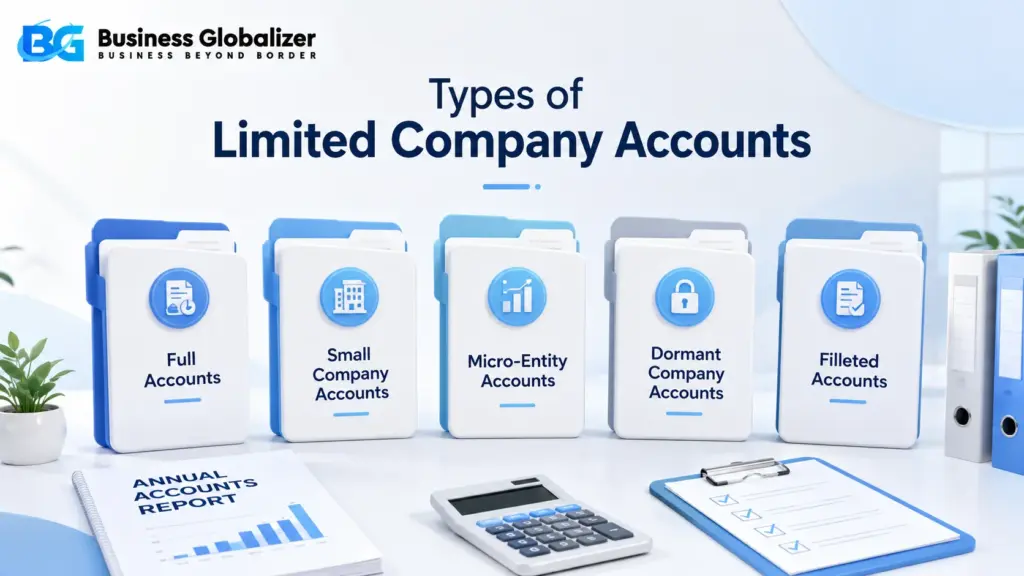
Types of Limited Company Accounts
Not every company has to file the same kind of accounts. The reporting requirements depend on factors such as the company’s size, eligibility, and trading status.
Let’s look at the main types of limited company accounts you’ll come across.
Full Accounts
Full accounts are the most comprehensive form of company accounts. They normally include detailed financial statements, supporting notes, and additional disclosures required by the applicable accounting standards.
Larger companies generally prepare full accounts because they do not qualify for simplified reporting options.
Small Company Accounts
Qualifying businesses may be able to prepare small company accounts, which involve fewer reporting requirements than full accounts. Although simpler, these accounts must still meet legal standards and accurately reflect the company’s financial position. Eligibility depends on meeting the relevant size criteria set under UK company law.
Micro Entity Accounts
For the smallest qualifying businesses, Micro Entity Accounts offer an even simpler reporting option. Companies that meet the required eligibility conditions may prepare simplified accounts with fewer disclosures than many other businesses.
If you’d like to understand the qualifying criteria and filing process in more detail, we’ve covered that separately in our guide to Micro Entity Accounts.
Dormant Company Accounts
If a company has had no significant accounting transactions during the financial year, it may qualify to file Dormant Company Accounts.
These accounts are much simpler because the company has not been actively trading. However, dormant companies still have ongoing filing responsibilities and must continue meeting Companies House requirements.
Filleted Accounts
Another term you may hear is filleted accounts. Rather than being a completely different set of accounts, filleted accounts are a version of eligible company accounts where certain information is removed before filing at Companies House.
This allows qualifying companies to limit the amount of financial information placed on the public register while still meeting legal filing requirements.
You may also come across the term abridged accounts when researching older articles. These were used under previous reporting rules but are no longer the standard filing option for current accounting periods, having largely been replaced by today’s filing framework.
Limited Company Accounts: At a Glance
Before diving into filing requirements, here’s a simple comparison of the main account types you’ll come across.
| Account Type | Who Usually Files It | Main Purpose | Companies House Filing |
| Full Accounts | Medium and large companies, or companies that do not qualify for simplified reporting | Give a clear, complete view of the company’s financial position | Full statutory accounts are filed. |
| Small Company Accounts | Companies that qualify as small under UK legislation | Reduce reporting requirements while remaining compliant | Simplified accounts may be filed if eligible. |
| Micro Entity Accounts | Companies meeting the micro-entity thresholds | Offer the simplest reporting option for qualifying businesses | Simplified micro-entity accounts are filed. |
| Dormant Company Accounts | Companies with no significant accounting transactions | Confirm the company remained dormant during the financial year | Dormant accounts are filed instead of trading accounts. |
| Filleted Accounts | Eligible companies choosing reduced public disclosure | Remove certain information from the version filed at Companies House | A filleted version of the accounts is placed on the public register. |
No single account type is “better” than another. The correct option depends entirely on your company’s size, activity, and legal eligibility.
Limited Company Accounts Example
Sometimes a simple example explains more than pages of guidance. Imagine two newly incorporated UK companies.
- Company A started trading immediately, hired staff, generated sales, and continued growing throughout the year. Depending on its size, it might prepare full accounts or qualify for small company accounts.
- Company B registered the company but never traded, never issued invoices, and had no significant accounting transactions. Assuming it met the legal conditions, it would normally file Dormant Company Accounts instead.
Now imagine a third business.
- It traded throughout the year but remained very small and met the micro-entity thresholds. Rather than preparing more detailed financial statements, it may qualify to prepare Micro Entity Accounts.
This simple limited company accounts example shows why there isn’t one universal set of accounts. The correct reporting depends on what your company actually did during the accounting period.
Companies House Accounts Filing Requirements
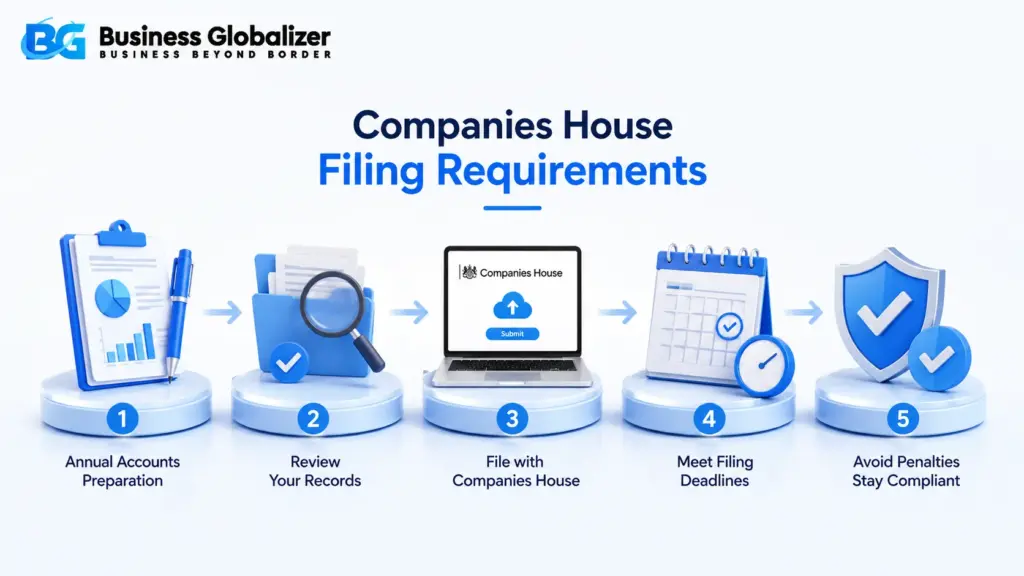
Preparing accounts is only half the job. Filing them correctly and on time is equally important. Most UK limited companies must:
- Prepare annual accounts for every financial year.
- File the appropriate accounts with Companies House before the filing deadline.
- Keep accounting records that support the figures submitted.
- Continue meeting any additional filing obligations, such as the Confirmation Statement.
If you miss a filing deadline, you’ll usually face automatic late filing penalties. If the issue continues, it can lead to more serious consequences, including action being taken against the company and its directors.
That is why understanding the Companies House accounts filing requirements is just as important as understanding which type of limited company accounts you need.
Companies House Penalties for Non-Compliance
Late accounts are not the only risk. Companies House now has stronger powers to deal with non-compliance, especially under the wider UK company law reforms.
That can include penalties for things like late filings, inaccurate information, failure to meet legal duties, or not responding properly when Companies House raises an issue.
For directors, the lesson is simple: filing accounts is not just admin. It is part of keeping the company in good standing. Missing deadlines or submitting poor information can create penalties, extra scrutiny, and unnecessary cleanup work later.
Common Mistakes Directors Make & How to Avoid Those
The accounts themselves are often not the biggest problem. Choosing the wrong reporting approach usually is. Here are some common mistakes and how to avoid them:
- Assuming every company files the same type of accounts
Not all companies follow the same rules. Check your company size and eligibility early so you choose the correct reporting framework.
- Confusing dormant status with micro-entity status
Dormant companies have no significant transactions, while micro-entities are small but active. Make sure you understand the difference before filing.
- Missing annual filing deadlines
Late filing leads to automatic penalties. Set reminders well in advance and prepare your accounts early.
- Choosing the wrong reporting category
Filing under the wrong category can cause compliance issues. Review your financial thresholds each year to confirm your status.
- Forgetting that Companies House and HMRC have different responsibilities
You may need to file accounts with both, but they serve different purposes. Keep track of both sets of requirements.
- Waiting until the deadline before organising accounting records
Leaving everything to the last minute increases the risk of errors. Keep records updated throughout the year to make filing smoother.
Most of these issues are avoidable with a little planning throughout the year.
Business Globalizer: Helping UK Companies Stay Compliant
Whether your business needs limited company accounts, dormant company accounts, micro-entity accounts, or broader compliance support, getting the details right matters.
At Business Globalizer, we support founders with UK company formation, annual accounts, confirmation statements, UK Taxation, registered office services, dormant company compliance, company restoration, dissolution, and ongoing filing support.
Our aim is straightforward: to help you stay on top of your legal responsibilities accurately and on time, so you can focus on running your business.
Key Insights
- Every UK limited company is expected to prepare annual accounts, even if it hasn’t traded during the year.
- There isn’t a single format for limited company accounts; the right one depends on your company’s size, activity, and eligibility.
- Full, small company, micro-entity, dormant, and filleted accounts each have their own place within the UK reporting system.
- Filing simpler accounts may reduce the amount of reporting, but it doesn’t reduce your legal responsibilities as a director.
- Companies House and HMRC both rely on company accounts, but each uses them for different compliance purposes.
- Filing the right accounts on time helps you avoid late penalties, wider non-compliance issues, and unnecessary attention from Companies House.
- Many founders qualify for simplified accounts without realising it because they never check which reporting category their company falls into.
- Filing problems often begin with choosing the wrong type of accounts or leaving everything until the deadline.
- Keeping your financial records organised throughout the year makes preparing annual accounts far less stressful.
- Understanding limited company accounts from the beginning makes it much easier to stay compliant instead of rushing to fix problems when filing reminders arrive.
Closing Thoughts
When founders first hear terms like full accounts, dormant accounts, or micro-entity accounts, they often assume they’re completely different reporting systems. In reality, they’re simply different forms of limited company accounts, each designed for a particular type of company.
The key is understanding which reporting option fits your business and making sure your accounts are prepared and filed correctly every year.
Once you know where your company fits, annual filing becomes much less intimidating. And when questions do come up, it’s always better to check the rules early than to fix a filing mistake later.
FAQ’s on UK Limited Company Accounts
What are limited company accounts?
Answer: Limited company accounts are annual financial statements prepared by a UK limited company. They show the company’s financial position and help meet Companies House and HMRC reporting requirements.
What are the main Types of limited company accounts?
Answer: The main types include full accounts, small company accounts, Micro entity accounts, Dormant company accounts, and filed accounts. The right one depends on your company’s size, trading activity, and eligibility.
Does every UK company need to file annual accounts?
Answer: Yes, most UK limited companies must prepare and file annual accounts, even if they made no profit or did not trade. Dormant companies usually file a simpler version called dormant company accounts.
What is a limited company accounts example?
Answer: A small trading business may file small company accounts. A very small qualifying business may file Micro entity accounts. A company with no significant accounting transactions may file Dormant company accounts.
Are Micro entity accounts the same as small company accounts?
Answer: No. Micro entity accounts are usually simpler and meant for the smallest qualifying companies. Small company accounts apply to a wider group of companies and may include more detail.
What are Companies House accounts filing requirements?
Answer: Companies House accounts filing requirements depend on the company’s size and activity. Most companies must file the correct accounts by the deadline and keep records that support the figures submitted.
What happened to the abridged account filing?
Answer: Abridged account filing is mostly an older term from previous reporting rules. For current filings, eligible companies usually look at options like filleted accounts, micro-entity accounts, small company accounts, or dormant accounts.
What happens if limited company accounts are filed late?
Answer: Late filing can lead to automatic penalties. Wider non-compliance can also create extra scrutiny, correction work, or problems with the company’s public record.