 Quick Answer: A dormant company is a registered company that has had no significant accounting transactions during a financial year. It still exists legally and usually still has certain filing responsibilities.
Some companies are built to trade immediately, especially after completing UK company formation, while others spend months planning their first sale. Then there’s a third type: companies that exist, but are quietly on pause. Maybe the founder secured a strong business name before someone else took it. Maybe a project got delayed. Or maybe the business is simply taking a break, with plans to restart later.
From the outside, the company still looks alive. It appears on Companies House, has directors, and remains legally registered. But is it actually active? That’s usually where founders start asking: what is a dormant company? Or, what does a dormant company mean?
At first, it sounds simple enough. But before you assume your company qualifies, it’s worth checking the rules, exceptions, filing duties, and responsibilities that come with dormant status.
What Is a Dormant Company?
A dormant company is generally a limited company that has had no significant accounting transactions during the financial year.
In practical terms, the company is not actively carrying out normal business activities. That means no regular trading, no routine business expenses, and no normal commercial transactions. The company still exists legally, but its business activity is effectively paused. This is the simplest way to define dormant company status.
Dormant Company Meaning in Simple Words
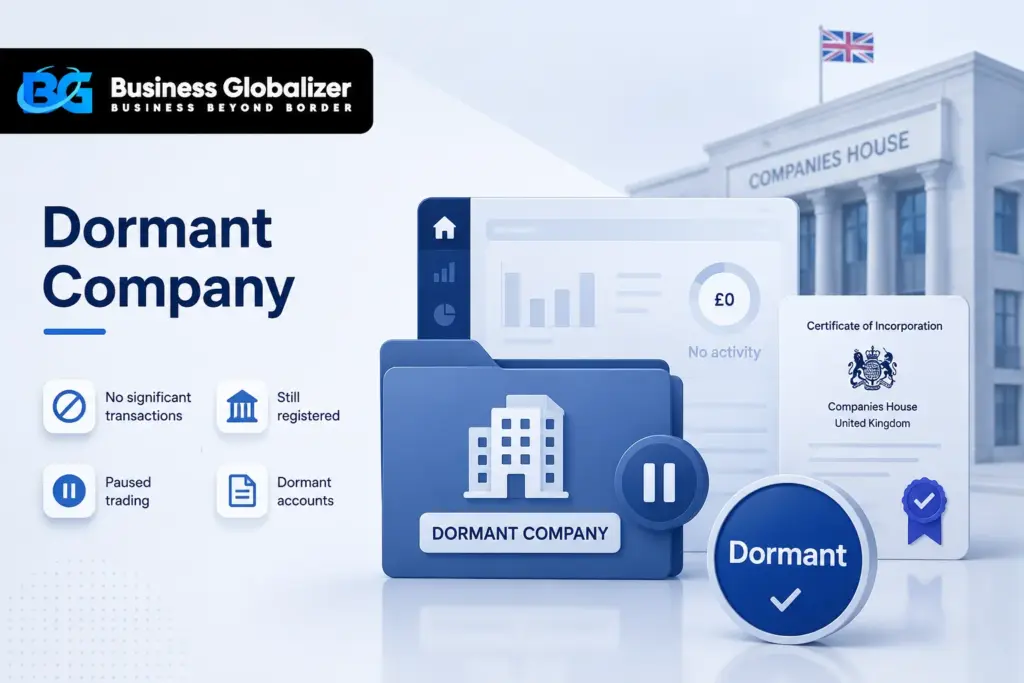
The legal wording can sometimes make things sound more complicated than they really are. A dormant company is essentially a company that is “on hold.” The company has not been dissolved. It has not disappeared. It simply is not actively doing business at that moment.
Think of it like a parked car. The car still exists. It still belongs to someone. It can be driven again in the future. But right now, it is not moving. That is often the easiest way to understand what a dormant company means in real-world terms.
What Is a Dormant Company on Companies House?
On Companies House records, a dormant company is usually a UK company that meets the dormancy rules and files dormant accounts instead of full trading accounts. But it still remains registered and publicly visible.
Here’s the part people often misunderstand: dormant does not mean deleted, closed, or hidden. The company still exists as a live legal entity on the Companies House register.
Why Would You Have a Dormant Company?
At first glance, keeping an inactive company might seem pointless. In reality, there are several legitimate reasons. Common reasons include:
- Protecting a business name
- Delaying a business launch
- Holding a company for future projects
- Pausing trading temporarily
- Restructuring operations
- Holding intellectual property
- Preparing for future investment opportunities
Sometimes dormancy is a strategic decision rather than a sign that something went wrong.
Advantages and Disadvantages of Dormant Company
Dormant company status offers flexibility and simplicity but still comes with ongoing compliance responsibilities and potential limitations.
Advantages of Dormant Company Status
Keeping a company dormant can be useful when a founder wants breathing room without closing the door on future trading. The main benefits usually include:
- Protecting a company name for future use
- Keeping a business structure available without active trading
- Pausing operations without immediately dissolving the company
- Potentially simpler reporting requirements than an active trading company
- Making it easier to restart later if plans change
- Maintaining a corporate identity for future contracts or opportunities
- Avoiding the need to re-incorporate if the business resumes later
Overall, for founders who expect future activity or want to keep options open, dormancy can be a practical and strategic choice.
Disadvantages of Dormant Company Status
While dormancy can be useful, it is not completely free of responsibilities or risks. Some common drawbacks include:
- Ongoing filing obligations with Companies House
- Annual compliance responsibilities such as confirmation statements
- Potential penalties for missed deadlines or incorrect filings
- Continued director responsibilities despite inactivity
- The risk of accidentally ending dormant status through business transactions
- Possible confusion between Companies House and HMRC dormancy rules
- Administrative effort required to monitor and maintain compliance
Many founders assume dormancy means “nothing to do,” but in reality, it still requires attention and proper management to avoid unnecessary issues.
How to Make a Company Dormant in the UK
Another common question is how a company becomes dormant in the first place.
To make a company dormant in the UK, the company must stop trading and avoid significant accounting transactions. It is not enough to simply call the company dormant; its activity must actually match the dormant status.
In practice, this usually means:
- Stopping business activity
- Avoiding business income and expenses
- Informing HMRC if the company was previously active
- Filing dormant accounts with Companies House
- Continuing the confirmation statement and basic company updates
- Maintaining proper records
So yes, dormancy can be simple. But it still needs to be handled properly, especially if the company has traded before or may restart later.
How to Declare Your Company Dormant
Making a company dormant is not usually about filling out a special dormancy form. Instead, it is about ensuring the company genuinely qualifies as dormant and that the relevant authorities are informed or updated correctly.
The exact process depends on whether you are dealing with HMRC for tax purposes or Companies House for company-record purposes.
How to Tell HMRC Your Company Is Dormant for Corporation Tax
If your company has stopped trading and no longer has Corporation Tax obligations, you may need to inform HMRC that it is dormant for tax purposes.
In many cases, HMRC can be notified through your Corporation Tax online account or by contacting them directly. Once HMRC accepts the company as an HMRC dormant company, it may stop issuing Corporation Tax return notices while the company remains inactive.
If the company later starts trading, receives income, or resumes business activity, you should tell HMRC so the company’s tax status can be updated.
How to Tell Companies House Your Company Is Dormant
For Companies House, there is usually no separate application to declare dormancy. Instead, dormancy is reflected through the company’s filings.
A Companies House dormant company generally demonstrates its dormant status by filing dormant accounts rather than full trading accounts, provided it meets the dormancy conditions.
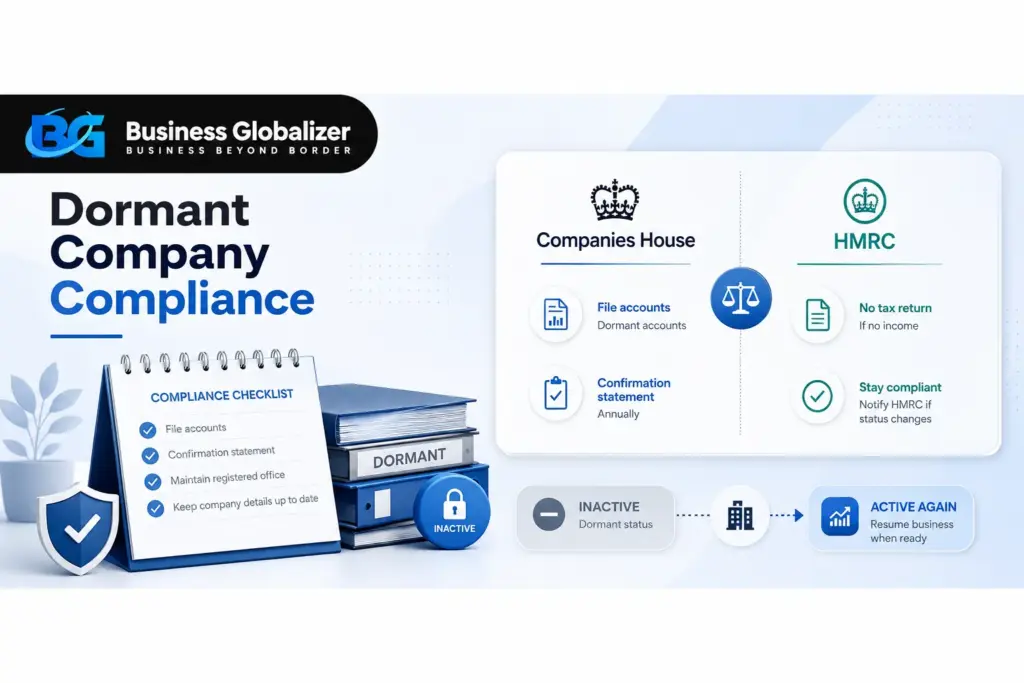
The company must still meet ongoing filing obligations, including dormant accounts and, where required, a Confirmation Statement. Staying up to date with these filings helps maintain the company’s dormant status on the public register.
Dormant for Corporation Tax
This is one of the areas that often causes confusion.
HMRC may treat a company as dormant for Corporation Tax purposes if it is not carrying out business activity and has no income that needs to be reported. In simple terms, if there is nothing to declare or pay, HMRC may consider the company dormant.
However, this status applies specifically to tax obligations and does not automatically mean the company is dormant for Companies House purposes. Understanding this distinction helps avoid incorrect assumptions about your company’s overall status.
Dormant Company: Companies House Vs. HMRC
Dormant status is not determined by a single authority. Companies House and HMRC assess dormancy differently because they serve different roles.
- Companies House focuses on whether the company has had significant accounting transactions.
- HMRC focuses on whether the company has taxable activity or Corporation Tax obligations.
That means a company can look dormant to one authority but not to the other. So, directors should check both Companies House and HMRC rules instead of assuming one status covers everything.
Dormant Company Accounts
We have a dedicated blog covering dormant company accounts in detail, so let’s keep it brief here.
Most dormant companies still need to file dormant accounts with Companies House. The filing is generally much simpler than full trading company accounts, but it remains an important compliance requirement. Dormant does not mean exempt from filing.
Difference Between Dormant and Active Company
We also have a separate blog dedicated to this dormant and active company comparison. You can always click the link and check that to learn more.
The simplest distinction is this:
- A dormant company exists but has little or no qualifying business activity.
- An active company is carrying out business operations and recording transactions.
The difference affects accounts, tax obligations, and filing requirements. Understanding which category your company falls into is often the first step toward staying compliant.
Common Mistakes Founders Make
Most dormant-company issues arise from simple misunderstandings about what dormancy actually means. Common mistakes include:
- Assuming no sales automatically qualifies the company as dormant
- Forgetting that annual filings are still required
- Ignoring reminders from Companies House
- Confusing dormancy with closing or dissolving the company
- Assuming HMRC and Companies House apply the same rules
- Carrying out transactions that unintentionally end dormant status
Being aware of these points early can help avoid unnecessary compliance problems later.
Expert Tips for Dormant Companies
If your company is dormant, staying organised is key to maintaining that status correctly. Helpful practices include:
- Keeping track of all filing deadlines
- Reviewing your company’s status each year
- Avoiding unnecessary financial transactions
- Monitoring Companies House obligations regularly
- Checking HMRC requirements separately
- Maintaining accurate company records
Dormancy works best when it is actively managed rather than overlooked.
Business Globalizer: Helping UK Companies Stay Compliant
Dormant companies may not be actively trading, but they still have compliance responsibilities.
At Business Globalizer, we help founders with UK company formation, dormant company filings, annual accounts, confirmation statements, UK Taxation, registered office services, company restoration, dissolution support, and ongoing compliance guidance.
Because staying compliant is usually much easier than fixing missed obligations later.
Closing Thoughts
Coming back to the original question: What is a Dormant Company? It is not a closed company. It is not an abandoned company. And it certainly is not a company that can be ignored.
A dormant company is a company that still exists, but isn’t carrying out any significant business activity. For many founders, it’s a practical way to keep future plans alive without shutting things down too soon. The key point is simple: dormancy can reduce some obligations, but it doesn’t erase them completely.
When you understand the rules, stay on top of your filings, and review your company’s status from time to time, a dormant company can be a smart choice, not an administrative headache.
Key Insights
- A dormant company is not closed; it still legally exists on Companies House.
- Dormant status usually means the company has no significant accounting transactions.
- A company can be inactive today and still be kept ready for future business plans.
- Dormancy can help protect a company name without actively running the business.
- Founders often confuse “not making sales” with being dormant, but activity matters more than profit.
- Dormant companies still usually need to file accounts and keep company details updated.
- Companies House and HMRC may treat dormancy differently, so both sides need checking.
- A dormant company can become active again once it starts trading or making significant transactions.
- Holding assets may be possible, but income or expenses from those assets can affect dormant status.
- Dormancy is useful when managed properly, but risky when founders treat it as “nothing to do.”
FAQ’s on What is a Dormant Company ?
What is a dormant company in simple words?
Answer: A dormant company is a registered company that is not currently trading or carrying out significant business activity. It still exists legally, but it is basically paused from a business-activity point of view.
What does dormant company mean for a UK limited company?
Answer: For a UK limited company, dormant company status usually means the company has had no significant accounting transactions during the financial year. It can still stay registered with Companies House, but the directors must keep up with required filings.
What is a dormant company on Companies House?
Answer: On Companies House, a dormant company is still a live company on the public register. The difference is that it may file dormant accounts instead of full trading accounts, provided it meets the dormancy conditions.
Why would you have a dormant company instead of closing it?
Answer: You might keep a company dormant if you want to protect the name, pause trading, prepare for a future launch, or keep the company structure available. If you know you may use it later, dormancy can be cleaner than dissolving and starting again.
How to make a company dormant in the UK?
Answer: To make a company dormant in the UK, stop trading, avoid significant accounting transactions, update HMRC if needed, and continue filing with Companies House. The company must genuinely stay inactive, not just be called dormant.
Can a dormant company hold assets?
Answer: Yes, a dormant company can sometimes hold assets, but the details matter. If the asset creates income, expenses, or transactions, it could affect dormant status, so directors should review the situation carefully.
What does Dormant for Corporation Tax mean?
Answer: Dormant for Corporation Tax means HMRC treats the company as inactive for Corporation Tax purposes. This does not automatically cover Companies House requirements, so directors should check both separately.
Does a dormant company need to file accounts?
Answer: Yes. Most dormant companies still need to file dormant company accounts with Companies House. The accounts are simpler than active-company accounts, but the filing requirement does not disappear.
What is the difference between dormant and active company status?
Answer: A dormant company is inactive and has no significant accounting transactions. An active company carries out business activity, such as selling, receiving income, paying expenses, or trading with customers.
Can a dormant company become active again?
Answer: Yes. A dormant company can become active again whenever it starts trading or carrying out significant accounting transactions. Once that happens, its filing and tax responsibilities may change too.