Key Insights
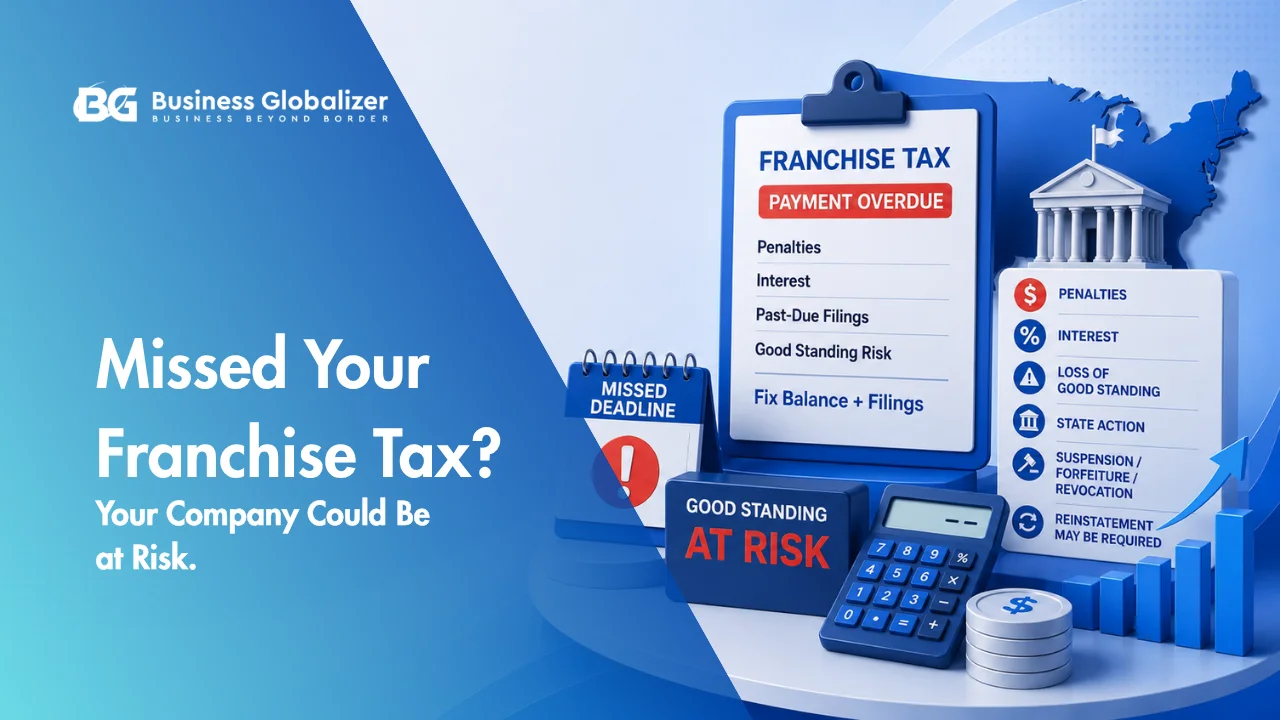
- Unpaid franchise tax usually starts as a balance issue, but it can quickly grow into a compliance and business-status problem.
- The risk is not limited to penalties and interest. It can also affect good standing, filings, and routine business records.
- Different states handle franchise tax differently, so the penalty path depends on where the entity is formed or registered.
- A missed payment can turn into suspension, forfeiture, revocation, cancellation, or reinstatement trouble if it sits too long.
- Fixing the issue usually means more than paying the balance. Missing returns, reports, penalties, and related filings often have to be cleared too.
- Reinstatement usually comes after the backlog is fixed, not before.
- The longer the issue stays unresolved, the more expensive and complicated the cleanup tends to become.
You formed the company.
Kept it alive.
And carried it through expensive, uncertain, and fragile stages.
Yet one missed franchise tax payment can turn a manageable issue into a much bigger problem. What starts as a missed payment does not always stay a late-fee issue. Depending on the state, it can lead to added penalties, interest, loss of good standing, and in some cases, suspension, forfeiture, or reinstatement trouble.
That is the part many founders do not see coming. The bill is only the start. Once it spreads, cleanup usually gets slower and more expensive. This guide explains what happens, how the risk grows, and how to fix it before it starts affecting filings, records, and the company itself.
What Franchise Tax Actually Means
Franchise tax is usually a state-level obligation tied to keeping a business entity active, registered, or legally allowed to do business in a state. It is not the same as income tax.
In many cases, it applies because the entity exists on the state’s records, not because the business made a profit. That is why franchise tax can still matter even when activity was low, operations paused, or revenue never really took off.
The exact structure still depends on the state, because some states tie franchise tax closely to annual reporting, while others separate those obligations more clearly.
Common mix-ups
- “Franchise tax” must mean franchise businesses only
- No income must mean no tax liability
- Annual report filed means everything is current
- Inactive business means the state no longer expects anything
- One missed deadline is only a small late-fee problem
Why does this cause problems?
Most franchise tax issues do not start with deliberate neglect. They usually start with one wrong assumption. An owner files one document and thinks the state side is covered. Or the business stops operating, but the entity stays active on paper. That is how a small compliance miss grows into penalties, standing problems, and a much larger cleanup later.
What Happens If You Don’t Pay Your Franchise Tax?
Unpaid franchise tax rarely stays just a balance issue. It usually starts with added cost, then moves into compliance, status, and cleanup problems. The exact outcome depends on the state, but the direction is usually the same: delay makes everything heavier.
Penalties Start First
The first consequence is usually simple. The amount due grows.
Once the deadline passes, states can add late-payment penalties, interest, or both. And if the state also expects a return or report, leaving that missing can make the compliance side worse than the balance alone. That means even a manageable balance can become more expensive just because it sat too long.
Interest Keeps the Problem Alive
This is the part that owners often underestimate.
A missed payment does not always stay frozen in place. In many cases, interest keeps building while the issue remains open, which turns the delay itself into part of the cost.
Good Standing Can Be Lost
This is where the problem stops being just financial.
Once the account stays unresolved, the business can fall out of good standing. That can affect how the company appears on state records and whether it remains usable for normal filings and business proof.
Other Tasks Can Get Caught in It
A franchise tax issue can begin interfering with things that do not look tax-related at first.
For example:
- Certificates of good standing
- State updates
- Registrations
- Amendment filings
- Company cleanup or closure steps
- Dissolution, withdrawal, or reinstatement filings
That is usually the moment owners realize the problem has spread beyond the bill itself.
State Action Can Follow
If the issue keeps sitting, some states can move into stronger enforcement.
Depending on the jurisdiction, that may mean suspension, forfeiture, revocation, void status, or cancellation. Different label, same headache.
The Cleanup Gets Bigger Than Expected
This is where a small miss starts bringing company with it. One unresolved franchise tax issue can turn into:
- past-due filings
- added notices
- more penalties
- older balances
- reinstatement steps
That is why the later fix often feels much larger than the original problem.
Franchise Tax Penalties by State
There is no single franchise tax penalty rule that works across every state. The outcome depends on where the entity is formed or registered, what type of entity it is, and whether the issue is only unpaid tax or unpaid tax plus missing reports.
(The examples below show how quickly the consequences can differ by state, but they are not a substitute for checking the current rules that apply to the exact entity and filing year involved.)
States to pay attention to:
- California: Late filing and nonpayment can grow into suspension or forfeiture, and some entities can face a $2,000 penalty per tax year after ignoring a written demand.
- Texas: Late tax can trigger 5%, then 10%, and continued noncompliance can move toward forfeiture.
- Delaware: Unpaid franchise or annual tax can bring a $200 penalty plus 1.5% monthly interest.
- Tennessee: Delinquent payments can bring 5% per month up to 25%, plus interest.
- North Carolina: If returns, taxes, or required fees stay unpaid for 90 days after due, the Secretary of State must suspend the corporation’s articles or certificate.
| State | Initial Penalty Path | If Left Unresolved |
| California | Late filing or payment penalties | Suspension, forfeiture, possible extra demand penalty |
| Texas | 5% to 10% penalty | Forfeiture risk |
| Delaware | $200 + 1.5% monthly interest | Loss of good standing, possible void/cancelled status |
| Tennessee | 5% monthly up to 25% + interest | Growing balance and ongoing state tax exposure |
| North Carolina | Tax, penalty, and interest may apply | Suspension after 90 days (requires reinstatement) |
How to Fix Unpaid Franchise Tax Step by Step
Step 1: Check business status first
Look up whether the entity is:
- Active
- Delinquent
- Suspended
- Forfeited
- Void
- Cancelled
- Not in good standing
Entity status can change a lot of things. A current entity with a late balance is a comparatively easy repair. A forfeited registration is not.
Step 2: Confirm what is actually missing
Always be sure of what the business is truly missing. It can be:
- Tax payment
- Franchise tax report
- Annual report
- Public Information Report
- Information report
or
- similar state-required filing
Step 3: File all past-due items
States usually want the whole record fixed, not one payment pushed through. File every missing return, report, and required state document. Do not fix the balance and leave the filings behind. If more than one year is missing, work through each year in order so the record is fully brought current.
Step 4: Pay the full balance, not just a piece of it
Partial fixes are famous for feeling productive and solving nothing.
A partial payment may reduce the balance but still leave the entity blocked. If the goal is to restore clean standing, the business record usually needs to be fully current, not partly fixed.
Step 5: Check whether relief is available
Once the account is current, check whether the state offers penalty relief, waiver requests, or dispute options. This can help reduce part of the cost in some cases. In many cases, that kind of relief is more likely to affect penalties than the underlying tax itself. It should be treated as a follow-up step, not the main fix.
Reinstate Business After Franchise Tax Issues
Reinstatement is usually required after unpaid franchise tax has already affected the entity’s status. At that stage, the issue is no longer limited to the balance due. The business record usually has to be corrected before the entity can return to active or usable standing.
1. Clear the compliance backlog first
Reinstatement usually comes after the catch-up work, not before.
In most cases, the business must first clear past-due returns, reports, tax balances, penalties, interest, and required fees. If those items remain open, reinstatement usually cannot move forward properly.
2. Gather the full record before filing
Prepare these first:
- Entity name
- State file number
- EIN
- Missing years
- Notices received
- Payment history
- Related filing gaps
This helps confirm what is missing and reduces filing errors. A disorganized file can slow the process even when the business is ready to correct the issue.
3. Expect more than one office to be involved
Reinstatement isn’t always handled by one office alone.
One agency may control the tax account, while another controls the business record or filing status. That is why making a payment does not always restore the entity immediately.
Even after the backlog is paid and filed, reinstatement may still take time because the tax side and the entity-record side do not always update at the same speed.
4. Know what makes reinstatement slower
Common delay factors:
- Multiple years of noncompliance
- More than one entity-status problem
- Missing reports beyond the tax issue
- Unresolved registered-agent or record problems
The longer the issue stays unresolved, the more likely the cleanup will require multiple corrective steps.
How Business Globalizer Helps with Franchise Tax Cleanup and Compliance
Unpaid franchise tax is usually not just a payment issue. In many cases, it also affects business status, missing filings, reinstatement steps, and the records needed to keep the company in usable standing.
That is where Business Globalizer (BG) can help. BG supports the practical side of resolving the issue before it causes broader compliance problems or delays.
Our support includes services such as:
Final thoughts
Unpaid franchise tax rarely looks serious at the beginning. That is exactly why it becomes expensive later.
What starts as a missed deadline can turn into penalties, standing issues, filing delays, and in some cases, reinstatement work that takes more time than expected. The tax bill is only part of the problem. The bigger issue is everything that starts piling onto it once the business record falls behind.
FAQs
What happens if you don’t pay franchise tax?
Answer: In many states, it starts with penalties and interest, then can turn into a status problem if it sits too long. That is when the issue stops being “just a bill” and starts affecting the business record itself.
Can unpaid franchise tax affect good standing?
Answer: Yes, and that is one of the biggest risks. Once the business falls out of good standing, other filings and routine tasks can start getting harder.
Is franchise tax the same as income tax?
Answer: No. Franchise tax is usually tied to the business entity’s legal presence or registration, not just to profit.
Can you still owe franchise tax if the business made no money?
Answer: Sometimes, yes. In many cases, the obligation depends on the entity still being active or registered, not only on income.
Can unpaid franchise tax delay business filings?
Answer: Yes. Once the issue spreads beyond the balance itself, it can start affecting certificates, updates, registrations, and closure steps.
When does reinstatement become necessary?
Answer: Usually after the issue has already affected the entity’s status. At that point, the business often needs more than a payment to get back into clean standing.
Can a small missed payment turn into a bigger business problem?
Answer: Yes. That is what makes franchise tax issues easy to underestimate. What starts as a balance issue can become a filing and status issue later
Can unpaid franchise tax stop me from closing my company properly?
Answer: Yes, it can. Most states won’t let you fully close or dissolve your business if there are unpaid franchise taxes or missing filings. You usually need to clear the balance and fix any pending reports before the closure process can move forward cleanly.
Can I get a certificate of good standing if franchise tax is unpaid?
Answer: No, not usually. A certificate of good standing is only issued when your business is fully up to date. If franchise tax is unpaid or filings are missing, the state will typically block it until everything is brought current.
Do I need to fix missing reports too, or just pay the tax?
Answer: You’ll need to fix both. Paying the tax alone often isn’t enough. States usually expect all past-due reports, returns, and filings to be submitted as well before your business record is considered fully current again.