Key Insights
- Moving the business does not automatically move the LLC. The legal structure may remain tied to the old state.
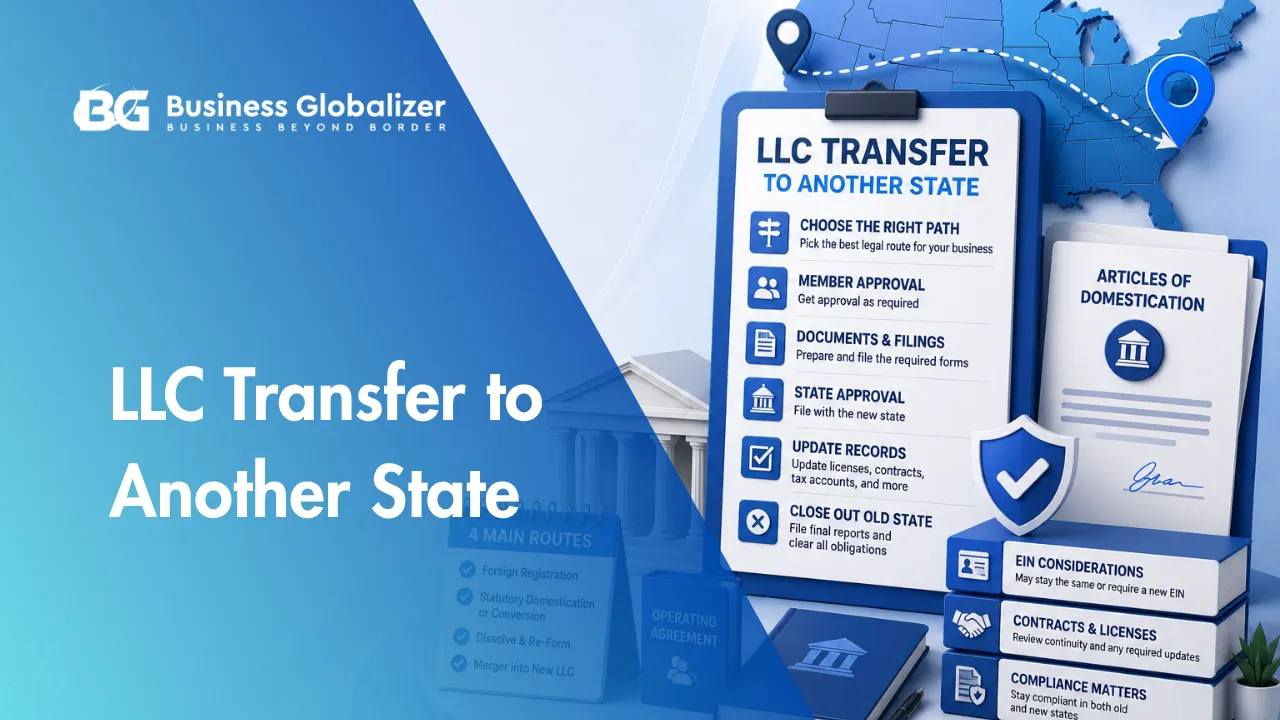
- An LLC move usually follows one of four paths: foreign registration, statutory domestication or conversion, dissolving and reformation, or merger into a new LLC.
- Foreign registration works when the old state still matters. A full transfer usually makes more sense when one legal home state is the goal.
- Statutory transfer is often the cleanest route, but it depends on whether both states allow domestication or conversion.
- The move is not finished after one filing. Member approval, required documents, old-state cleanup, and record updates all matter.
- The transfer route can affect EIN treatment, contract continuity, licenses, and business history.
- Most problems come from weak route selection, missed state rules, or leaving old-state obligations open.
You moved.
Your operations have moved.
But your LLC did not.
That mismatch is where a simple move starts turning into a legal and compliance problem. In practice, the business may already be running in a new state. But on paper, the LLC can still be sitting in the old state.
An LLC move is rarely just an address update. It is a legal choice about whether the same entity should continue, register elsewhere, merge, or be replaced. This guide breaks down the actual options, the documents involved, the costs that can follow, and what comes next.
Can You Transfer an LLC to Another State?
Yes, but not always in the clean, one-step way people expect. An LLC transfer is often not just one filing. It can mean registration, domestication, merger, or replacing the old entity with a newly formed one.
Whether the answer is yes or no usually depends on a few things:
- The laws of the old state
- The rules of the new state
- Whether the same LLC needs to stay intact
- How much continuity the business needs for tax, contracts, and compliance
That is why this process gets misunderstood so often. In some cases, the LLC can continue in a new state. In others, the business may need a different legal route to get there. So the real question is not just whether an LLC can move. It is what kind of move the business actually needs.
Why “Move” and “Transfer” Are Not the Same
Moving the business and transferring the LLC are two separate things. A move changes where the company operates in real life. A transfer changes the LLC’s legal position from one state to another. That is why a business can already be running in a new state while the LLC is still tied to the old one on paper.
Legal Options for Moving an LLC
When moving an LLC to another state, there are four main options:
- Foreign registration in the new state
- Statutory domestication or conversion
- Dissolve the old LLC and form a new one
- Merge the existing LLC into a new LLC
The right route depends on whether the business needs continuity, whether both states allow statutory transfer, and whether the old state still matters after the move.
Register the Existing LLC as a Foreign LLC
The LLC stays active in the original state and registers to do business in the new one. This is usually the right choice when the business is expanding, not fully relocating.
Transfer the LLC Through Domestication or Conversion
If both states allow it, the LLC may be moved without shutting it down and replacing it. This is often the cleanest option for continuity.
Dissolve the Old LLC and Form a New One
The original LLC is closed, and a new LLC is formed in the destination state. This can work, but it often creates the most follow-up work.
Merge the Old LLC Into a New LLC
A new LLC is formed in the new state, and the original LLC is merged into it. This can help move assets, liabilities, and business history in a more structured way.
Steps to Move an LLC to Another State
Moving an LLC to another state is not one filing. The process usually starts with choosing the right legal path, then checking state rules, internal approvals, and filing requirements before anything is submitted. The steps below help sort the move in the right order.
Step 1: Choose the right transfer path
Before filing anything, the first job is to decide what kind of move the LLC actually needs. Some businesses only need legal authority to operate in a new state. Others need the LLC itself to shift into a new legal home.
If the original formation state still serves a purpose, keeping the LLC where it is and registering in the new state may be enough. That can make sense when the LLC still has contracts, licenses, operations, or tax reasons tied to the original state. If the old state no longer makes sense, a full transfer path may be the cleaner option.
Registration usually makes sense if:
- The original LLC should stay intact
- The old state still matters
- The move is mainly operational
Consider a full transfer if:
- You want one legal home state
- The old formation state no longer serves a purpose
- Dual-state compliance would be a wasted cost
Step 2: Check if statutory transfer is allowed
If the LLC needs a full move, the next question is whether the same entity can legally continue in the new state.
That is where statutory transfer comes in with domestication or conversion. Instead of shutting down the old LLC and forming a new one, the same LLC continues under the new state’s law.
But this route depends on state law. Some states allow it. Some do not. So before looking at forms or fees, check whether both states permit it. If they do, this is often the cleanest transfer path.
What domestication usually involves
This process is not just a one-page filing. A statutory move often requires the following:
- Member approval
- Plan of domestication or conversion
- Certificate of good standing
- Articles of domestication or conversion
- Follow-up filing in the old state if required
Step 3: Compare the Other Transfer Options
If statutory transfer is not available, the move usually comes down to two fallback routes. You can form a new LLC and close the old one, or form a new LLC and merge the old one into it.
Both options involve more follow-up work because the same LLC is no longer continuing cleanly under the new state’s law. The better choice depends on what needs to carry over cleanly. That difference can matter for contracts, licensing, banking history, and tax registrations that do not move as smoothly when the original LLC is simply shut down.
- Dissolve and start a new LLC
This is the simpler route to understand. You form a new LLC in the destination state and close the old one. But the reset can create extra work with licenses, contracts, tax setup, and registrations.
- Merge into a new LLC
This option is often better when continuity matters. A merger can move assets, liabilities, and business history in a more structured way, which may reduce cleanup later.
Step 4: Review the Operating Agreement and Get Member Approval
Before filing anything with the new state, confirm that the LLC has approved the move properly. If the LLC has more than one member, check the LLC operating agreement first. That document may control:
- Voting thresholds.
- Manager authority.
- Notice requirements.
- Approval rules for a merger, conversion, or dissolution.
Even for a single-member LLC, a written resolution is worth having. It creates a clear record of who approved the move and who has the authority to sign the filings.
This step is easy to rush, but weak internal approval is one of the easiest ways to create problems later. A clean internal paper trail makes everything after it easier.
Step 5: Gather the Required Documents
There is no single document packet for every move. The paperwork depends on the path you choose. Still, the same core items tend to show up again and again.
Common documents include:
- Certificate of good standing
- Certified copy of Articles of Organization
- Articles of domestication or conversion
- Application for a certificate of authority for a foreign qualification
- Articles of merger
- Articles of dissolution
- Member consent or written resolution
- Updated LLC operating agreement
- State tax clearance, where required
- New registered agent details
The filing logic stays fairly consistent: prove the LLC exists, prove the move was properly approved, and file the document that matches the route.
Step 6: File in the New State
From this point on, the move becomes public and official. Usually, the filing happens in the new state, whether the route is registration or statutory transfer. If the route is a merger, the new LLC may need to be formed first before the merger can move forward.
This is also where the practical issues tend to show up the most:
- Filing fees
- Processing times
- Name availability
- State-specific filing requirements
If the LLC name is not available in the new state, you may need to use an alternate name or adjust the filing plan. That alone can affect the order of the move. Before filing, make sure the new state is ready for the exact entity structure you plan to bring in.
Step 7: Close Out or Update the Old State
Filing in a new state is only half of the move. Your old LLC state does not automatically close just because you’ve filed somewhere else. Depending on your route, your LLC may still need to file a dissolution, withdrawal, or final update.
That can include:
- Final state reports
- Franchise tax cleanup
- Annual fee cleanup
- Confirmation of the effective transfer date
If this part is left open, the LLC may still appear active in the old state and continue to pick up obligations there.
Step 8: Update Records After the Move
Once the LLC is accepted in the new state, the business side has to catch up. That means updating the records and accounts that still reflect the old setup.
What usually needs to be updated:
- Federal and state tax registrations
- Payroll accounts
- Sales tax accounts
- Licenses and permits
- Insurance records
- Contracts and vendor details
- Invoice information
- Business address records
The move is only fully done when the paperwork, accounts, and business records all reflect the new state properly.
What Happens to Your EIN, Contracts, and Business History After the Transfer?
The transfer method directly affects tax identity, contract continuity, and record carryover. Because the answer can depend on the exact route, ownership structure, and tax treatment after the move, this is one of the areas worth reviewing before filing rather than after.
EIN
The EIN may stay the same in some transfer routes, but not all. If the LLC continues through a cleaner legal path, the EIN may remain in place. If the old entity is closed and replaced in a way that creates a new tax setup, a new EIN may be required.
Contracts and licenses
Contracts do not always move automatically. Some contracts carry over more easily in a merger or statutory transfer. Others may need review, consent, or assignment. Licenses and permits can be even stricter because many are tied to a specific entity or state.
Business history
A merger or statutory transfer usually preserves continuity better than dissolving one LLC and starting another. That can matter for banking, vendor trust, internal records, and long-term structure.
Common Mistakes When Moving an LLC to Another State
An LLC move can look finished on paper and still be wrong in practice. That gap is where most of the trouble starts. A weak route choice or a missed state requirement can keep the move legally incomplete even after approval.
Some mistakes show up over and over, such as:
- Choosing foreign registration when a full transfer fits better
- Assuming an address update alone legally moves the LLC
- Assuming domestication is allowed in both involved states
- Leaving the old state active after the move
- Missing tax changes caused by the new structure
- Ignoring contract clauses tied to consent or assignment
- Filing without checking state-specific forms and attachments
- Skipping member approval before filing
- Forgetting to update licenses, permits, and tax accounts after the move
Most of these mistakes are preventable. They come from treating the move like paperwork instead of a structural decision.
How Business Globalizer Helps with LLC Transfers and Multi-State Compliance
Moving an LLC to another state is not just a filing task. The harder part is choosing the right route before the filing starts, then handling the compliance work that follows.
This is where Business Globalizer (BG) plays a crucial role. BG supports the pressure points that usually cause delays or costly cleanup. Supports include:
Final Thoughts
Moving an LLC to another state is never just about filing a form. The right path depends on what both states allow, how much of the original entity needs to stay intact, and how cleanly the business needs to carry its tax, contract, and compliance history forward.
A move can look finished on paper while key parts of the business are still out of sync. The better result is not just getting the filing approved but also choosing a route that keeps the structure, records, and follow-up obligations in order.
FAQs
1. Is foreign registration the same as transferring an LLC?
No. Foreign registration keeps the LLC in its original formation state and only gives it authority to do business in the new one.
2. When should an LLC register as a foreign LLC instead of transferring?
This usually makes sense when the old state still matters and the business is expanding rather than fully relocating. The trade-off is that the LLC may end up handling annual obligations in two states instead of one.
3. Do all states allow LLC domestication or conversion?
No, and that is one of the first things to verify. Domestication or conversion only works where the states involved actually authorize it.
4. What does statutory domestication usually require?
It is usually more than a single form. Official state instructions commonly point to items like a plan of domestication or conversion, member approval, a certificate of good standing or existence, and the required domestication or conversion filing.
5. Do I need a certificate of good standing to move an LLC?
Very often, yes. New York’s Application for Authority for a foreign LLC requires a Certificate of Existence, and many states treat that document as part of the basic filing package.
6. Do LLC members need to approve the move first?
Usually, yes, especially for mergers, domestications, or conversions. State rules and the operating agreement often control how that approval has to happen, so this is not the step to leave until later.
7. Can you transfer an LLC to another state without closing it?
Yes, sometimes you can. If both states allow domestication or conversion, the same LLC may continue in the new state without being dissolved and replaced. If that route is not available, the alternative is usually foreign registration, which lets the LLC stay formed in the old state while registering to do business in the new one.
8. Does moving an LLC to another state automatically change the EIN?
Answer: Not always. In some transfer routes, the EIN may stay the same. In others, especially when the old LLC is dissolved and replaced, a new EIN may be needed. It depends on how the move is handled and whether the legal and tax identity of the business stays intact.
9. Will contracts automatically stay valid after the LLC move?
Answer: Not necessarily. Some contracts carry over more smoothly when the LLC continues through domestication or merger, but others may need review, consent, or assignment. That is why contract continuity should be checked before the move, not after.
10. Can an LLC keep the same name in the new state?
Answer: Not always. The name must be available under the new state’s records. If another business is already using it there, the LLC may need to file under an alternate name or adjust the move plan before filing.
11. Does moving an LLC end old-state franchise tax or annual report obligations automatically?
Answer: No, and this is where many business owners get caught off guard. The old state does not automatically close out the LLC just because a filing was made somewhere else. Until the proper dissolution, withdrawal, cancellation, or final filing is completed, old-state obligations may still continue.