Key Insights:
- Forming a US company and getting a US visa are two separate processes.
- A company can be active on state records and still give its owner no visa rights.
- A real, operating business may support certain visa paths such as E-2 or L-1A.
- The company matters more when it shows real activity, real investment, and proper records.
- The B-1 visa may help with short business visits, but it does not allow you to move to the US and run the company day to day.
- The O-1A may be relevant for founders with strong recognition in their field.
- A company does not create visa eligibility on its own, but it can help support the factual basis behind a case.
You formed the company.
Got the EIN.
Maybe even set up Stripe and opened a US bank account. At that point, the next question hits. Does any of this actually help you qualify for a U.S. visa? The honest answer is no, not by itself.
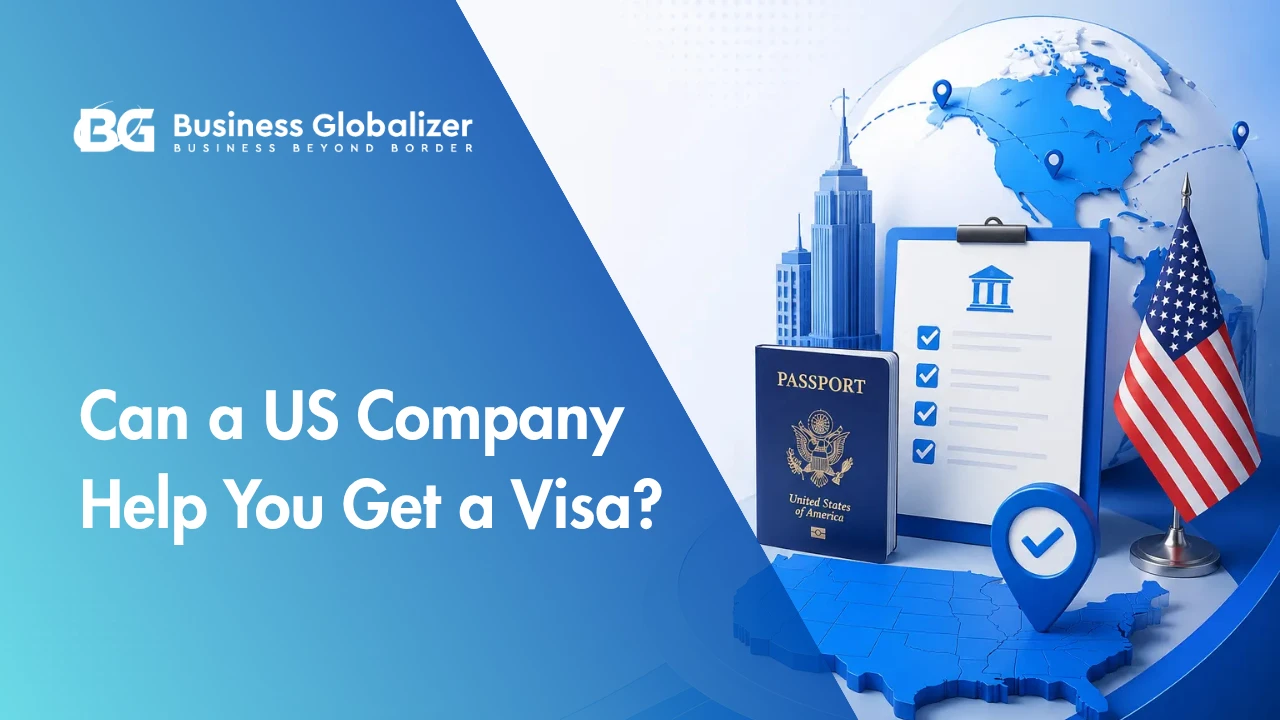
A US company can support certain visa paths, but forming one does not automatically give you a visa. The connection is legitimate, but it only works in specific ways. This guide breaks down where a company may help, where it does not, and what the real picture looks like.
⚠️ A Short Disclaimer
This article is for general information only and is not immigration legal advice. Visa eligibility depends on personal facts, business records, treaty rules, investment level, role, and the final decision of the U.S. embassy, consulate, USCIS, or other immigration authority.
Forming a US Company and Getting a Visa Are Two Separate Things
Registering a US LLC or C-Corp is a business step, not an immigration act. A company can be active on state records, hold an EIN, and still give its owner no visa rights at all.
That is because visa eligibility is not created by the company alone. It depends on the person, the travel purpose, and the visa category they’re applying for. When you apply through a U.S. embassy or consulate, the consular officer decides whether you qualify under U.S. immigration law.
So, having Articles of Organization does not automatically bring you closer to getting a visa. In some cases, the company can support the bigger picture. On its own, it does not create eligibility. Think of the company as possible supporting evidence, not a shortcut to immigration status.
So What Does the Company Actually Do for You?
Quite a lot, just not in the way most people expect.
A properly formed, actively operating US entity can be the foundation for several visa categories. Without that business structure, certain paths such as E-2 or L-1A may not be available at all. With one, you have a structure that immigration authorities can evaluate as evidence of genuine business intent, investment, and operational presence.
A credible US company helps by demonstrating a real operating business rather than a shell registration. This satisfies the entity requirements that specific visa categories demand, and provides documentation such as ownership records, proof of investment, EIN, and bank activity that immigration applications require as supporting evidence.
The company does not create visa eligibility on its own. But it does help create the factual basis for it. That factual basis usually becomes stronger when the company has real expenses, contracts, bank activity, tax records, employees or contractors, and a clear business plan.
What a U.S. Company Does Not Do
A U.S. company does not automatically give you the right to live, work, or stay in the United States. It also does not replace visa requirements, personal eligibility, investment proof, or immigration review. The company can support the case only when the business activity and records match the visa category being pursued.
Visa Options That Connect to Your US Company
Not every visa requirement is connected to your business. But a few do, and that is where your U.S. company starts to matter.
E-2 Treaty Investor Visa
For founders from treaty countries, the E-2 is often the first serious option to look at. Bangladesh is listed as an E-2 treaty country, so Bangladeshi founders may be able to explore this route if the business and investment meet the requirements.
This visa can apply when you have made a substantial investment in a real US business and plan to enter the country to develop and direct it. There is no fixed minimum investment amount, but the money must be committed and genuinely at risk.
L-1A Intracompany Transferee Visa
This one starts to matter when you already run a business outside the US and want to expand through a related US entity.
The foreign company and the U.S. company must have a qualifying relationship, and you usually need to have worked for the foreign business for at least one continuous year in the last three years in an executive or managerial role.
B-1 Business Visitor Visa
The B-1 visa is more limited, but it still has its place. It can work for short business trips, like meetings, consultations, conferences, or contract negotiations. It is usually for temporary business activity, not hands-on employment or regular operational work inside the United States.
A B-1 Business Visitor visa does not let you move to the US and run the company day to day.
O-1A Extraordinary Ability Visa
For founders with serious industry recognition, the O-1A may be worth a closer look. A company may help provide a U.S. petitioner or business context, but the case still depends mainly on the founder’s personal achievements and evidence. The O-1A Extraordinary Ability visa is meant for individuals who can show extraordinary ability in business, and the petition must be filed by a qualifying US employer or agent.
How Business Globalizer Helps
If you are forming a US company with future visa plans in mind, the business side still has to be built properly. Immigration is a separate process, but the company behind it needs to be real, active, and properly maintained.
Business Globalizer (BG) can help with the business side through:
- US Company Formation
- EIN Service
- Registered Agent
- Tax Filing
- Premium Business Consulting.
- Business record organization for banking, tax, and compliance readiness
Forming a company that is properly maintained helps you better prepare for what comes next. BG can help organize the business foundation, while the immigration strategy should be reviewed with a qualified immigration professional.
Final Thoughts
Forming a US company and getting a US visa are two different steps. But they can still connect. The company you build today may support a future E-2, L-1A, or even a short B-1 business visit. What matters is that the business is real, active, and properly maintained.
A strong company record puts you in a better position when the time comes to apply. That is the real advantage. The company does not create visa eligibility by itself, but a real and properly maintained business can help support the path in the right case.
FAQs
What does “at risk” mean in an E-2 case?
It means the money must already be committed to the business and exposed to possible loss. In simple terms, it cannot just be sitting safely on the side while you wait to see what happens.
Can I get an E-2 visa just because I opened an LLC and a bank account?
No. A company registration and bank account alone are not enough, because the E-2 looks at the actual business and the actual investment behind it.
Does a real operating business matter more than a paper company for visa purposes?
Yes. In business-linked visa categories, the U.S. government looks for a real enterprise, not just a company that exists on paper.
When does the L-1A visa make sense for a founder?
It starts to make sense when you already run a business outside the US and want to expand through a related US company. That is why L-1A usually fits expansion cases better than first-time setup cases.
Do the foreign company and US company need to be related for L-1A?
Yes. USCIS requires a qualifying relationship, such as parent, branch, subsidiary, or affiliate.
Can an E-2 case be based on a business that exists only on paper?
No. The E category looks at a real investment enterprise that meets the requirements of the law. A paper registration with no real business behind it is not enough.
Do I need to keep the E-2 investment already committed before I apply?
Yes. The investment must be real and committed, not just planned in theory. That is one of the reasons clean business records matter so much in E-2 cases.
Can a founder use L-1A to open a new US office?
Yes. USCIS says L-1A can be used when a foreign company sends an executive or manager to the United States to establish a new office.
Can I live in the U.S. after forming an LLC?
No. Forming an LLC does not give you permission to live in the U.S. You still need the proper visa or immigration status.
Does a U.S. company improve my visa chances?
It can help in some business-linked visa categories, but only when the company shows real activity, investment, records, and a connection to the visa requirements.
Should I speak with an immigration lawyer before choosing a visa path?
Yes. A business setup can support some visa strategies, but visa eligibility should be reviewed by a qualified immigration professional.