 Quick Answer: A Abridged accounts are no longer the standard filing option for UK limited companies. Eligible companies now generally prepare their accounts under the current reporting framework and may file filleted accounts with Companies House where permitted.
If you’ve been researching UK company accounts for more than ten minutes, you’ve probably come across the phrase “abridged accounts.” Then you visit another website and suddenly everyone is talking about filleted accounts instead.
So which one is correct?
Actually…both are, depending on when the information was written. Abridged accounts were once part of the UK reporting system, but the rules have changed. Today, most eligible companies use different filing options under the current Companies House framework. This often comes up for founders during UK company formation or shortly after forming the company, when they first start learning about their reporting obligations.
Let’s break it down and clear up the confusion.
What Were Abridged Accounts?
Abridged accounts were a simplified version of statutory accounts that certain small companies could prepare under previous UK accounting rules, forming part of the broader landscape of annual accounts and the different types of UK limited company accounts.
Their purpose was simple: reduce the amount of financial information that qualifying companies needed to prepare and disclose. Not every company qualified, and directors still had legal responsibilities for preparing accurate annual accounts.
Do Abridged Accounts Still Exist?
This is the question on many founders’ minds. In practice, no, Abridged accounts don’t exist anymore. If you’re preparing accounts for current accounting periods, you should not expect to file abridged accounts as they existed under the previous framework.
Changes to the UK reporting rules have replaced that approach with today’s filing system, where eligible companies may file filleted accounts instead. That is why newer Companies House guidance refers to filleted accounts rather than abridged accounts.
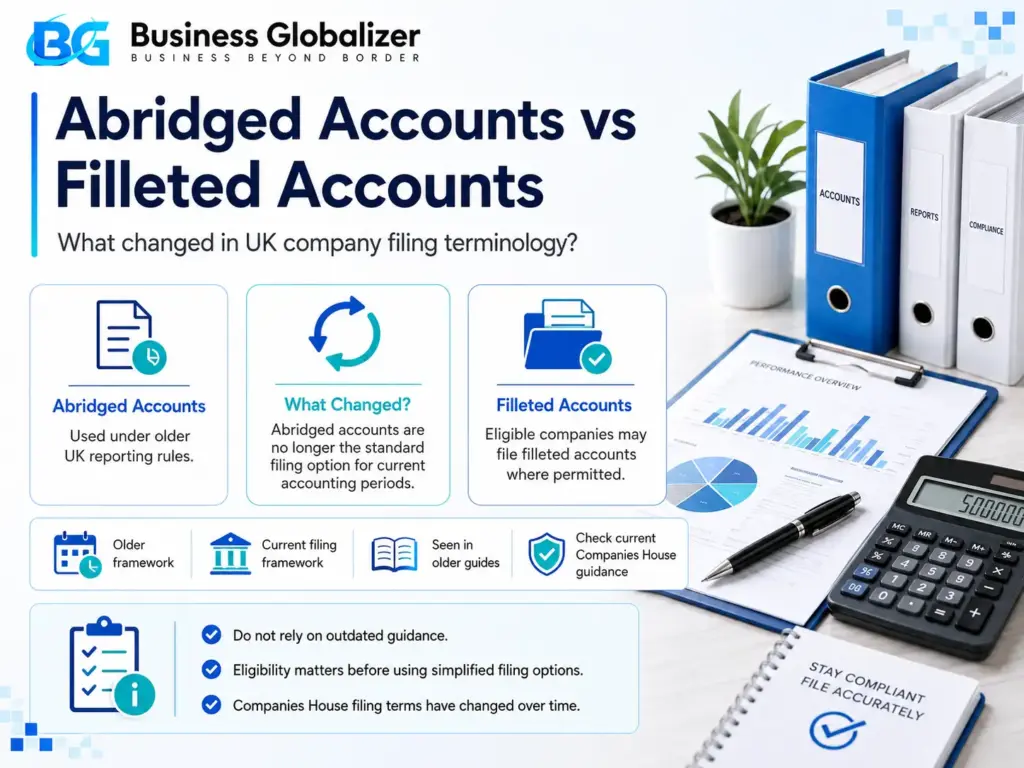
Abridged Accounts vs Filleted Accounts
Although the two terms are often confused, they are not exactly the same.
| Abridged Accounts | Filleted Accounts |
| Used under previous UK reporting rules. | Used under the current filing framework for eligible companies. |
| No longer the standard filing option. | Currently available where eligibility requirements are met. |
| Frequently mentioned in older guides and articles. | Referred to in current Companies House guidance. |
If you are reading older accounting advice online, chances are it still discusses abridged accounts. Always check the publication date before relying on filing guidance.
What Should Companies File Instead?
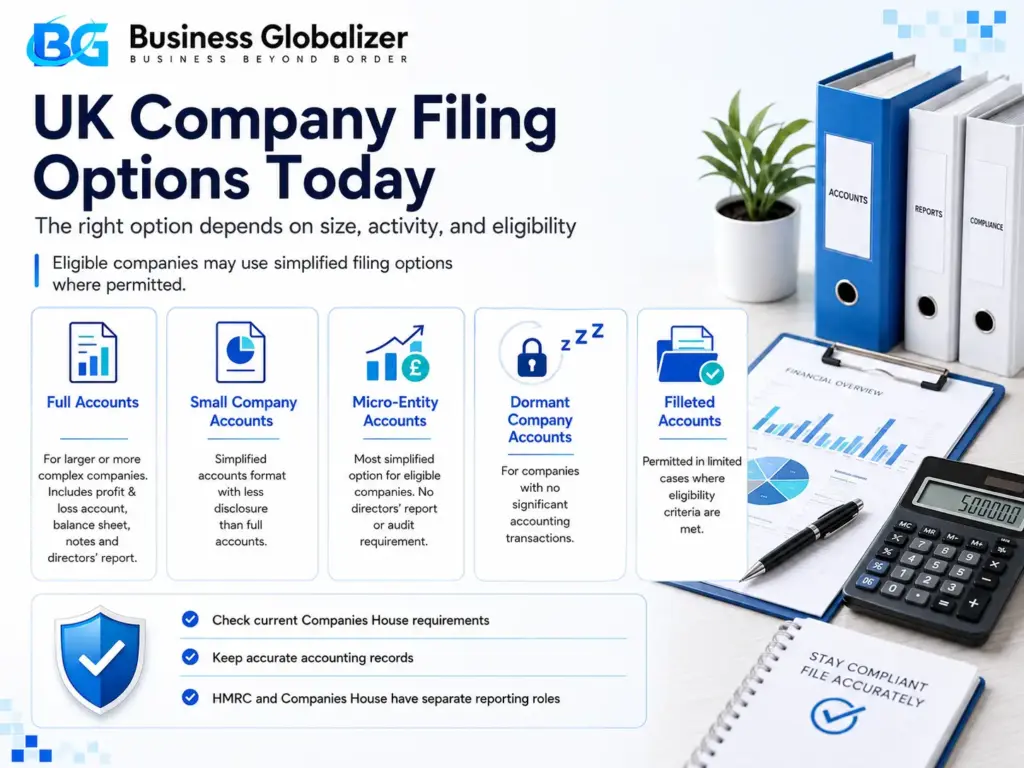
That depends on the company. Today’s reporting options may include:
- Full Accounts
- Small Company Accounts
- Micro Entity Accounts
- Dormant Company Accounts
- Filleted Accounts (where eligible)
The right option depends on your company’s size, trading activity, and reporting requirements.
Why Do So Many People Still Search for Abridged Accounts?
Because thousands of older guides, blogs, videos, and accounting resources still use the term. If a director formed a company several years ago, their accountant may also have used “abridged accounts” at the time.
The terminology has changed, but the goal hasn’t: helping eligible companies meet their annual reporting obligations without preparing more disclosures than the law requires.
Common Mistakes to Avoid
The biggest mistakes usually happen because people rely on outdated information. A few practical reminders:
- Don’t assume older filing guidance still applies today.
- Always check the current Companies House requirements before preparing accounts.
- Don’t confuse abridged accounts with filleted accounts.
- Make sure your company qualifies before using any simplified reporting option.
- Keep accurate accounting records throughout the year, regardless of which account type you file.
Business Globalizer: Helping You File the Right Accounts
UK reporting requirements change over time, and older accounting terms don’t always disappear overnight.
At Business Globalizer, we help founders understand which filing option actually applies today. Whether your UK company needs a registered office address, corporate taxation, annual accounts, micro-entity accounts, dormant company accounts, confirmation statements, or broader compliance support, we help you file accurately and on time. We also help with company dissolution and company restoration whenever required.
Closing Thoughts
The biggest thing to remember about abridged accounts is that they are mostly part of the UK’s previous reporting framework.
If you’re preparing accounts today, your focus should be on the current Companies House requirements and choosing the reporting option that fits your company’s circumstances.
Accounting terminology changes from time to time, but the goal stays the same: preparing accurate annual accounts, meeting your filing obligations, and keeping your company compliant.
Key Insights
- Abridged accounts were once available for certain UK companies but are no longer part of the current filing framework.
- Since the reporting changes introduced for accounting periods beginning on or after 1 January 2016, the filing rules have gradually moved away from abridged accounts.
- Eligible companies now generally use filleted accounts instead of abridged accounts.
- Many older articles still mention abridged accounts, which often causes confusion for new directors.
- The correct filing option depends on your company’s size, eligibility, and reporting requirements.
- Companies House and HMRC continue to have different reporting responsibilities.
- Choosing the correct account type helps avoid filing mistakes and unnecessary compliance issues.
FAQ’s on Abridged Accounts
What are abridged accounts?
Answer: Abridged accounts were a simplified form of statutory accounts previously available to certain qualifying UK companies. They are no longer the standard filing option under the current reporting framework.
Do abridged accounts still exist?
Answer: Not for current accounting periods. Eligible companies now generally use the current filing framework, which includes filleted accounts where permitted.
Are abridged accounts the same as filleted accounts?
Answer: No. Abridged accounts were used under older reporting rules, while filleted accounts are part of today’s Companies House filing framework for eligible companies.
Why do older websites still mention abridged accounts?
Answer: Many articles were written before the reporting changes took effect and have never been updated. Always check whether the guidance reflects the current Companies House rules.
Who can file filleted accounts?
Answer: Eligible companies that meet the relevant legal requirements may file filleted accounts. Eligibility depends on the company’s size and reporting status.
Do abridged accounts affect Corporation Tax?
Answer: No. Corporation Tax obligations are separate from whether a company previously prepared abridged accounts or now files under the current reporting framework.