
 Quick Answer: To make your UK company dormantyou’ll essentially be putting your business on hold. This means stopping all trading activity and avoiding any significant financial transactions while still remembering to keep HMRC in the loop and staying on top of your ongoing filing requirements with Companies House.
There’s a moment many founders quietly recognize. You’ve set everything up, maybe even after forming a UK company, but something shifts. Funding slows down, plans change, or life simply pulls you in another direction.
The company is still there, sitting on the register, but the business itself has paused. That’s usually when the question comes up: can I make the company dormant?
The answer is yes. But it’s not as simple as stepping away and forgetting about it. You still need to stick to the rules, keep up with your filings for HMRC and Companies House, and watch out for a few common pitfalls that can create problems later on.
If you’re wondering how to make a company dormant in the UK, here’s what actually matters.
What Is a Dormant Company?
Before looking at the process, it helps to understand the goal.
A dormant company is generally a limited company in the UK that has had no significant accounting transactions during a financial year. It remains legally registered but is not actively carrying out normal business operations, which makes it different from an active company that is trading and conducting regular business activities.
We have a separate guide covering what a dormant company is, so here we’ll focus on the practical side: how a company reaches and maintains that status.
When Should You Make a Company Dormant?
Dormancy is not only for businesses that failed or shut down. Many companies become dormant for completely strategic reasons. Common examples include:
- Delaying a business launch
- Protecting a company name
- Pausing operations temporarily
- Waiting for funding or investment
- Holding a company for future use
- Taking a break before restarting later
If the company genuinely has no need to trade for a period of time, dormancy can often be a sensible option.
How to Make a Company Dormant in the UK
Many founders assume there is a special application to make a company dormant. In reality, the company becomes dormant by meeting the conditions for dormancy and handling the relevant compliance requirements properly.
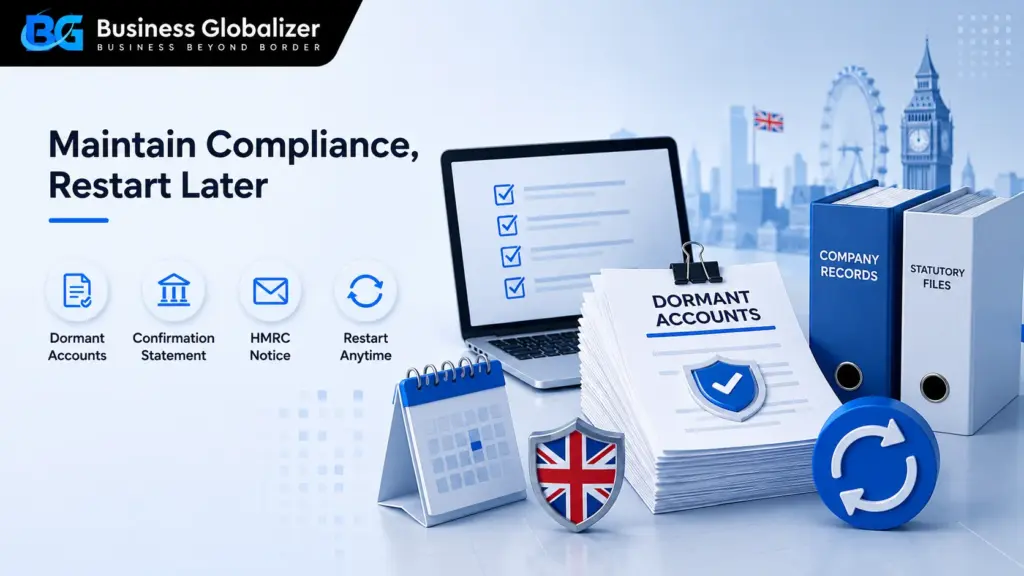
To keep things clear, here are the key steps involved:
- Stop Trading and Business Activity
The company must stop carrying out normal business activity. This includes selling products, providing services, invoicing customers, or operating commercially in any way. If business activity continues, the company is unlikely to qualify as dormant.
- Avoid Business Income and Expenses
Dormancy is really all about your bank balance. If your company is still bringing in money, paying off suppliers, or even covering small, everyday costs, it might not count as dormant. To keep things simple and avoid any confusion, it’s usually best to stop all financial activity entirely.
- Inform HMRC (If Previously Active)
If the company has traded before, HMRC may need to be notified. An HMRC dormant company is one that the authority accepts as inactive for Corporation Tax purposes. This can usually be done through the company’s Corporation Tax account or by contacting HMRC directly. Once accepted, HMRC may stop issuing Corporation Tax return notices while the company remains dormant.
- File Dormant Accounts with Companies House
Even when your company is dormant, you’re still required to file accounts with Companies House. The good news is that these are much simpler versions called ‘dormant accounts’ rather than full trading accounts. Just remember to get them in on time to avoid any pesky penalties.
- Continue Confirmation Statements and Company Updates
Just because your company is dormant doesn’t mean it’s off the books. You’ll still need to keep things current, like filing your annual Confirmation Statement and ensuring info such as your directors, shareholders, and registered office address remain accurate.
- Maintain Proper Records
Even while dormant, the company should keep basic records to demonstrate that it has not carried out significant transactions. This helps support its dormant status if ever reviewed.
Missing any of these steps can lead to compliance issues, even if the company is not actively trading.
HMRC Dormant Company vs Companies House Dormant Company
One of the most common areas of confusion is assuming that HMRC and Companies House define dormancy in exactly the same way.
In reality, they assess dormancy from different perspectives:
- Companies House: Focuses on whether the company has had significant accounting transactions during the financial year. If there are none, the company may qualify to file dormant accounts.
- HMRC: Focuses on whether the company has Corporation Tax obligations. If the company is not trading and has no taxable activity, HMRC may treat it as dormant for tax purposes.
In many cases, both definitions align. However, a company may be considered dormant by one authority but not the other. For this reason, directors should understand both perspectives and ensure they meet the requirements of each.
What Happens After Your Company Becomes Dormant?
Once a company becomes dormant, it does not disappear or become inactive in a legal sense. It simply stops trading while remaining on the register. There are still a few key responsibilities to keep in mind:
- The company must remain registered with Companies House
- Directors continue to hold legal responsibilities
- Dormant accounts must still be filed
- A Confirmation Statement is still required
Although the workload is reduced, the company still needs basic maintenance to stay compliant. For many founders, the main benefit is that reporting becomes simpler because there is no active trading activity to account for.
However, dormant status should be actively managed rather than ignored, as missed filings can still lead to penalties.
Common Mistakes When Making a Company Dormant and How to Avoid Them
Most dormancy issues are avoidable once you understand where things go wrong.
- Assuming No Sales Automatically Means Dormancy
Mistake: Many directors assume no sales means the company is dormant.
How to Avoid It: Ensure there are no significant accounting transactions at all, not just no revenue. Review all activity before treating the company as dormant.
- Forgetting to Tell HMRC After Trading Stops
Mistake: Some directors stop trading but do not inform the HMRC, leading to unexpected Corporation Tax obligations.
How to Avoid It: Notify HMRC that the company has become dormant for Corporation Tax purposes as soon as trading stops, especially if it was previously active.
- Missing Dormant Filing Deadlines
Mistake: Assuming dormancy removes filing responsibilities often leads to missed deadlines.
How to Avoid It: Track all Companies House deadlines, including dormant accounts and Confirmation Statements, and submit them on time.
- Ignoring Confirmation Statement Requirements
Mistake: Some directors overlook the Confirmation Statement, thinking it is not required for dormant companies.
How to Avoid It: Continue filing the Confirmation Statement annually to keep company information accurate and compliant.
- Accidentally Carrying Out Business Transactions
Mistake: Small or routine transactions can unintentionally break dormancy status.
How to Avoid It: Avoid unnecessary financial activity once the company is dormant and monitor accounts to ensure no transactions occur.
- Assuming Companies House and HMRC Use Identical Rules
Mistake: Treating both authorities as if they follow the same definition of dormancy can lead to compliance gaps.
How to Avoid It: Understand that Companies House and HMRC assess dormancy differently and ensure you meet both sets of requirements.
Most penalties arise from misunderstandings rather than intentional non-compliance, so a structured approach helps maintain dormancy without issues.
Can You Restart a Dormant Company?
Can you get a dormant company back up and running? Absolutely. Dormancy is just a temporary pause, not a permanent goodbye, so you’re not locked out of your business forever. When you’re ready to jump back in, reactivating is straightforward.
Usually, this means you’re starting to trade again, bringing in revenue, bringing on team members, or picking up other commercial activities. Once that happens, just keep in mind that your reporting and tax duties will ramp back up, so you’ll need to update HMRC and Companies House accordingly. It’s that flexibility, knowing you can press pause and play whenever your plans change, that makes dormancy such a great option for many founders.
Business Globalizer: Helping Companies Stay Compliant
While making a company dormant sounds straightforward, it can quickly get complicated when you start digging into the details of HMRC notifications, Companies House filings, and all the ongoing compliance work.
That’s where we come in at Business Globalizer. We’re here to take that off your plate, whether you need help with setting up a UK company, managing your dormant filings and accounts, corporate taxation, VAT registration, handling company dissolutions, restorations, or just keeping your registered office address current. It’s all about giving you peace of mind so you don’t have to worry about fixing compliance headaches down the road.
Closing Thoughts
So, that’s the big picture on how to make your company dormant in the UK. Simply put, most business owners go this route for practical reasons; maybe a project is on hold, a launch is delayed, or your priorities have just shifted for a while.
The most important thing to remember is that dormancy isn’t about walking away and ignoring your company. It’s about keeping everything above board and compliant while giving yourself the flexibility to come back and hit the ground running whenever the timing feels right.
As long as you truly stop trading, meet the requirements, and stay on top of your filings, dormancy can be a really helpful tool instead of a headache.
Key Insights
- You don’t apply for dormancy; your company becomes dormant by stopping all trading activity.
- No significant transactions means no income, expenses, or routine business payments.
- HMRC and Companies House assess dormancy differently, so both must be considered.
- Even when dormant, your company still has legal filing responsibilities.
- You may need to inform HMRC if your company has previously traded.
- Dormancy is often used to pause a business, not close it permanently.
- Small or accidental transactions can break dormant status.
- Dormant companies must still file accounts and Confirmation Statements.
- You can restart a dormant company at any time by resuming business activity.
- Dormancy should be actively managed to avoid penalties and compliance issues.
FAQ’s on Make a Company Dormant in the UK
How do I actually make my company dormant in the UK?
Answer: In simple terms, you make your company dormant by stopping all trading activity and avoiding any significant business transactions. If your company has traded before, you should also let HMRC know, and you’ll still need to keep up with basic Companies House filings like dormant accounts and your Confirmation Statement.
What does “dormant company” really mean?
Answer: A dormant company is basically a company that isn’t doing any real business. It hasn’t had meaningful financial activity during the year and isn’t actively trading, even though it still exists on the register.
Do I need to tell HMRC if my company becomes dormant?
Answer: If your company has traded in the past or has been registered for Corporation Tax, then yes, it’s usually a good idea to inform HMRC that it’s now dormant. This helps avoid unnecessary tax return requests.
What is an HMRC dormant company?
Answer: From HMRC’s perspective, a dormant company is one that isn’t carrying out business activity and doesn’t have Corporation Tax to pay. Once they accept this, they may stop asking for tax returns while the company stays inactive.
What is a Companies House dormant company?
Answer: For Companies House, a dormant company is one that hasn’t had significant accounting transactions. Instead of full accounts, it files simpler dormant accounts each year.
Can I keep a bank account if my company is dormant?
Answer: Yes, you can keep a bank account open. Just be careful, because certain transactions going through that account could affect whether your company is still considered dormant.
My company is dormant, do I still need to file a Confirmation Statement?
Answer: Yes, you do. Even if your company is dormant, you still need to submit a Confirmation Statement and keep your company details up to date.
Can I restart my company after it’s been dormant?
Answer: Absolutely. One of the main benefits of dormancy is flexibility. You can start trading again whenever you’re ready, as long as you update HMRC and meet any new obligations.
Do dormant companies still need to file accounts?
Answer: Yes, they do. The difference is that you’ll usually file dormant accounts instead of full trading accounts, which are much simpler.
What happens if I ignore filings while my company is dormant?
Answer: To put it simply, even if your company isn’t trading, missing deadlines can still bring in penalties and compliance issues. It’s important to stay on top of filings to avoid problems later.