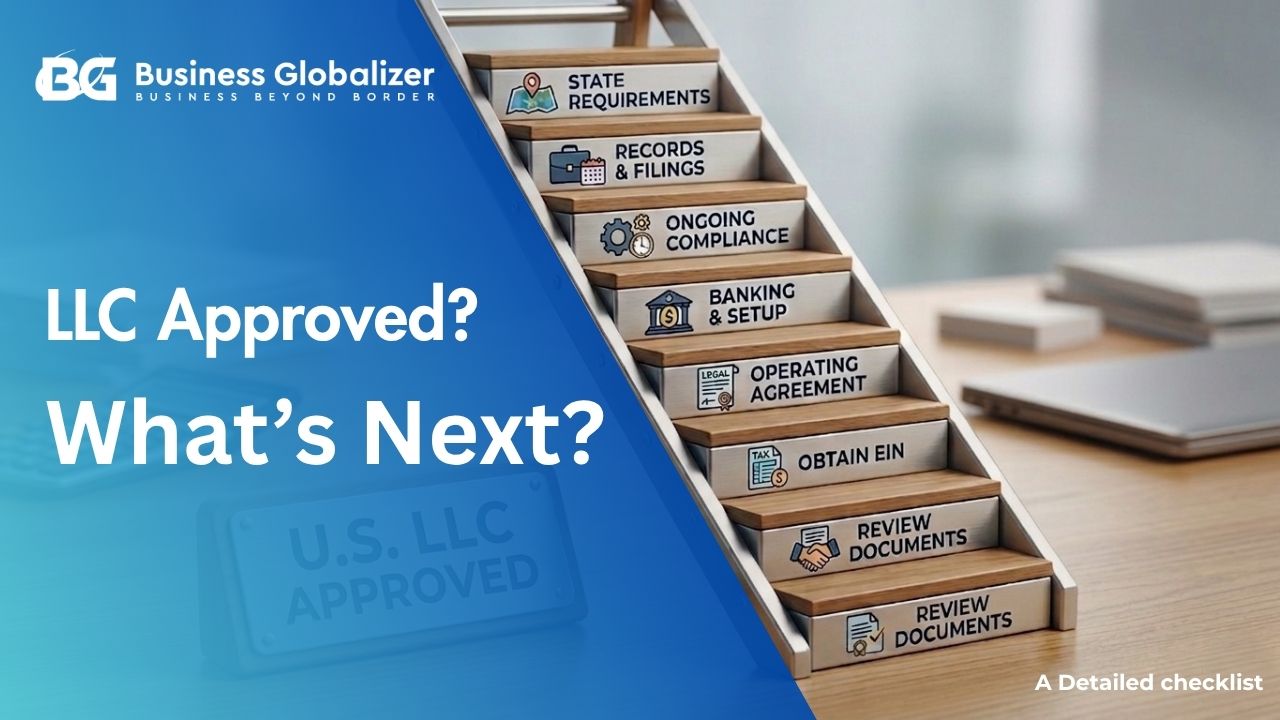
What to do after getting an LLC starts with understanding that forming a U.S.LLC is a strong start. But approval alone doesn’t make your business operational.
The real setup begins after formation. An EIN, operating agreement, banking, and bookkeeping routines keep your LLC in good standing. One missing document or one mismatched detail can slow everything down. This guide walks you through the right order, helping you avoid delays, failed reviews, and missed filings.
Key Insights
- U.S. registration cost is not one fee. It’s a stack of state fees, compliance, and tax obligations.
- The filing fee is usually the smallest part. Maintenance after approval drives the real budget.
- Your biggest cost drivers are state choice, entity type, and recurring state requirements.
- Forming in a “cheap” state can backfire if you must foreign-register where you actually operate.
- LLC vs C-Corp costs diverge mostly because corporate formalities and filings are heavier.
- Non-U.S. founders often pay more due to registered agents, banking help, and foreign-owner reporting.
- Some states add special first-year costs like New York publication requirements.
- Many entities still have filing obligations even with $0 income or low activity.
- Franchise or minimum annual taxes (like CA and DE examples) can reshape the yearly budget fast.
- The clean way to plan is two buckets: formation + year-one compliance, then annual maintenance + tax filings.
Post-Formation Checklist for U.S. LLC
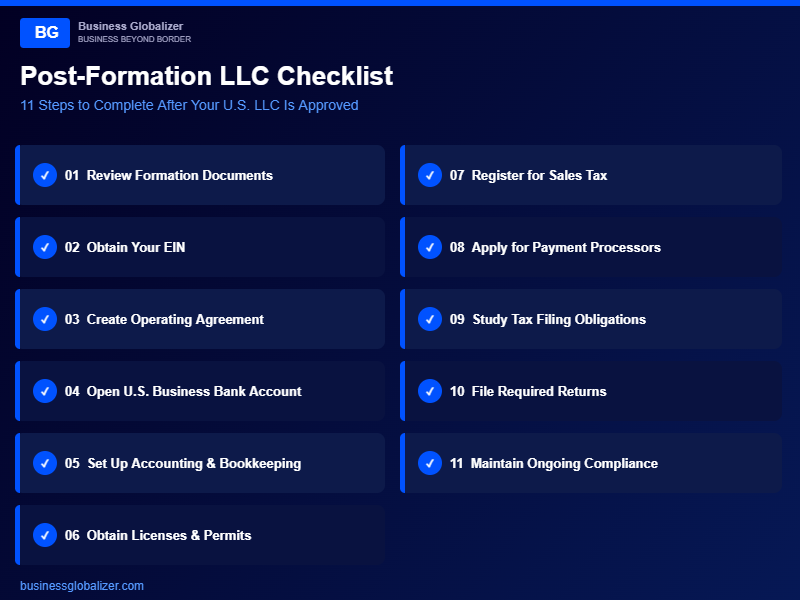
These are the steps to handle right after formation. Follow them in order so banking, payments, and compliance do not turn into avoidable delays.
Step 1: Receive and Review Formation Documents
Before you apply for anything else, make sure your LLC paperwork matches what banks and platforms expect.
What to collect and store (PDF + printed):
- Approved Articles of Organization (or Certificate of Formation)
- State approval confirmation
- Registered Agent details
- Your LLC’s legal name exactly as approved
- State filing number or entity ID
- Any state-specific extra documents you received
Make sure to check your LLC’s spelling along with the business address and registered agent info. Your business purpose should not be written in a way that looks high-risk when opening a Stripe or merchant account.
Step 2: Obtain an Employer Identification Number (EIN)
Your EIN is your LLC’s federal identifier. You will need it for banking, tax filing, payroll, and other payment services. The IRS typically requires your entity type and formation details for the EIN application. You’ll apply using IRS Form SS-4, and approval timing depends on the method you use.
If your principal place of business is outside the U.S., the IRS notes that you cannot use the online application and should apply by phone, fax, or mail. Non-resident founders should also confirm whether they can open a U.S. LLC with an ITIN before starting the EIN process.
Step 3: Create an LLC Operating Agreement
Even if your state does not demand an operating agreement, banks, partners, and future investors often will. It also proves that you’re operating a real business, not a paper entity. An operating agreement also applies even to single-member LLCs.
Your operating agreement should clearly state:
- Owner(s) and ownership percentage
- Profit distribution rules
- Voting rules for major decisions
- What happens if an owner exits
- How records are maintained
Step 4: Open a U.S. Business Bank Account
Many non-resident founders stall while opening a U.S. bank account. Banks check your identity, legitimacy, address consistency, and industry risks. Your files can get stuck if your documents don’t line up cleanly. Traditional banks and fintech platforms review applications differently, but both expect consistency.
Typical bank requirements:
- Approved formation documents
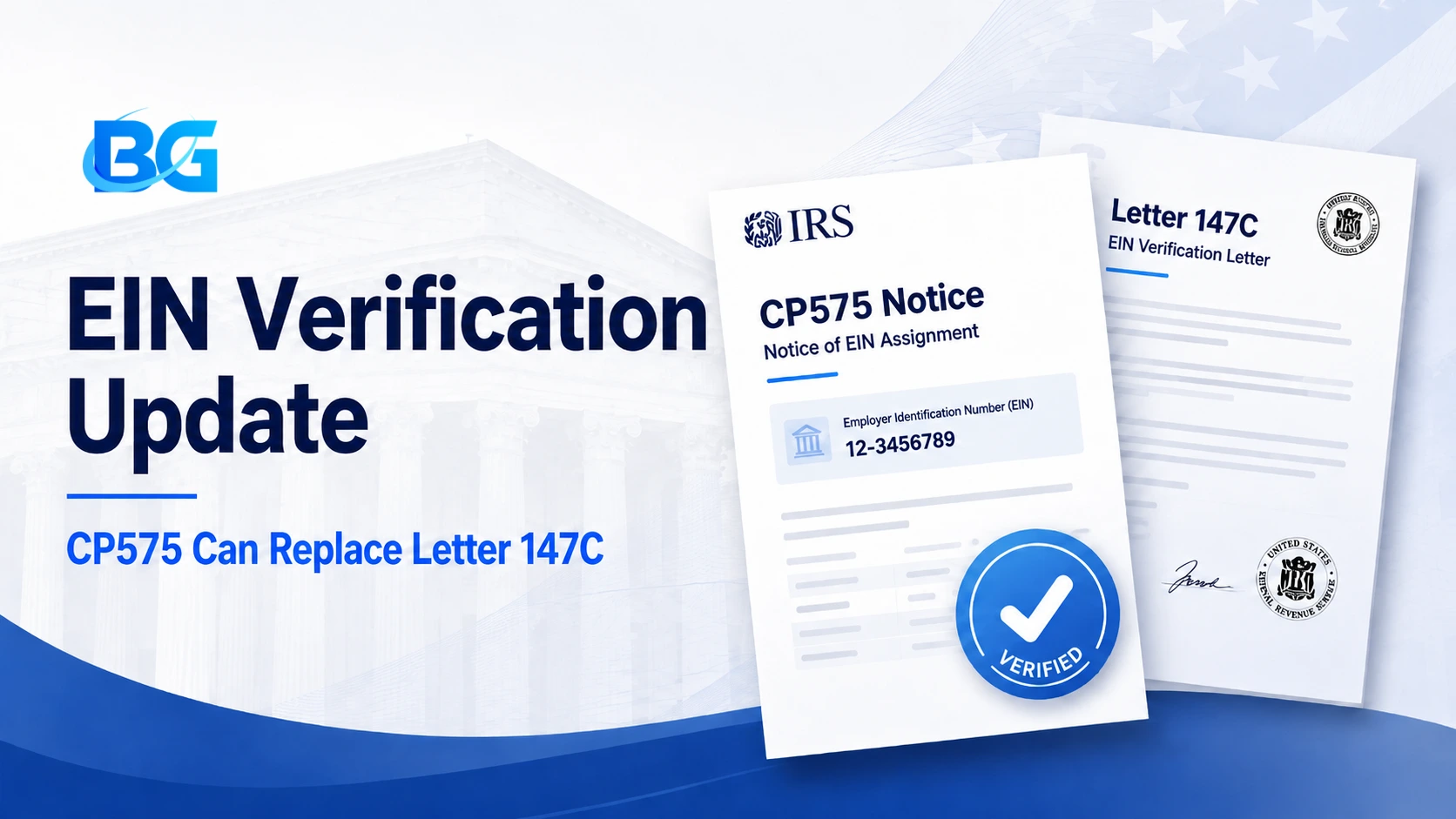
- EIN letter or EIN confirmation
- Operating agreement
- Passport and address proof (a dedicated U.S. business address can strengthen your application)
- Business website or proof of business activity
Step 5: Accounting Setup and Bookkeeping
Accounting and bookkeeping requirements need to be handled early, not after you start earning. A simple accounting setup includes,
- A bookkeeping tool.
- A business expense category list.
- Monthly reconciliation habit
- Separate folders for:
- Formation docs
- Contracts and invoices
- Receipts
- Bank statements
- Tax filings
Most small LLCs start with simple cash-based tracking unless a different method is required.
Step 6: Obtain Required Licenses and Permits
You’ll need permission to operate an LLC even after formation. Depending on your industry and state choice, you’ll need:
- Local business license
- Professional license
- Home occupation permits (if operating from home)
- Industry permits (food, health, transport, etc.)
Not every online business needs a license, but this depends on what you sell and where you operate. If you are outside the U.S. but selling into the U.S., your requirements will depend on nexus, product type, and how you sell. Understanding the difference between a domestic LLC vs a foreign LLC can also clarify your licensing obligations by state.
Step 7: Register for Sales Tax or Seller’s Permit
Sales tax registration is one of the most misunderstood steps for e-commerce founders. Sales tax registration is required when you have a sales tax nexus in a state. If you register too early in the wrong state, you create filings you did not need. If you register too late, you risk penalties. So this step should be intentional. Nexus is usually triggered by sales volume, transaction count, or physical presence.
Step 8: Apply for Payment Processors or Merchant Accounts
This is where your overall business profile gets reviewed as a whole, not just your LLC status. Payment processors look for consistency across documents, websites, and activity descriptions.
Before applying, make sure these basics align:
- LLC name, business address, and website
- Clear description of your goods or services
- Refund policy, shipping policy, and contact page (for online businesses)
- Business email that matches your domain
For non-resident founders, document organization is much more crucial. Even small gaps can put your payment approvals at risk.
Step 9: Study Your U.S. Tax Filing Obligations
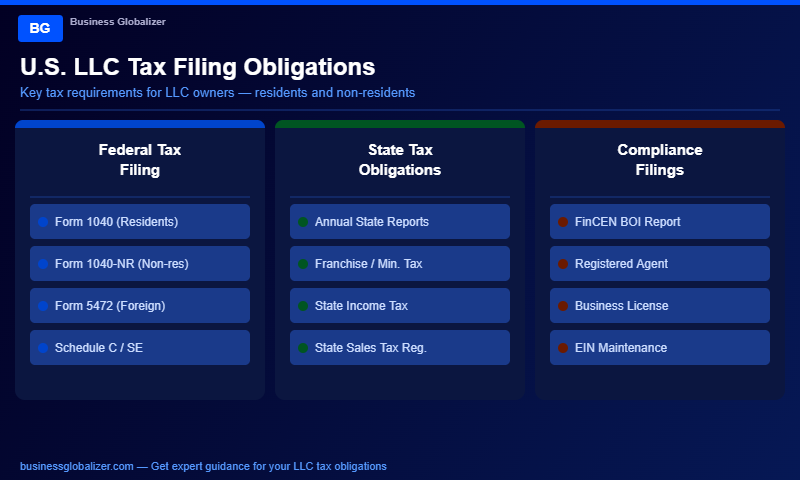
U.S. tax rules for LLCs are not universal. Your obligations depend on how your LLC is structured and how it operates.
Key factors include:
- Single-member vs multi-member LLC
- Whether you are a U.S. resident or non-resident
- If the LLC earns U.S.-sourced income
- Whether income is considered effectively connected (ECI)
- Any tax election you make, such as corporate treatment
Some structures trigger filings even when no tax is owed. Also keep in mind that your EIN is not the same as a personal taxpayer ID. Many non-resident owners eventually need an ITIN as well to meet personal filing requirements. For a detailed breakdown specific to non-U.S. founders, see our foreign-owned LLC taxation guide.
Step 10: File Required Returns
This step is often skipped because it doesn’t feel operational. Yet this is where penalties usually start.
1) FinCEN BOI reporting (Corporate Transparency Act)
Under the current FinCEN rule, the BOI reporting requirement has been narrowed. U.S. companies and U.S. persons are removed from the requirement, while certain foreign reporting companies may still need to file. Whether you need to file depends on where the entity was formed and who owns it.
2) IRS informational filings for foreign-owned structures
Foreign-owned U.S. LLCs may be subject to specific IRS informational filings, such as Form 5472 for international returns. Missing these filings can trigger penalties even if the LLC had no income.
This area is technical and easy to miss. Confirm your filing category early so nothing gets overlooked.
Step 11: Maintain Ongoing Compliance
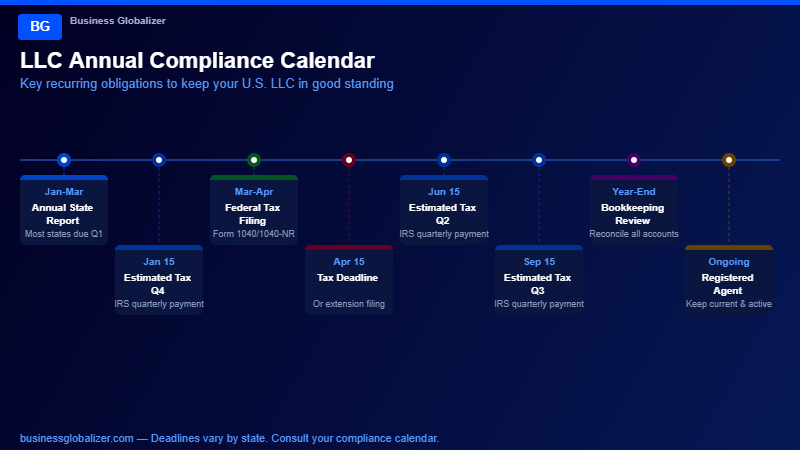
Compliance is not a one-time task. It’s an ongoing routine.
Common obligations include:
- State annual or biennial reports
- Franchise tax or annual state fees
- Registered Agent renewals
- Address updates
- Business license renewals
- IRS and state tax filings based on classification
The simplest way to stay on track is a compliance calendar with clear reminders.
Where Business Globalizer Fits In
Once your LLC is formed (if you don’t have one already, check our company formation packages and choose one according to your plan), the next steps usually touch multiple systems: IRS, banks, payment processors, state compliance, and others. This is where founders need a support system to help them stay on track.Business Globalizer supports founders through the post-formation setup, from EIN and document readiness to banking, payouts, and compliance tracking. The goal is simple: keep everything aligned so approvals and filings stay smooth. If it feels like a lot, you can book a free consultation and clear the confusion.
Final Thoughts
Formation gives you the structure. Setup gives you the ability to operate.
Make sure to follow these steps in order and keep your records aligned with the IRS, banks, and payments. That alone prevents most delays founders face after forming a U.S. LLC. If you want guided support through the post-formation process, Business Globalizer can help you complete the setup and keep everything organized.
Frequently Asked Questions for Post-Formation LLC Steps
Q1. How do I keep my LLC in good standing?
Answer: File the required state reports, pay the annual fees, and renew your registered agent on time. Missing deadlines is what usually knocks LLCs out of good standing.
Q2. What should I do right after my LLC is approved?
Answer: Start with reviewing your formation documents, then move on to EIN, operating agreement, banking, and basic bookkeeping. The order matters more than speed.
Q3. How soon should I finish the post-formation steps?
Answer: Ideally within the first few weeks. Delaying setup for compliance and accounting can often lead to approval issues and rework later.
Q4. Is it possible for a single-member LLC to run with no EIN?
Answer: Usually, no. Banks, payment processors, and platforms still require an EIN. So getting one early avoids roadblocks.
Q5. Do I need an operating agreement for a single-member LLC?
Answer: Yes. And many banks and payment processors request it during their reviews, even for single-member LLCs.
Q6. What documents do banks usually ask for after LLC formation?
Answer: Most banks ask for your formation approval, EIN confirmation, operating agreement, and proof of business activity.
Q7. Can I apply for a U.S. bank account before I get my EIN?
Answer: Usually not. Most banks want an EIN before they open a business account.
Q8. Can the address of my LLC be different from my personal address?
Answer: Yes, but keep it consistent across your EIN, bank profile, and payment applications to avoid review delays.
Q9. Should I use my LLC name exactly everywhere?
Answer: Yes. Use the exact legal name on documents and applications to avoid mismatches during verification.
Q10. When should I start tracking expenses for my LLC?
Answer: From day one. Even pre-revenue expenses matter for records and tax deductions later.